Why Are RF Circulators Used in Radar Systems?
Learn why RF circulators are used in radar systems to separate transmit and receive paths, protect sensitive receivers, reduce reflected power, and improve radar front-end reliability. HzBeat provides low-loss, high-isolation RF circulators for radar, phased array, and microwave systems.
 Updated on: Apr 29, 2026
 Author:
RF circulators are used in radar systems because they allow high-power transmitted signals and weak received echo signals to share the same antenna path while remaining properly separated inside the RF front end. In a typical radar chain, the transmitter sends a high-power pulse toward the antenna, while the receiver must detect very small reflected signals returning from a target. Without proper signal routing and isolation, the transmitted energy or reflected power could leak into the receiver path and damage sensitive low-noise circuits.
An RF circulator solves this problem by directing signal flow from one port to the next in a controlled direction. For example, the transmitted radar signal can travel from the transmitter port to the antenna port, while the returning echo signal is routed from the antenna port to the receiver port. This non-reciprocal behavior makes the circulator especially valuable in radar and antenna array systems, where transmitter/receiver separation is critical. Pasternack notes that circulators and isolators are commonly used to protect sensitive receiver circuitry from high-power transmitter outputs by separating transmitted and received signals at the antenna input.
RF circulators also help improve radar system reliability by reducing the impact of impedance mismatch and reflected power. In real radar systems, antennas, cables, waveguide paths, and environmental conditions may not always maintain a perfect 50-ohm match. When mismatch occurs, part of the RF energy can be reflected back toward the power amplifier. A properly selected circulator can route this unwanted reflected energy toward a termination or load instead of allowing it to return directly to sensitive or expensive RF components.
This is why insertion loss, isolation, VSWR, power handling, frequency range, and thermal stability are all important when selecting a radar RF circulator. Low insertion loss helps preserve transmitted power and receiver sensitivity. High isolation helps protect the receiver and reduce signal leakage. Strong power-handling capability allows the circulator to operate safely in pulsed or high-power radar environments. RF-CI’s application note also identifies radar as a common high-frequency application for ferrite circulators and isolators.
For phased array radar and modern microwave radar platforms, RF circulators may be used across many transmit/receive channels. In these systems, compact size, stable performance, and repeatable manufacturing quality become just as important as electrical specifications. HzBeat provides RF circulator solutions for radar applications where low insertion loss, high isolation, wide frequency coverage, and miniaturized structure are required. Depending on the radar architecture, HzBeat can support microstrip, drop-in, coaxial, and waveguide circulator configurations for different power levels, frequency bands, installation methods, and system environments.
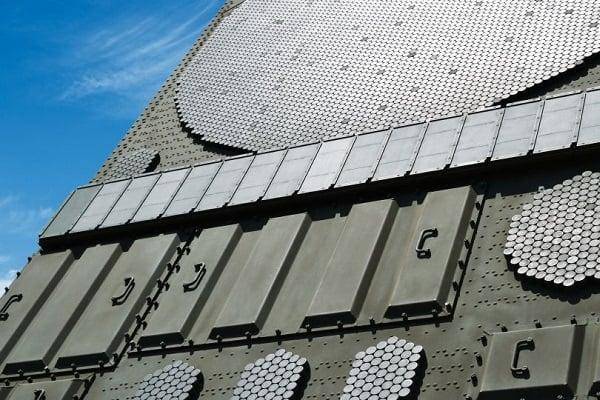
In short, radar systems use RF circulators because they help direct RF energy efficiently, protect the receiver from high-power leakage, manage reflected signals, and improve the overall stability of the radar front end. For radar engineers, a circulator is not just a passive component—it is a quiet gatekeeper standing between high-power transmission and sensitive signal detection.
 Article Tags
Keith Wong
Marketing Director, Chengdu Hertz Electronic Technology Co., Ltd. (Hzbeat)
Keith has over 18 years in the RF components industry, focusing on the intersection of technology, healthcare applications, and global market trends.