Do I Need a Single-Junction or Dual-Junction Circulator?
Learn how to choose between single-junction and dual-junction RF circulators based on isolation, insertion loss, VSWR, size, power handling, reflected power protection, and radar or communication system requirements.
 Updated on: Apr 30, 2026
 Author:
Whether you need a single-junction or dual-junction circulator depends mainly on your system’s requirements for isolation, insertion loss, size, cost, reflected power protection, and system reliability.
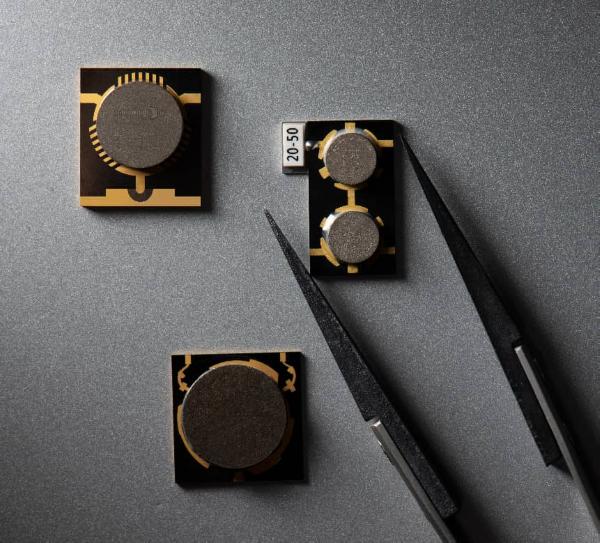
A single-junction circulator is usually the right choice when your system needs a compact, efficient, and lower-loss RF signal-routing component. It is commonly used when standard isolation is sufficient and when the design must control insertion loss, package size, and overall cost. For many communication systems, test setups, antenna paths, and general RF front-end designs, a single-junction circulator can provide a practical balance between performance and integration.
A dual-junction circulator is used when the system needs higher isolation and stronger protection against mismatch or reflected power. A dual-junction circulator typically combines two circulator sections in one structure, which allows better isolation than a standard single-junction design. Valvo’s circulator technical document also notes that dual-junction circulators are used when higher isolation and better directivity are required. Everything RF similarly explains that dual-junction circulators provide better isolation because the RF signal passes through two isolation paths.
The trade-off is that a dual-junction circulator may be larger, more complex, and may introduce more insertion loss than a single-junction option, depending on the frequency band, package type, and power level. This is why the best choice is not simply “single is cheaper” or “dual is better.” The better question is: how much isolation does your RF system actually need, and how much insertion loss can it tolerate?
For radar and high-performance T/R systems, dual-junction circulators can be especially valuable. Microwave101 notes that dual-junction circulators are often used in radar transmit/receive paths, where the second junction helps isolate the power amplifier from poor impedance match and load-pull effects. This makes dual-junction designs useful when reflected power, antenna mismatch, or receiver protection could directly affect system stability.
When choosing between the two, engineers should compare key parameters such as frequency range, bandwidth, insertion loss, VSWR, isolation target, forward power, reverse power, package size, interface type, and operating temperature. GlobalSpec defines insertion loss as the RF power transmission loss caused by adding a device into the signal path, and VSWR as an indicator of how much energy is reflected due to mismatch. M2Global also highlights insertion loss, VSWR, and isolation as key electrical performance parameters when specifying isolators and circulator-based designs.
For HzBeat customers, the selection can usually be simplified like this:
- Choose a single-junction RF circulator when you need lower insertion loss, smaller size, easier integration, and sufficient isolation for standard RF signal routing.
- Choose a dual-junction RF circulator when your system requires higher isolation, stronger mismatch tolerance, better reflected power control, or improved protection in radar, high-power, satellite communication, or demanding microwave front-end systems.
HzBeat can support circulator selection across microstrip, drop-in, coaxial, and waveguide configurations, helping engineers balance low insertion loss, high isolation, wideband coverage, miniaturized structure, power handling, and mechanical integration. For customized projects, it is best to provide the required frequency range, bandwidth, power level, isolation target, insertion loss limit, VSWR requirement, interface type, available space, and operating environment before requesting a quote.
In short, use a single-junction circulator when efficiency, size, and cost are the main priorities. Use a dual-junction circulator when isolation and protection matter more than the added complexity. In RF design, the right circulator is not the biggest one or the most expensive one—it is the one that quietly keeps the whole front end stable when power, reflections, and real-world mismatch start causing trouble.
 Article Tags
Keith Wong
Marketing Director, Chengdu Hertz Electronic Technology Co., Ltd. (Hzbeat)
Keith has over 18 years in the RF components industry, focusing on the intersection of technology, healthcare applications, and global market trends.