What Is the Frequency Range of an RF Circulator?
An in-depth engineering guide to the frequency range of RF circulators, from MHz to millimeter-wave. Explains ferrite physics, non-reciprocal behavior, structural limits, bandwidth definition, measurement conditions, and manufacturer-level capability using HzBeat as a reference.
 Updated on: Jan 12, 2026
 Author:
In RF and microwave systems, an RF circulator is a ferrite-based non-reciprocal passive component that enforces directional signal flow between ports. While it often appears as a small block in system diagrams, its frequency-dependent behavior directly affects amplifier protection, stability margins, thermal performance, and long-term system reliability.
Engineers and system architects frequently ask: What is the frequency range of an RF circulator? The answer is not a single number. It is the result of electromagnetic theory, ferrite material physics, magnetic biasing techniques, mechanical structure, and the performance margins demanded by real RF systems.
What “Frequency Range” Means for an RF Circulator
Classical microwave texts such as David M. Pozar’s Microwave Engineering define circulators as non-reciprocal ferrite junction devices whose operation relies on gyromagnetic effects under static magnetic bias. In this framework, frequency range is not defined by signal transmission alone.
A usable frequency range exists only where multiple conditions are simultaneously satisfied:
- Insertion loss remains low enough to preserve link budget and manage heat.
- Isolation remains high enough to suppress reflected power and prevent oscillation.
- VSWR / return loss stays within limits compatible with active devices.
- Non-reciprocal phase behavior remains stable across temperature and power.
As a result, the system-usable frequency range of an RF circulator is typically narrower than the absolute limits suggested by ferrite resonance theory or laboratory measurements.
Why RF Circulators Span from MHz to Millimeter-Wave
When considered as a technology class rather than a single product, RF circulators cover an exceptionally wide portion of the electromagnetic spectrum. Practical implementations exist from tens of megahertz into millimeter-wave frequencies above 100 GHz.
This wide span is made possible because circulator design scales with wavelength. At lower frequencies, physically larger ferrite junctions and magnetic structures are acceptable. At higher frequencies, the same non-reciprocal principles are implemented using smaller geometries, tighter tolerances, and alternative transmission-line formats such as waveguides.
Center Frequency, Bandwidth, and Usable Range
Circulators are typically optimized around a center frequency where magnetic biasing and phase rotation conditions are ideal. As operating frequency moves away from this center, isolation and return loss degrade gradually rather than abruptly.
For most RF systems, isolation degradation near the band edges defines the usable frequency range long before insertion loss becomes excessive.
Structural Dependence of Frequency Range
Structural implementation strongly determines which frequency ranges can be achieved with acceptable performance and manufacturability.
HzBeat RF Circulator Frequency Coverage
From a manufacturer perspective, frequency range should be discussed at the portfolio level rather than as a single specification. HzBeat develops RF and microwave circulators across multiple structures and frequency regions, with each optimized for a different part of the spectrum.
In practical terms, HzBeat’s circulator portfolio demonstrates coverage from low RF and microwave bands through high-frequency and millimeter-wave regimes, depending on structure and application context:
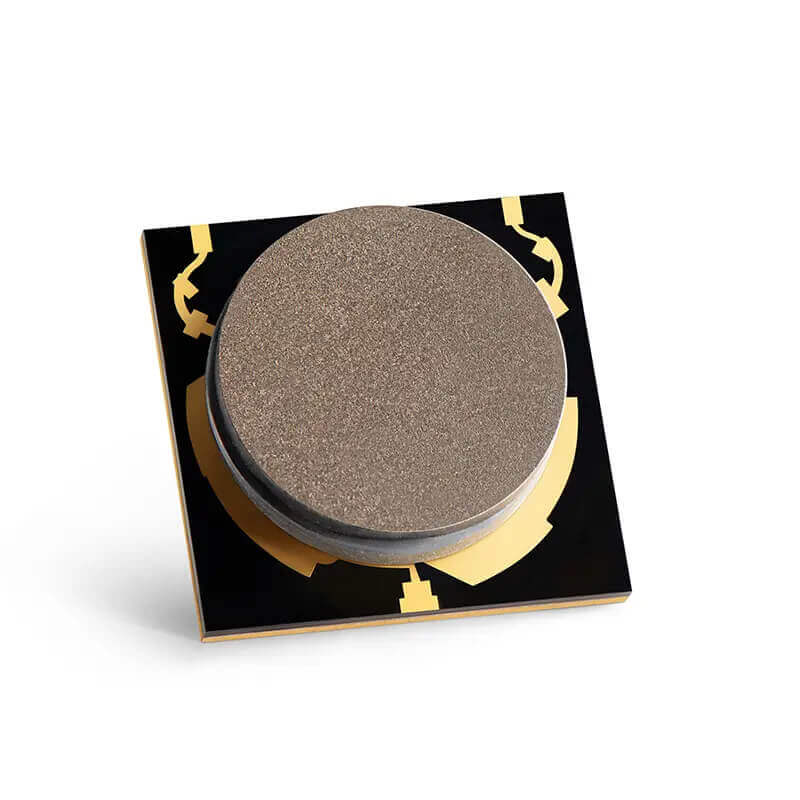
- Microstrip and planar circulators: typically used in microwave frequency ranges where compact size, PCB integration, and module-level assembly are required.
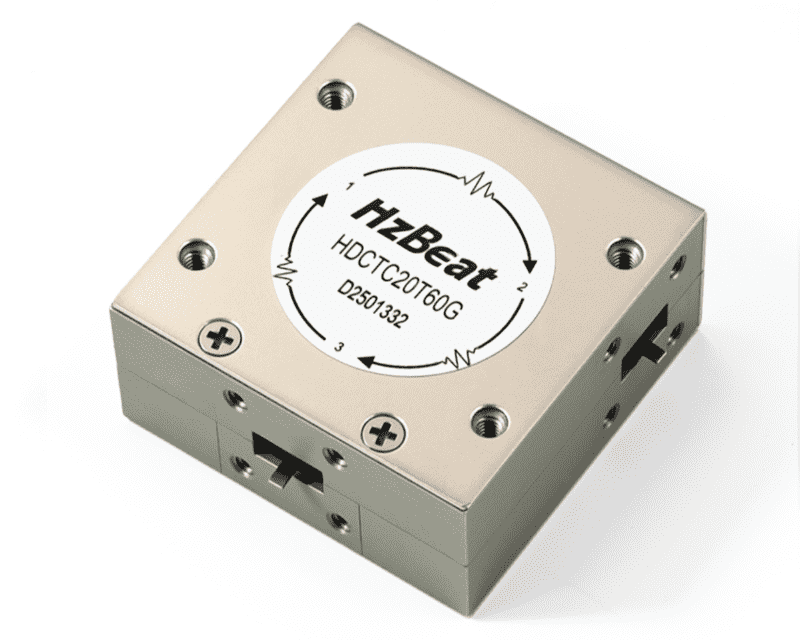
- Coaxial circulators: employed across lower and mid microwave bands where power handling and mechanical robustness are critical.
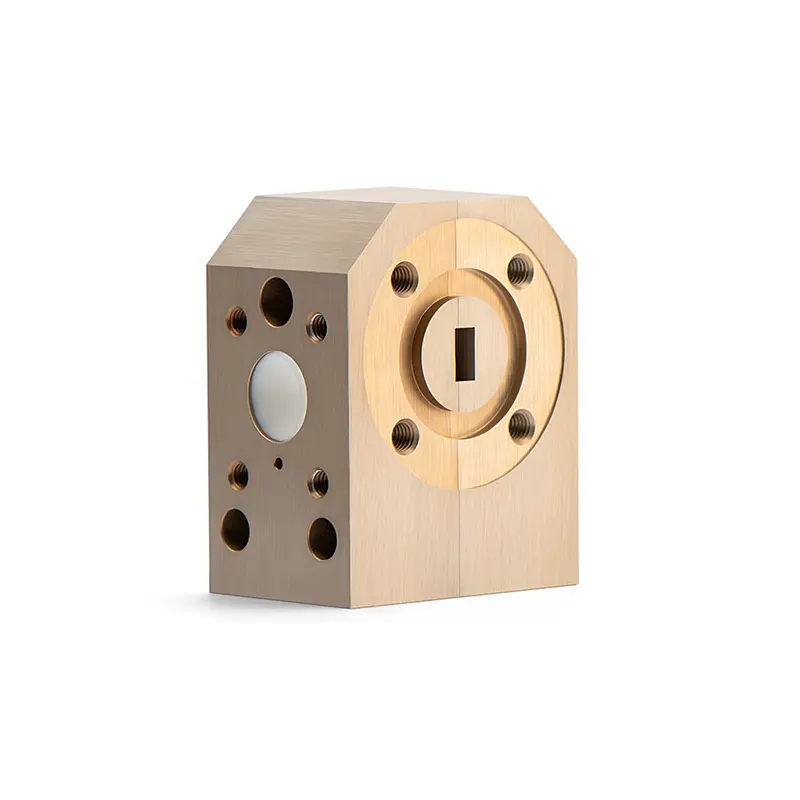
- Waveguide circulators: designed for upper microwave and millimeter-wave frequencies, including X, Ku, Ka, and beyond, where low loss and stable isolation dominate system requirements.
Collectively, this structure-driven approach enables HzBeat to support RF circulator solutions spanning from MHz-class systems into millimeter-wave applications, while maintaining realistic performance margins for insertion loss, isolation, and thermal stability.
Ferrite Physics and Ultimate Frequency Limits
According to research published in IEEE Transactions on Microwave Theory and Techniques, the permeability tensor of ferrite materials evolves with frequency and magnetic bias field strength. As frequency increases, non-reciprocal phase shift decreases and magnetic loss increases, placing a practical upper limit on usable frequency range.
Measurement Conditions and Real-World Range
Datasheet frequency ranges are typically measured under controlled laboratory conditions using vector network analyzers, matched loads, and stable temperatures. In deployed systems, broadband modulation, power cycling, vibration, and thermal gradients often reduce the effective usable frequency range.
Application-Driven Frequency Requirements
Different applications impose different expectations on frequency range. Radar systems often prioritize isolation stability across temperature, while satellite communication systems emphasize low insertion loss across wide bandwidths.
Conclusion
The frequency range of an RF circulator is not a single number, but the outcome of ferrite physics, magnetic bias design, structural implementation, and real-world system constraints.
By understanding these factors—and by evaluating manufacturer capabilities at the portfolio level, as illustrated by HzBeat—engineers can select circulators that deliver predictable, stable performance across their intended operating frequency range.
References
- D. M. Pozar, Microwave Engineering, Wiley.
- R. E. Collin, Foundations for Microwave Engineering, IEEE Press.
- J. Helszajn, Non-Reciprocal Microwave Junctions and Circulators, Wiley.
- IEEE Transactions on Microwave Theory and Techniques.
Recommended Products
 Article Tags
Keith Wong
Marketing Director, Chengdu Hertz Electronic Technology Co., Ltd. (Hzbeat)
Keith has over 18 years in the RF components industry, focusing on the intersection of technology, healthcare applications, and global market trends.