Cryogenic RF Circulators in Ultra-Low-Temperature Systems: Engineering Challenges, Real-World Cases, and What’s Next
Engineering-grade news deep dive on cryogenic RF circulators and RF isolators (77 K, 4 K, and mK). Covers quantum computing measurement chains, insertion loss and isolation at cryogenic temperatures, magnetic compatibility, validation practices, and documented industry cases—plus an R&D outlook.
 Updated on: Jan 30, 2026
 Author:
Introduction
Ultra-low-temperature platforms are moving from niche physics labs into industrial-scale roadmaps. Superconducting quantum computing, cryogenic sensing, and precision microwave measurement now depend on robust, repeatable microwave signal chains that operate across temperature stages from 300 K down to 4 K and even millikelvin (mK) regions. In those systems, an RF circulator is not merely a passive routing component: it is a stability device that manages reflections, controls back-propagating noise, and protects sensitive elements such as superconducting qubits and cryogenic low-noise amplifiers.
This shift has created a very “current” engineering story. Public product releases, technical reviews, and system-level guidance increasingly treat cryogenic RF circulators and cryogenic RF isolators as foundational building blocks for scalable cryogenic measurement infrastructure. At the same time, research continues to push beyond conventional ferrite implementations toward more compact and potentially integrable approaches for non-reciprocal microwave components operating at cryogenic temperatures.
This article provides a professional, fact-anchored deep dive into what changes for RF circulators and RF isolators at cryogenic temperatures, why insertion loss and isolation behave differently in ultra-low-temperature contexts, what “magnetic compatibility” means in real systems, and how engineers validate performance across temperature cycles. It also summarizes documented case examples and offers a measured R&D outlook aligned with observable industry direction.
Why This Topic Is a Real “Now” Story
Quantum computing—particularly superconducting qubit platforms—requires operation near absolute zero. Achieving that requires dilution refrigerators and a carefully engineered cryogenic measurement stack that delivers control signals, extracts readout signals, and suppresses noise across multiple temperature stages. System-level guidance from cryogenic infrastructure providers highlights the practical realities of cryogenic wiring, signal transfer, filtering, amplification, and protection. In that context, RF circulators and RF isolators appear repeatedly as the devices used to control reverse noise and reflections in microwave readout chains.
In parallel, the component ecosystem has become more explicit: engineering media has published focused overviews on cryogenic circulators and isolators for quantum use, and component announcements increasingly specify cryogenic performance targets (for example, insertion loss measured at 77 K or 5 K). The overall market signal is clear: cryogenic RF circulators and cryogenic RF isolators are becoming a strategic supply layer for quantum and ultra-low-temperature RF systems rather than one-off lab purchases.
What an RF Circulator and RF Isolator Do in Cryogenic Chains
An RF circulator is a non-reciprocal passive device (commonly three-port) that routes microwave power directionally, such as Port 1 → Port 2 → Port 3. This directional behavior allows an RF circulator to separate forward-traveling signals from reflections. In cryogenic chains, that is not an abstract “routing” feature; it is how systems prevent reflected energy and amplifier noise from returning to the coldest, most sensitive stage.
An RF isolator is closely related and is often implemented as a circulator with a matched termination on one port. In practice, RF isolators are deployed to reduce reverse-propagating noise and provide additional protection margin. For superconducting qubits, this matters because back-propagating noise can degrade measurement fidelity and disturb delicate quantum states. As systems scale to more qubits and more readout lines, consistent non-reciprocal behavior across multiple channels becomes an infrastructure requirement.
In short, in a cryogenic environment, RF circulators and RF isolators are often used as: (1) reflection managers, (2) noise direction controllers, and (3) protective interfaces between devices under test and amplification stages.
Cryogenic Measurement Infrastructure: The System Context
Cryogenic performance cannot be evaluated in isolation from the measurement stack. The term “cryogenic measurement infrastructure” generally refers to the complete set of wiring and microwave components that span multiple thermal stages—room temperature, 50–80 K stages, 4 K stages, and the millikelvin stage near the qubit device. The stack includes attenuation to thermalize noise, filtering to suppress out-of-band energy, amplification (often beginning at 4 K), and non-reciprocal devices such as RF circulators and RF isolators to prevent reverse noise from returning to the device.
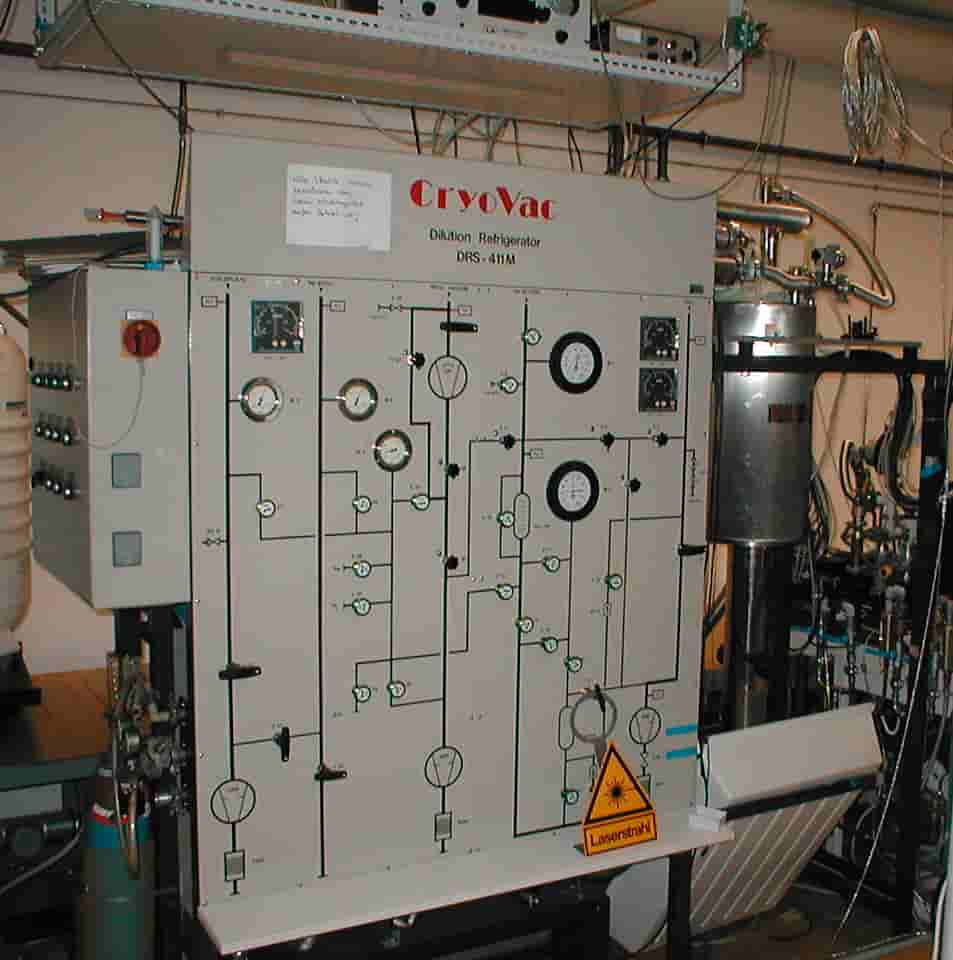
This system framing is essential for understanding why cryogenic RF circulators receive so much attention. At cryogenic temperatures, losses and reflections translate into effective noise and stability issues more directly than in many room-temperature RF systems. A well-chosen RF circulator placement can isolate the coldest stage from amplifier back-action; an RF isolator stage can further reduce reverse noise; and together they help stabilize the microwave environment seen by the qubit or cryogenic sensor.
What Changes at 77 K, 4 K, and mK
1) Insertion loss becomes “effective noise” in cryogenic chains
Insertion loss (IL) is always important, but at cryogenic temperatures it is tightly coupled to system noise performance. Any loss in an RF circulator can contribute thermal noise to the signal path, and in an ultra-low-temperature environment that contribution can dominate margins because the rest of the chain is engineered to be extraordinarily quiet. For this reason, cryogenic circulator and cryogenic isolator specifications often emphasize very low IL at cryogenic temperatures and design features intended to minimize dissipation and facilitate thermalization.
Public cryogenic isolator/circulator documentation in the 4–12 GHz range, for example, explicitly discusses ultra-low insertion loss values and provides typical cryogenic RF characteristics (including IL and isolation) at cryogenic temperatures such as 77 K, with additional context about minimizing thermal noise contribution through material and packaging choices.
2) Isolation is not just a number—it is a stability mechanism
Isolation is commonly described as the attenuation between the forward signal path and the reverse path. In cryogenic systems, isolation is a mechanism for preventing reflections and reverse noise from reaching the most sensitive device. In superconducting qubit readout systems, isolation helps prevent amplifier noise and reflections from re-entering the resonator/qubit environment. This improves measurement repeatability and reduces the chance of undesirable coupling pathways that can create drift or instability.
3) Frequency bands and bandwidth constraints become “integration constraints”
Many cryogenic RF applications concentrate around microwave frequency bands used for qubit readout and control (commonly within a few GHz up to the low tens of GHz). As systems scale, bandwidth requirements are often driven by multiplexing strategies and by how many channels must be supported through limited cryostat wiring. The result is a practical engineering push toward cryogenic RF circulators and RF isolators that are not only low-loss, but also consistent across frequency and robust under thermal cycling.
Core Engineering Challenges (Thermal, Magnetic, Mechanical)
Thermalization and heat load management
Cryogenic systems operate under strict cooling-power budgets. Even modest heat leakage can force longer cooldown times or reduce steady-state performance. A cryogenic RF circulator must therefore be evaluated not only for S-parameters but also for how it couples thermally to its mounting stage. Packaging choices, connector interfaces, and materials can influence both RF loss and thermal conduction. In practice, engineers look for designs that reach thermal equilibrium reliably and do not introduce unpredictable temperature gradients that might shift behavior.
Magnetic compatibility (especially near superconducting devices)
Many traditional RF circulators rely on ferrite materials and magnetic bias to achieve non-reciprocity. However, superconducting qubits and many cryogenic sensors can be highly sensitive to stray magnetic fields. This creates a real system-level tension: the circulator needs stable biasing, while the cryogenic quantum device needs minimal magnetic disturbance. Industry coverage of cryogenic circulators emphasizes options such as magnetic shielding and design approaches intended to reduce interference in dense cryogenic environments.
Mechanical stress and repeatability under thermal cycling
Cooling from room temperature to 4 K changes material properties and introduces differential contraction across metals, ceramics, and assemblies. For cryogenic RF circulators and RF isolators, this can shift impedance match, alter mechanical alignment, or change contact integrity. A practical cryogenic component must maintain repeatable performance across cooldown and warm-up cycles and remain stable over long operating times.
Real-World Cases: Documented Deployments and Product Families
Case A — Quantum readout chains: cryogenic infrastructure as the baseline
In superconducting quantum computing, dilution refrigerators cool qubits to millikelvin temperatures, while the measurement chain must control and read out signals across multiple thermal stages. Practical cryogenic measurement infrastructure discussions repeatedly include non-reciprocal components—RF circulators and RF isolators—as part of how engineers protect the coldest stage from amplifier noise and reflections. This is not a theoretical preference; it is a recurring element of real quantum measurement stacks.
Case B — Documented 4–12 GHz cryogenic isolator/circulator releases
Recent public announcements in RF engineering media have highlighted cryogenic isolator/circulator products designed for ultra-low temperature RF applications. One example is a publicly reported 4–12 GHz cryogenic isolator/circulator release that specifies ultra-low insertion loss at 5 K and targets quantum computing, superconducting device testing, and low-temperature physics research. Such releases are noteworthy because they publish explicit cryogenic performance metrics and application framing rather than leaving cryogenic behavior implied.
Complementary product documentation from manufacturers in this category often emphasizes material and packaging choices aimed at minimizing loss and thermal noise—such as oxygen-free high-conductivity (OFHC) copper bodies and gold plating—and presents typical cryogenic RF characteristics such as insertion loss and isolation values across the specified band. For engineers building cryogenic chains, these details matter because they connect RF performance to the thermal realities of ultra-low-temperature integration.
Case C — Arrays and scaling: cryogenic RF circulators as a multi-channel tool
As readout architectures scale, multi-channel consistency becomes as important as single-device performance. Engineering coverage has highlighted cryogenic circulators and isolators in array configurations intended to support advanced quantum research programs. The focus is often on enabling repeatable qubit readout pathways and addressing dense cryogenic integration issues, including magnetic isolation and packaging approaches that reduce interference in crowded cryostats. This is a “systems” story: cryogenic RF circulators are increasingly evaluated as scalable infrastructure, not one-off components.
Case D — Research route: cryogenic CMOS circulators and alternative non-reciprocal concepts
Research continues to explore alternatives that may reduce size and integration complexity. One documented example is a cryogenic CMOS circulator demonstration described as operating from 300 K down to 4.2 K, motivated by the need for compact non-reciprocal components that could become part of a cryogenic quantum computing platform. While such approaches are still research-stage compared with ferrite-based cryogenic RF circulators, they represent a credible direction: smaller, potentially integrable non-reciprocity that could reduce wiring and packaging complexity over time.
How Engineers Validate Cryogenic RF Circulators
Cryogenic validation is often harder than the RF design itself, because measurement conditions must be controlled across temperature, power level, and calibration state. In practice, engineering teams typically validate cryogenic RF circulators and RF isolators through a combination of:
- Room-temperature baseline characterization: Initial S-parameter verification, connector integrity checks, and repeatability assessments at 300 K.
- Temperature-stage verification: Measuring performance at key stages (e.g., 77 K and 4 K), where insertion loss and isolation are compared against expected shifts and stability criteria.
- Thermal cycling repeatability: Repeating cooldown/warm-up cycles to ensure the RF circulator does not drift or degrade due to mechanical stress, contact changes, or packaging effects.
- System-in-chain testing: Evaluating the RF circulator and RF isolator as part of an actual measurement chain to verify that they deliver the expected stability and noise control at the system level.
This last point is critical: in ultra-low-temperature systems, “component good” does not always guarantee “system good.” Engineers must verify how circulators interact with wiring, attenuators, filters, and amplifiers across thermal stages. That is why many cryogenic infrastructure resources describe measurement chains holistically and emphasize integration practices, not just standalone component specs.
Industry Outlook and HzBeat’s R&D Direction (Public-Facing)
The direction of travel is increasingly visible in public documentation: cryogenic RF circulators and RF isolators are being positioned as core infrastructure for quantum computing and ultra-low-temperature measurement, with growing emphasis on reproducibility, integration constraints, and published cryogenic performance metrics. At the same time, research on alternative non-reciprocal implementations suggests a parallel long-term roadmap toward smaller and more integrable solutions.
Against this background, HzBeat is also prioritizing research into RF circulator and RF isolator behavior under cryogenic constraints. The goal is not headline claims, but engineering readiness: understanding how insertion loss, isolation, and impedance match evolve across temperature, and how packaging, thermalization, and magnetic compatibility affect real integration. In practice, that means building validated workflows for cryogenic characterization and identifying design approaches that remain stable under thermal cycling and system-level constraints.
This approach reflects a broader industry truth: for cryogenic RF circulators, “performance” is not a single number. It is a set of behaviors that must remain predictable across thermal stages, under realistic power levels, and in magnet-sensitive environments. As quantum platforms scale and cryogenic measurement stacks become more standardized, the importance of reliable cryogenic circulators and RF isolators—and the engineering discipline behind them— will continue to increase.
Conclusion
Cryogenic RF circulators and RF isolators have become key infrastructure for ultra-low-temperature microwave systems, especially in superconducting quantum computing measurement chains. The engineering focus is not simply whether an RF circulator “works in the cold,” but whether it remains predictable under thermalization constraints, compatible with magnet-sensitive environments, and optimized so insertion loss does not become a dominant noise source.
Documented product releases and technical reviews show a clear trend toward published cryogenic specifications and engineering-ready designs targeted at quantum and ultra-low-temperature physics. In parallel, research demonstrations of cryogenic CMOS circulators and related approaches suggest longer-term opportunities for size and integration improvements. For engineers and system architects, the practical implication is clear: cryogenic circulators are now part of the critical path for system stability and scaling, and they must be evaluated as components of a full cryogenic measurement infrastructure.
FAQ
Do cryogenic RF circulators always use ferrite technology?
Many mature cryogenic RF circulators and cryogenic RF isolators are ferrite-based, and commercial offerings commonly rely on ferrite non-reciprocity with appropriate biasing and shielding. However, research has demonstrated cryogenic CMOS circulator concepts operating down to 4.2 K, indicating a credible alternative direction focused on integration and size reduction.
What matters more at cryogenic temperatures: insertion loss or isolation?
Both are essential, but insertion loss can translate directly into effective noise contribution in ultra-low-temperature chains. Isolation remains critical as a stability mechanism to block reverse-propagating noise and reflections. In practice, cryogenic system design treats insertion loss and isolation as a coupled optimization problem, verified in-chain under realistic cryogenic conditions.
Why is magnetic shielding often mentioned in cryogenic circulator discussions?
Ferrite-based RF circulators typically require magnetic biasing, while superconducting devices are sensitive to magnetic fields. As a result, dense cryogenic environments often require careful magnetic compatibility planning, which may include shielding options and integration strategies that reduce stray-field impact.
Is a “room-temperature good” RF circulator automatically suitable for cryogenic use?
Not necessarily. Cryogenic operation can shift material properties, change mechanical stress states, and alter thermalization behavior. Cryogenic RF circulators and RF isolators are therefore validated at temperature stages (e.g., 77 K, 4 K) and across thermal cycles to ensure repeatability and stability in real cryogenic measurement infrastructure.
References
- Microwave Journal — “Cryogenic Circulators & Isolators for Quantum.”
- everythingRF — “LNF Introduces 4–12 GHz Cryogenic Isolator/Circulator for Ultra-Low Temperature RF Applications.”
- Low Noise Factory — “4–12 GHz Dual Junction Isolator/Circulator” (product information and design intent for ultra-low temperature physics research).
- Low Noise Factory — Datasheet “LNF-xxxxC4_12A” (typical RF characteristics at 77 K, including insertion loss and isolation).
- Bluefors — “Cryogenic Measurement Infrastructure for Quantum Computing” (system-level context for cryogenic wiring and signal transfer).
- Delft University of Technology — “A Wideband Low-Power Cryogenic CMOS Circulator for Quantum Applications” (publication page).
- Wikimedia Commons — “Helium dilution refrigerator.jpg” (image source and license).
Recommended Products
.jpg)
 Article Tags
Keith Wong
Marketing Director, Chengdu Hertz Electronic Technology Co., Ltd. (Hzbeat)
Keith has over 18 years in the RF components industry, focusing on the intersection of technology, healthcare applications, and global market trends.