Which Industries Use RF Circulators Most?
Learn what industries use RF circulators the most and why they are critical in radar, defense, satellite communications, 5G wireless infrastructure, test and measurement, and MRI systems.
 Updated on: Mar 16, 2026
 Author:
In high-power transmit chains, sensitive receive paths, shared-antenna architectures, and high-reliability links, the RF circulator is rarely the loudest component on the stage. Yet it is often the quiet valve that keeps the entire system stable. The industries that use RF circulators most heavily are the ones that cannot afford reflected power, leakage, or front-end failure.
Why RF Circulators Concentrate in Specific Industries
RF circulators do not appear evenly across all electronics sectors. They show up most often where several conditions overlap: high transmit power, sensitive receive paths, shared-antenna or closely coupled transmit-receive architectures, and systems that are too expensive or mission-critical to fail. That is why radar, satellite communications, wireless infrastructure, test platforms, and MRI systems need circulators far more than ordinary consumer products do.
At the device level, a circulator is a passive three-port component that routes energy in one preferred direction between ports. Public overviews from Pasternack describe RF circulators as common in radar, AESA, satellite, and telecommunications applications. Smiths Interconnect likewise positions circulators and isolators around communications, radar, AESA, and space systems. The concentration is not accidental. It is a direct response to front-end system physics.
High-Power Risk
When transmit power is substantial, reflected energy can threaten power amplifiers, LNAs, or other sensitive front-end hardware.
High-Sensitivity Reception
Radar echoes, weak satellite signals, and precision measurement setups all require better isolation to suppress leakage, mismatch effects, and unwanted coupling.
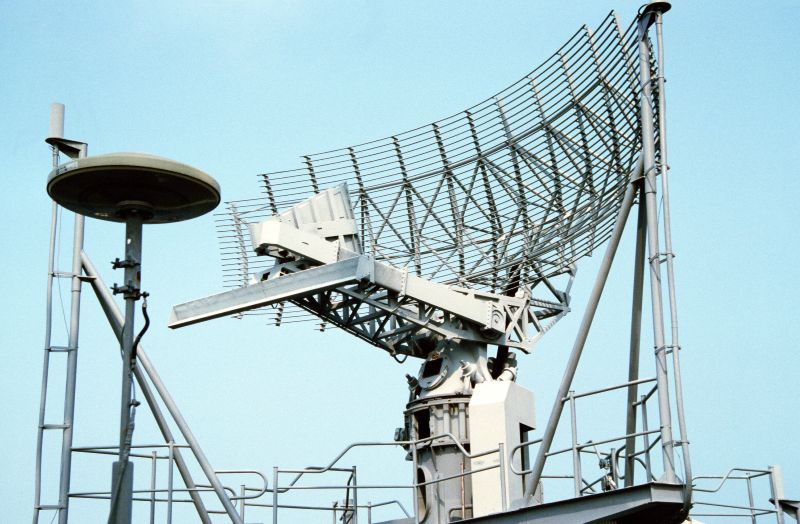
Radar and Defense: The Core Battlefield
If RF circulators have a true home turf, it is radar and defense electronics. The reason is simple. A radar front end must launch relatively high-power transmit energy toward an antenna and then, often through the same front-end region, receive extremely weak echo signals returning from targets. The gap between the transmit signal and the receive signal is not small. It is enormous. Without effective routing and isolation, reflected power and leakage can overwhelm the receive chain or threaten valuable hardware.
In this environment, the RF circulator acts like a one-way traffic controller. Transmit power is directed toward the antenna. Returning echoes are steered toward the receiver. Unwanted reflected energy is prevented from rushing back into the most vulnerable parts of the front end. Qorvo’s X-band front-end materials and Smiths Interconnect’s public product positioning both reinforce the close relationship between circulators and radar, AESA antennas, SSPA chains, and defense-grade RF hardware.
Modern radar systems also demand more than “good enough.” AESA platforms push for higher channel counts, tighter packaging, lighter weight, better thermal stability, and more consistent phase behavior. As a result, microstrip, stripline, SMT, and compact coaxial circulators continue to evolve. Radar does not merely use RF circulators. It actively pushes them toward higher frequencies, smaller packages, and greater power density.
Satellite Communications and Space: Guardians of High-Reliability Links
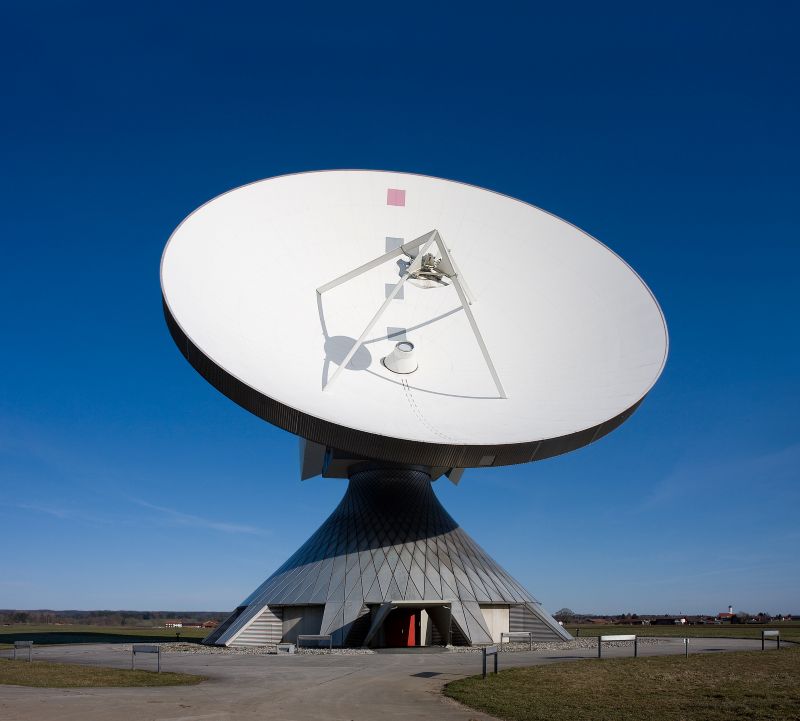
Satellite communications and space payloads form the next major tier, with equally serious dependence in many designs. What separates space hardware from ordinary ground equipment is not just cost. It is the brutal price of failure. When a front-end chain on an orbiting system suffers from poor reflected-power handling, the consequences can be mission-wide and essentially impossible to repair directly.
Smiths Interconnect’s space-focused materials for high-power L-band isolators and circulators explicitly target spacecraft SSPAs, communications, navigation, RadarSat systems, and GEO, MEO, and LEO constellations. The emphasis is clear: power handling, long-term stability, environmental resilience, and mission reliability. In these systems, the RF circulator is not decorative hardware. It is part of the front-end safety architecture.
As low-earth-orbit constellations, satellite internet, and more advanced payloads continue to expand, the value of circulators in space-related RF chains remains strong. They may not headline the brochure, but in high-cost, high-reliability systems they serve as the quiet fasteners holding the structure together.
Wireless Infrastructure: A Practical Role in 5G
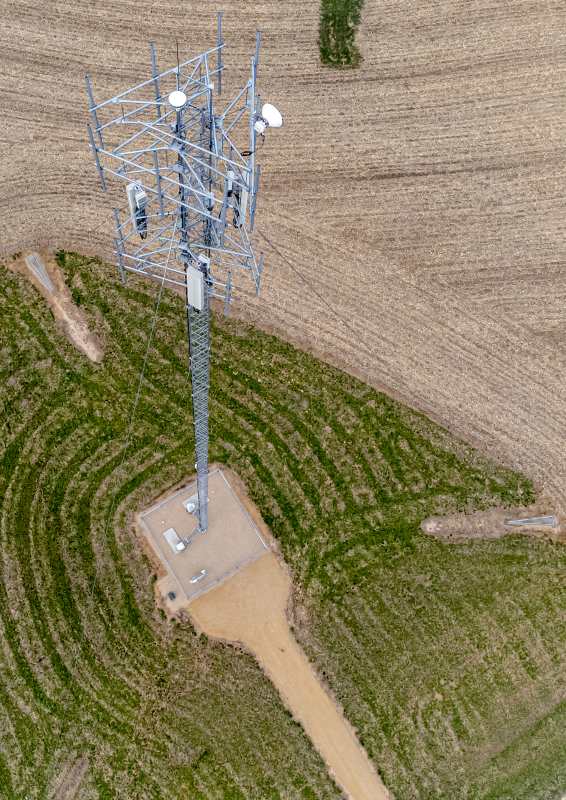
Many engineers still instinctively associate RF circulators with military or aerospace hardware. Yet they also have a practical place in wireless infrastructure, especially in small cells, certain TDD architectures, and front-end chains where power-amplifier protection and mismatch management matter. Analog Devices, in its 5G and O-RAN technical material, shows a small-cell transmitter chain that includes a circulator alongside the PA, filter, and transceiver. In TDD-related receive-path illustrations, the circulator also appears again.
That placement reflects a plain engineering truth. Base stations also suffer from reflections. Antenna mismatch, environmental variation, standing-wave issues, or front-end shifts can all push unwanted energy back toward sensitive hardware. A circulator or isolator helps direct that reflected energy into a termination path instead of letting it punish the PA or disturb the receive chain.
This does not mean every 5G base station must use a ferrite circulator. Communications use is more architecture-specific than radar use. Still, in the right front-end designs, the circulator remains a small component with very real value.
Test and Measurement: A Frequent Engineering Tool
If the ranking is based on where engineers personally encounter RF circulators most often, test and measurement deserves a very high position. Laboratory benches, microwave characterization setups, millimeter-wave validation platforms, and RF development fixtures regularly use circulators to manage reflections, protect sources, and keep signal paths controlled.
Product listings across the RF component ecosystem frequently label circulators for wireless communications, radar, and test and measurement. This makes sense. In a lab environment, unwanted reflections are not a minor nuisance. They can distort results, threaten expensive instruments, or complicate repeatability. The circulator becomes a practical engineering tool for controlling what goes where and what comes back.
Compared with radar programs, the total number of units in test and measurement may be smaller. But the performance demands are often severe. Engineers care about insertion loss, isolation, VSWR, bandwidth, repeatability, and high-frequency stability because those parameters directly affect how trustworthy the measurement is.
MRI Systems: Protection in High-End RF Architectures
Medical electronics is not the largest commercial market for RF circulators, but MRI provides a meaningful example of where they matter. In parallel transmit MRI systems, professional educational material notes that circulators can be used to protect power amplifiers from reflected power or coupled power from coil elements.
This is important because it shows that the value of an RF circulator is not limited to defense or telecommunications. Whenever a system combines higher RF transmit power, sensitive control requirements, coupling risk, and hardware that must be protected, a circulator can earn a place in the architecture. In MRI it may not dominate the whole story, but it is very much part of the technical vocabulary.
Which Industries Use Them the Most?
Taking public application references, official product positioning, and system dependence together, the most defensible ranking is:
| Rank | Industry | Why RF Circulators Matter |
|---|---|---|
| 1 | Radar and Defense | Strong dependence on transmit-receive isolation, reflected-power management, echo routing, and front-end protection. |
| 2 | Satellite Communications and Space | High reliability requirements, expensive payloads, mission-critical SSPAs, and severe consequences of failure. |
| 3 | Wireless Infrastructure | Useful in selected 5G, TDD, and front-end protection designs where mismatch and reflected power must be controlled. |
| 4 | Test and Measurement | Frequent use in lab setups, microwave benches, and millimeter-wave validation for path control and equipment protection. |
| 5 | MRI and Other Specialized RF Systems | Applied where high-power RF chains and amplifier protection are important in specialized architectures. |
The common thread is simple. The higher the reflected-power risk, the more fragile or valuable the front end, and the more expensive the failure, the more likely the industry is to rely on RF circulators.
Future Trends
RF circulators are unlikely to vanish from advanced RF systems any time soon. Instead, their strongest markets are likely to continue evolving along several lines:
- AESA and high-density radar fronts ends: more channels, tighter packaging, and stricter stability targets keep pushing compact circulator technologies forward.
- LEO constellations and advanced space payloads: as satellite networks expand, the need for robust power handling and long-life isolation hardware remains strong.
- 5G and emerging 6G front ends: although architecture choices vary, selected wireless implementations still benefit from practical reflection management and front-end protection.
- Higher-frequency testing: as more development shifts into microwave and millimeter-wave bands, controlled-path measurement hardware stays important.
In other words, the RF circulator is not leaving the stage. It is simply becoming smaller, denser, and more tightly woven into the systems that cannot afford instability.
Conclusion
The industries that use RF circulators most are not difficult to identify once the underlying engineering logic is clear. Radar and defense stand at the front, followed closely by satellite communications and space. Wireless infrastructure comes next as a meaningful civilian application domain, while test and measurement keeps circulators highly visible in daily engineering work. MRI and other specialized RF systems complete the picture.
So if someone asks where RF circulators are used the most, the clearest answer is not a single noun but a hierarchy: radar and defense > satellite communications and space > wireless infrastructure > test and measurement > MRI and other specialized RF systems.
RF circulators do not always take center stage, but in the systems that matter most, they are often the silent hardware that keeps the signal chain honest.
FAQ
Which industry uses RF circulators the most: communications or radar?
Radar and defense usually rely on RF circulators more deeply because transmit-receive isolation, echo routing, and front-end protection are fundamental to radar operation.
Do all 5G base stations use RF circulators?
No. Not every architecture requires one, but RF circulators remain useful in selected small-cell, TDD, and front-end protection designs.
Why are RF circulators important in satellite systems?
Satellite systems must handle reflected power carefully because hardware is expensive, difficult to repair, and often mission-critical. Circulators help improve isolation and protect front-end equipment.
Are RF circulators also used in MRI systems?
Yes. In selected parallel-transmit MRI architectures, circulators can help protect power amplifiers from reflected or coupled energy from coil elements.
References
- Analog Devices. 5G Technology Devices for an O-RAN Wireless Solution.
- Smiths Interconnect. Miniature Coaxial Isolators and Circulators.
- Smiths Interconnect. The Anatomy of a Microstrip Isolator and Circulator.
- Smiths Interconnect. High Power Isolators and Circulators for Space in L-Band.
- Pasternack. What Are RF Isolators and RF Circulators?
- Qorvo. QPF5001 X-Band Front-End Module.
- MRI Questions. Parallel (Multi-) Transmit RF.
- everything RF. RF Circulator Product Listings and Application Pages.
Recommended Products
.jpg)
 Article Tags
Sara
Sara is a Brand Specialist at Hzbeat, focusing on RF & microwave industry communications. She transforms complex technologies into accessible insights, helping global readers understand the value of circulators, isolators, and other key components.