How to Choose an RF Isolator
Learn how to choose an RF isolator step-by-step: frequency & bandwidth, insertion loss vs isolation trade-offs, VSWR, power handling, package types (waveguide, coaxial, microstrip), reliability, and a practical selection checklist with FAQ.
 Updated on: Jan 06, 2026
 Author:
Choosing the right RF isolator is not simply a matter of frequency range or power rating. In real RF systems, isolators protect active devices, stabilize signal paths, and help maintain long-term reliability. If you’re new to the component itself, start with what an RF isolator is and what does an RF isolator do.
The selection process becomes even more critical at higher frequencies, where margins shrink fast.
1) Start with Operating Frequency & Bandwidth
First, define the exact operating band and required bandwidth. Is the system narrowband, broadband, or tunable? RF isolators are typically optimized around a center frequency; performance often degrades near the band edges.
- Frequency range: confirm the full usable range (not just the nominal center).
- Bandwidth target: verify insertion loss and isolation across the whole band.
- Application context: microwave vs. millimeter-wave (Ka/V/W band) changes what “good” looks like.
If your project is pushing upward in frequency, start from purpose-built high-frequency RF isolators rather than scaling a low-frequency device.
2) Understand Insertion Loss vs. Isolation Trade-offs
Insertion loss and isolation are coupled. Higher isolation typically comes with increased loss and/or narrower bandwidth. A practical deep-dive is insertion loss vs. isolation in RF isolators.
- Receiver paths: prioritize low insertion loss to protect noise figure.
- Transmit chains: prioritize isolation to reduce the impact of reflected power on power amplifiers.
- Bandwidth: don’t accept “typical” curves—check guaranteed performance at band edges.
3) Check Power Handling & Thermal Limits
Power handling is not a single number. Confirm average vs. peak power, duty cycle (CW vs. pulsed), and thermal path. As packages shrink at higher frequencies, heat dissipation becomes a primary constraint.
- Average power: tied to thermal dissipation and mounting conditions.
- Peak power: critical for pulsed radar and bursty transmitters.
- Temperature range: verify specs across your real ambient and case temperatures.
4) Verify VSWR and Impedance Stability
VSWR (or return loss) directly impacts reflections and stability. This is especially important in compact front ends and millimeter-wave modules, where a small mismatch can trigger large performance shifts.
- Input/output VSWR: check across band and temperature.
- Mismatch tolerance: confirm how isolation and loss behave under reflection.
- System stability: isolators often act as “insurance” for sensitive gain blocks.
5) Choose the Right Isolator Structure
The mechanical interface can matter as much as electrical performance. Choose a structure aligned with your frequency, integration style, and power level:
- Waveguide isolators: strong choice at very high frequencies and for waveguide-based architectures — see waveguide isolators.
- Coaxial isolators: flexible integration and common for many microwave systems — see coaxial isolators.
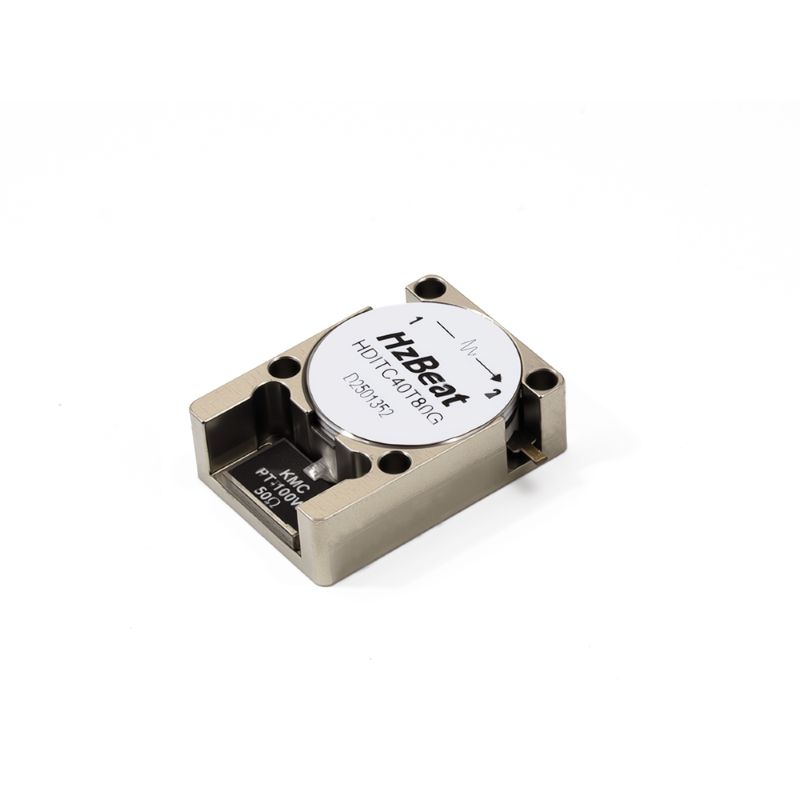
- Microstrip / drop-in isolators: compact and module-friendly — see microstrip isolators.
If you want a product-level starting point, browse HzBeat RF isolators by structure and band.
6) Match Environmental & Reliability Requirements
Lab-friendly parts aren’t always deployment-ready. For aerospace, satellite, industrial, and outdoor systems, consider:
- Shock & vibration: mechanical robustness and connector integrity.
- Temperature cycling: stability across repeated thermal stress.
- Bias stability: long-term stability of magnetic circuit performance.
- Qualification: test evidence matters more than “typical” plots.
7) Don’t Ignore Manufacturing Repeatability
In production systems, unit-to-unit consistency can be as important as peak performance. Ask:
- Guaranteed minimum specs: what is actually guaranteed vs. typical?
- Batch stability: how consistent are center frequency, isolation, and loss?
- Integration risk: will you need post-assembly tuning?
Final Selection Checklist
- Band & bandwidth: verified across the full operating range.
- Insertion loss: acceptable for system NF or link budget.
- Isolation: meets protection and stability needs at band edges.
- VSWR: stable under mismatch and temperature variation.
- Power & thermal: compatible with duty cycle and mounting conditions.
- Package/interface: waveguide, coaxial, or microstrip fits integration.
- Repeatability: guaranteed specs and batch consistency understood.
FAQ
What’s the first spec I should look at when choosing an RF isolator?
Start with operating frequency and bandwidth, then check insertion loss and isolation across the full band. Many selection mistakes happen when engineers validate only the center frequency.
How do I choose between low insertion loss and high isolation?
Let the system decide. Receiver chains often prioritize lower insertion loss to protect noise figure, while transmitter chains often prioritize isolation to reduce the impact of reflected power.
Does VSWR matter if I already have an isolator?
Yes. VSWR affects reflections, stability, and sensitivity to mismatch. Even with an isolator, poor matching can degrade performance—especially in compact or millimeter-wave systems.
Which structure should I use: waveguide, coaxial, or microstrip?
Waveguide is common at very high frequencies and waveguide architectures; coaxial is flexible for many microwave systems; microstrip/drop-in is best for compact modules and board-level integration. Interface choice often impacts both loss and integration risk.
What changes when selecting an RF isolator for millimeter-wave (Ka/V/W band)?
At mmWave, losses rise and tolerances tighten. Bandwidth may narrow, and thermal margins shrink. Start from purpose-designed high-frequency isolators and verify performance across temperature and band edges.
Recommended Products
.png)
.jpg)
 Article Tags
Keith Wong
Marketing Director, Chengdu Hertz Electronic Technology Co., Ltd. (Hzbeat)
Keith has over 18 years in the RF components industry, focusing on the intersection of technology, healthcare applications, and global market trends.