Why Are RF Isolators Used in RF Systems?
Learn why RF isolators are essential in RF systems, how ferrite isolators work, where they are used, and how to select the right microwave isolator.
 Updated on: Aug 05, 2026
 Author:
In modern RF systems, performance rarely fails because of one dramatic event. More often, it erodes from small reflections, unstable source loading, amplifier stress, rising noise, drifting gain, and heat that goes where it should not. That quiet battlefield is exactly why the RF isolator exists. A good microwave isolator is not there to decorate a schematic; it is there to keep energy moving forward, keep reflected power from poisoning sensitive stages, and keep the entire signal chain predictable under real-world mismatches.
The short explanation is simple: an RF isolator is used in RF systems to pass power in one direction while strongly attenuating energy in the reverse direction. But the engineering reason is richer than that. In transmit chains, a ferrite isolator helps protect a power amplifier from load mismatch, antenna detuning, and reflected energy. In receive or low-noise chains, a microwave isolator can improve stability, reduce interaction between stages, and make measurement and calibration more repeatable. In high-power radar, satellite communications, telecom infrastructure, test benches, and even some quantum and aerospace subsystems, the isolator acts like a disciplined traffic officer in a city full of impatient signals.
This article explains not just what an RF isolator is, but why it matters, how it works, where it earns its keep, how it differs from a circulator, what designers should watch in insertion loss, isolation, VSWR, temperature stability, and power handling, and why removing it from a bill of materials can be one of those “cheap” decisions that becomes very expensive later.
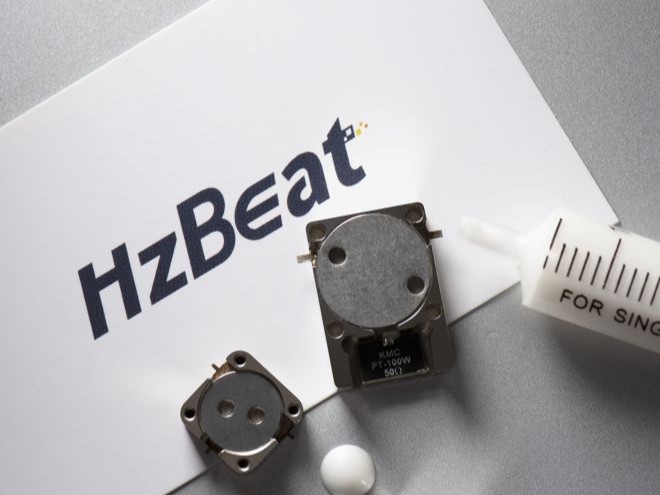
Introduction: The Hidden Problem of Reverse Energy
RF design would be much easier if every source always saw a perfect 50-ohm load and every antenna behaved exactly as simulated. Reality, of course, enjoys comedy. Cables flex, antennas detune, filters shift with temperature, connectors age, manufacturing tolerances stack up, and nearby structures change impedance. The result is reflected power. Reflections travel backward and interact with active devices, particularly amplifiers and oscillators, causing gain ripple, output compression changes, phase errors, instability, and in severe cases device stress or failure.
That is where the RF isolator becomes valuable. Rather than allowing reverse energy to re-enter the source, the isolator routes or dissipates that energy so the source sees a more stable operating environment. In a practical sense, this means a power amplifier can deliver power more consistently, an oscillator can remain less load-sensitive, and a measurement setup can behave more repeatably from bench to bench.
In other words, the microwave isolator is often used not because the forward path is broken, but because the reverse path is dangerous. That subtle distinction matters. Many younger designs optimize only forward gain or nominal insertion loss. Mature RF systems are built by engineers who also think about mismatch, reflected power, stability margin, and worst-case field conditions. The isolator lives in that second category—the adult section of the signal chain.
What Is an RF Isolator?
An RF isolator is a passive, non-reciprocal two-port device that allows RF or microwave power to pass with low attenuation in the forward direction while heavily attenuating power in the reverse direction. In many practical implementations, particularly ferrite-based ones, a ferrite isolator is derived from a circulator structure in which one port is terminated with a matched load. Because of the ferrite material and magnetic bias, the device exhibits directional behavior that is impossible in ordinary reciprocal passive components such as resistive pads or filters.
This non-reciprocal behavior is the heart of the matter. A reciprocal component behaves the same in both directions. An isolator does not. Forward transmission is intentionally favored; reverse transmission is intentionally suppressed. That is why a microwave isolator cannot simply be replaced by a random attenuator if the system goal is to protect a source from reflections. An attenuator reduces both directions. An isolator preserves the useful direction and punishes the unwanted one.
Isolator vs. Circulator
A circulator is usually a three-port non-reciprocal device that routes energy from port 1 to port 2, port 2 to port 3, and port 3 back to port 1. An RF isolator is often implemented by terminating one port of a circulator with a matched load, leaving two external ports. That is why technical literature often describes an isolator as a modified circulator. This is not just textbook poetry; it tells you something practical. The terminated port is where reverse energy goes to die quietly instead of marching back into your amplifier.
.png)
Why Are RF Isolators Used in RF Systems?
The most important reason is protection. A transmitter, power amplifier, oscillator, or other source should not be forced to absorb reflected energy from a mismatched load. Reflections can change the operating point of active devices and create electrical stress. A properly selected RF isolator reduces the amount of reverse power reaching the source and therefore improves robustness.
1. To Protect Power Amplifiers from Load Mismatch
Power amplifiers are often happiest when they see their designed impedance and deeply annoyed when they do not. Antenna mismatch, cable damage, connector contamination, icing, water ingress, and moving structures can all alter the load seen at the PA output. The ferrite isolator sits between the amplifier and the variable world outside, absorbing or redirecting reflected energy. This can reduce compression variation, limit stress on output transistors, and improve survivability in rugged operating conditions.
2. To Stabilize Oscillators and Frequency Sources
Oscillators can be load sensitive. When reverse energy re-enters an oscillator output, it can pull frequency, worsen phase noise, or destabilize amplitude. A microwave isolator helps decouple the oscillator from changing downstream conditions. In synthesis chains, local oscillators, and microwave source modules, this buffering effect is often one of the cleanest reasons to include an isolator.
3. To Improve Stage-to-Stage Isolation
In multi-stage RF systems, one block can disturb another through reverse coupling. Mixers, amplifiers, filters, and multipliers do not always live in perfect harmony. An RF isolator reduces interaction between stages, which can improve gain flatness, measurement repeatability, and production consistency. Sometimes the isolator is not preventing catastrophic failure; it is preventing cumulative ugliness.
4. To Enhance Measurement Accuracy and Repeatability
In test benches and calibration setups, repeatability matters. A source connected directly to a device under test may see different impedance conditions as the DUT changes. That can alter the effective source behavior and distort measured results. By inserting an RF isolator, engineers can make the source appear more independent of the DUT mismatch, leading to more stable measurements. It is one of those humble lab tricks that saves a shocking amount of time.
5. To Reduce the Risk of Self-Oscillation and Instability
High-gain microwave assemblies can become unstable when sufficient reverse coupling creates unintended feedback loops. A ferrite isolator can break those loops or weaken them enough that the system remains unconditionally or at least practically stable. This is particularly important in high-gain receive chains, up/down converter modules, and compact assemblies where physical separation between input and output paths is limited.
6. To Improve Reliability in Harsh or Dynamic Environments
Mobile, airborne, marine, and space-adjacent platforms do not live on a clean lab bench. Vibration, temperature cycling, radiation concerns in some environments, and variable antenna conditions all make the external load less predictable. In such conditions, a microwave isolator acts as an insurance policy for the RF chain. Not free insurance, of course—nothing in hardware is free—but much cheaper than field failures.
How Does a Ferrite Isolator Work?
Most conventional RF isolator products used in microwave hardware are ferrite-based. Ferrite is a magnetic ceramic material whose behavior changes under magnetic bias. In a ferrite isolator, the ferrite and magnet arrangement creates non-reciprocal propagation conditions. That means a forward wave and a reverse wave do not experience the structure in the same way. Depending on the isolator type, the reverse wave may be redirected toward a matched load or preferentially absorbed while the forward wave passes with relatively low loss.
There are several isolator topologies, including resonance isolators and field-displacement isolators in waveguide environments, as well as junction-based implementations related to circulator structures. The exact electromagnetic behavior is topology dependent, but the system-level function remains the same: low loss forward, high attenuation reverse.
The presence of a magnet is what gives these devices their directional personality. Remove the bias and the magic goes limp. This magnetic bias, combined with ferrite geometry and matching structures, sets the usable frequency range, insertion loss, isolation level, bandwidth, and power handling capability of the microwave isolator.
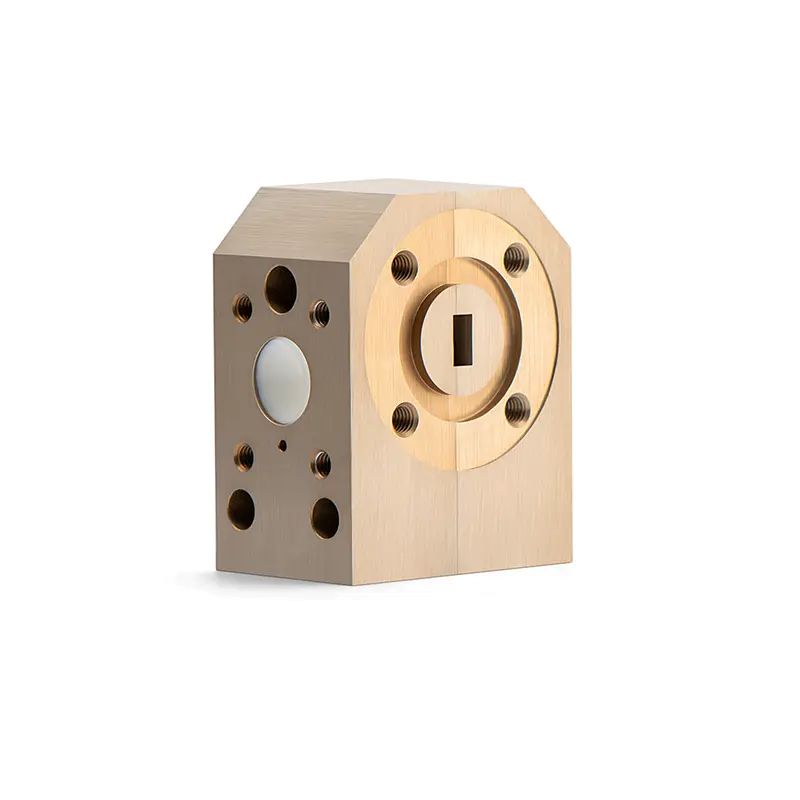
Where RF Isolators Are Commonly Used
Power amplifier output chains
This is one of the classic homes of the RF isolator. Between the PA and the antenna or following network, the isolator helps shield the amplifier from reflected power and varying load conditions. This is common in communications equipment, radar subsystems, and test transmitters.
Oscillator and synthesizer outputs
A microwave isolator is often placed after a frequency source to reduce load pulling and interaction with downstream assemblies. In clean source architectures, that one component can quietly improve spectral behavior and repeatability.
Receiver front ends and low-noise chains
Although insertion loss is always painful before a sensitive LNA, isolators can still be used strategically where reverse isolation and stability outweigh the loss penalty. In some architectures they are placed between gain stages rather than directly at the antenna input.
Radar and phased-array systems
Radar modules often demand protection, stability, and high power capability. Ferrite-based non-reciprocal devices have long been used in radar because reflected power and high transmit energy can be brutal. A ferrite isolator or related circulator-based device helps manage those conditions.
Satellite communications and aerospace payloads
Satcom hardware often values reliability, temperature stability, power handling, and well-controlled RF behavior. Space-qualified and aerospace-grade isolators are used in some amplifier chains and payload architectures where mismatch protection and stage isolation are important.
Microwave test and measurement
Bench setups, automated test systems, and calibration chains benefit from predictable source behavior. Insert an RF isolator between source and DUT, and suddenly the measurement looks less moody. Engineers remain moody, but the measurement improves.
Key Performance Parameters When Selecting an RF Isolator
| Parameter | Why It Matters | Practical Impact in RF Systems |
|---|---|---|
| Frequency range | The isolator must operate over the actual band of interest, not just the marketing headline. | An underspecified band can cause poor matching, low isolation, or rising insertion loss near the edges. |
| Insertion loss | Forward-path loss directly reduces available signal or output power and adds heat. | Critical in high-efficiency transmitters and low-noise receive chains. |
| Isolation | Determines how well reverse energy is attenuated. | Higher isolation means better protection and less reverse interaction. |
| VSWR / return loss | Indicates match quality seen by connected stages. | Poor match can erode the very stability benefit the isolator is supposed to provide. |
| Average and peak power | The device must survive both continuous and transient stress. | Essential in radar, satcom, and high-power PA chains. |
| Temperature range | Ferrite behavior and matching can shift with temperature. | Needed for outdoor, defense, aerospace, and industrial platforms. |
| Package style | Coaxial, drop-in, surface mount, microstrip, or waveguide each bring different trade-offs. | Affects size, integration method, bandwidth, and power handling. |
How to Select an RF Isolator
Selecting an RF isolator is not a beauty contest between datasheets. It is a discipline of matching the device to the real operating stress of the system. Start with the true frequency range, not the nominal center frequency on slide one. Then look at forward power, reverse power, required isolation, allowed insertion loss, package style, mechanical integration, temperature range, and whether your application is a lab instrument, telecom radio, radar front end, satellite payload, or rugged field system. A part that looks excellent in a catalog can still be the wrong choice if it is optimized for a different duty cycle, different mounting strategy, or narrower environmental assumptions.
1. Define the operating band honestly
Use the full working band of the product, including tuning margins and edge conditions. If your chain sweeps, hops, or must survive process drift and temperature drift, do not select a device that only looks good at the nominal center point. Official supplier guidance consistently starts with band coverage because performance usually softens near the band edges. Smiths Interconnect explicitly recommends beginning with operating band, RF power, and the preferred realization or interface when narrowing options, while HzBeat also places operating band at the top of its own customization and selection guide.
2. Balance insertion loss against protection
A high-isolation part with excessive forward loss can quietly tax your efficiency and thermal budget. In a transmitter, every extra fraction of a decibel hurts output power and heat dissipation. In a low-noise chain, insertion loss before gain is particularly painful. Do not chase isolation blindly; choose the minimum insertion loss that still provides enough reverse attenuation for the real mismatch risk in the system.
3. Size the power ratings for the ugly case, not the happy case
Average power and peak power are both important, but reverse power survivability is where many mistakes hide. Think about antenna detuning, cable faults, hot switching, and field abuse. Space, radar, and high-power industrial systems should leave margin rather than selecting a part that only survives on paper.
4. Match the package to the integration method
Coaxial isolators are often convenient for bench use and connectorized subsystems. Drop-in and microstrip styles are better suited to compact embedded hardware, while waveguide devices are natural in higher-frequency or high-power microwave assemblies. Package mismatch creates mechanical pain, grounding issues, and thermal compromises long before the RF numbers start misbehaving.
5. Check environment, not just RF performance
Temperature range, vibration, sealing, magnetic shielding, and long-term reliability all matter. A fine lab part may be the wrong answer for aerospace, defense, outdoor base station, or vehicle-mounted hardware. This is where supplier specialization often matters as much as the raw spec sheet.
Representative Global RF Isolator Suppliers and Their Strengths
The market does not have one universally “best” supplier; it has suppliers that are strong in different corners of the problem. The list below is representative rather than exhaustive, and the strengths or watch-outs are grounded in how each company presents its range, markets, and product focus on official sources.
| Supplier | What Stands Out | Advantages | Potential Drawbacks / Watch-outs |
|---|---|---|---|
| Smiths Interconnect | Broad ferrite portfolio across waveguide, coaxial, stripline, microstrip, and SMT, with operation starting around 400 MHz and extending to about 86 GHz depending on form factor. | Strong heritage, broad packaging options, and clear positioning for demanding markets. Their microstrip line also highlights broadband, low-mass structures and space heritage. | Often a fit for performance-driven or specialized projects, but buyers should expect a more application-driven qualification process rather than pure commodity-style shopping. |
| DiTom Microwave | Heavy emphasis on in-stock isolators and circulators, fast shipment, cryogenic products, TVAC-qualified hardware, military/aerospace offerings, and space-flight oriented models. | Very attractive when lead time matters, and especially notable for cryogenic, quantum, space, and specialized high-reliability niches. | Its messaging is strongly oriented toward catalog availability and specialty niches, so some projects may still need customization review for broader system-level optimization. |
| UIY | Very broad category coverage, with official pages listing coaxial, drop-in, broadband, dual-junction, surface-mount, microstrip, waveguide, and high-power isolators, plus frequency coverage in some families reaching high microwave bands. | Wide selection, customization language, and broad form-factor coverage make UIY useful when engineers want many package choices from one source. | Because the portfolio is broad, buyers should pay extra attention to model-level verification and not assume that every family has the same maturity, availability, or qualification depth. |
| Quantic PMI | Offers isolators and circulators as part of a larger defense and microwave component portfolio, with product pages showing detailed environmental ratings and application-oriented packaging. | Appealing for projects that value detailed specs, ruggedization context, and integration with a broader microwave component ecosystem. | Catalog navigation often feels more engineering-oriented than buyer-friendly, so selection may require tighter part-level review rather than top-down family browsing. |
| HzBeat | Positions itself around wide frequency coverage, miniaturization, and product breadth across microstrip, drop-in, coaxial, and waveguide solutions, with overall coverage stated from 20 MHz to 200 GHz and a customization-first workflow. | Especially attractive for buyers who need compact designs, broad package coverage, and a supplier willing to discuss operating band, power, environmental conditions, cost, and delivery together instead of treating them as separate problems. | Compared with legacy Western brands that emphasize decades of heritage in aerospace or space-qualified programs, buyers in highly regulated sectors may need to conduct deeper qualification and vendor-validation work for mission-specific approval. |
The practical lesson is simple: choose the supplier whose strengths match your risk profile. If you need rapid shipment or cryogenic specialization, one vendor may stand out. If you need deep space or heritage-heavy credentials, another may fit better. If you need compact, wideband, customized solutions with broad package choice, HzBeat may be a strong candidate. There is no shame in comparing multiple suppliers; that is not indecision, that is engineering.
Why an RF Isolator Is Not Just a “Nice to Have” Part
There is a temptation, especially during cost reduction, to ask whether the RF isolator can be removed. Sometimes it can. Often it should not. The answer depends on how tolerant the source is to mismatch, how controlled the external load is, whether the application is lab-only or field-deployed, and how much performance drift is acceptable. The problem is that systems without isolators may still work in nominal conditions, which encourages overconfidence. Then a cable changes, an antenna gets wet, a connector loosens, temperature shifts, and the design suddenly behaves like it is haunted.
A well-chosen microwave isolator buys margin. It lowers sensitivity to the unpredictable parts of the real world. In engineering, margin is not glamourous, but it keeps products alive. That makes the isolator especially valuable in systems that ship, travel, vibrate, heat, cool, and suffer the indignities of actual users.
Common Package Types of Microwave Isolator Products
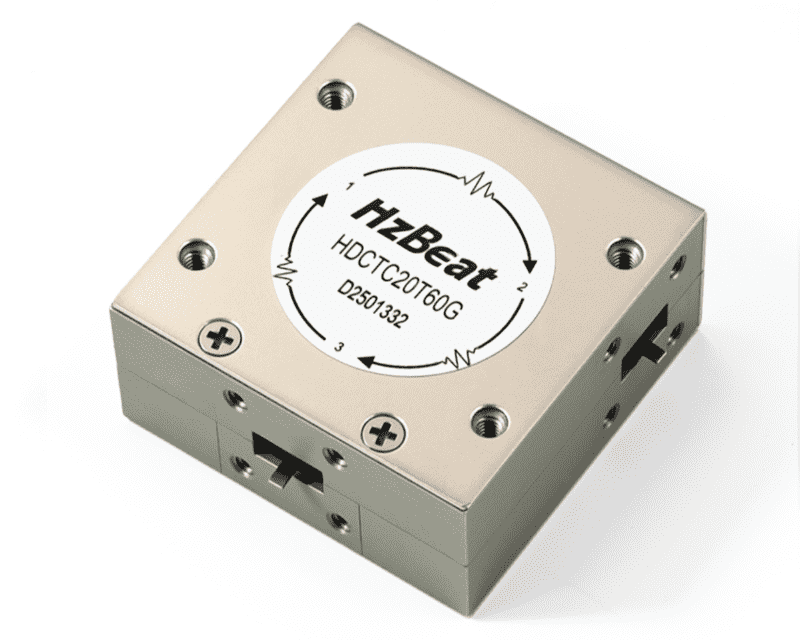
Coaxial isolator
Common in bench, rack, and module-level assemblies. Coaxial isolators are convenient to integrate and are widely available across microwave bands. They are often a practical choice for general-purpose RF systems.
Drop-in isolator
Designed for compact integration into modules and subsystems. Drop-in parts are useful where size and controlled assembly matter. They are popular in defense electronics and custom microwave modules.
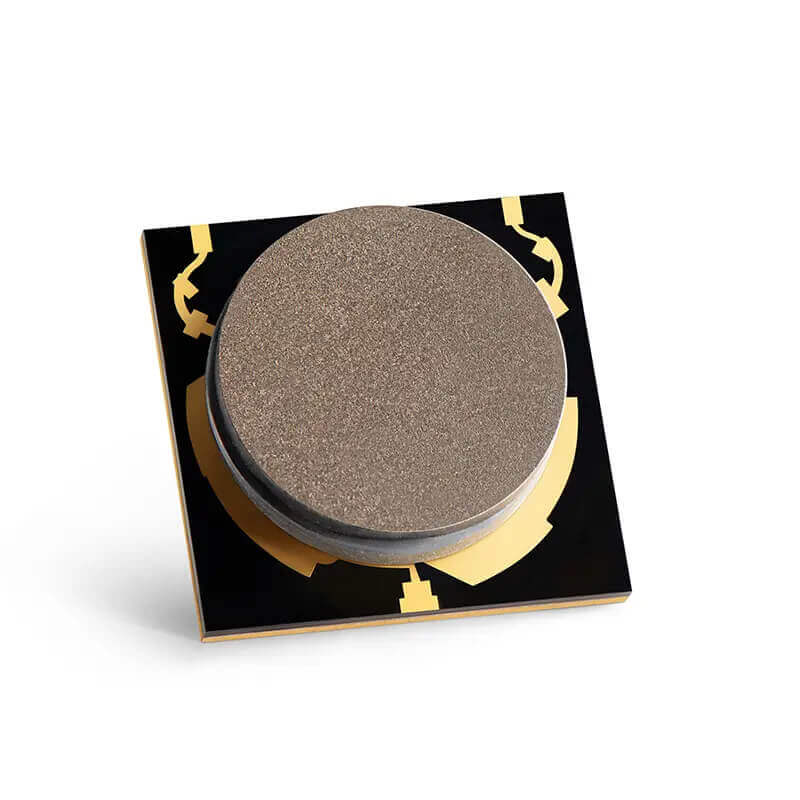
Surface-mount or microstrip-compatible isolator
Useful in compact electronics, though trade-offs in power and bandwidth may apply depending on the design. These can support miniaturization goals in space-constrained assemblies.
Waveguide isolator
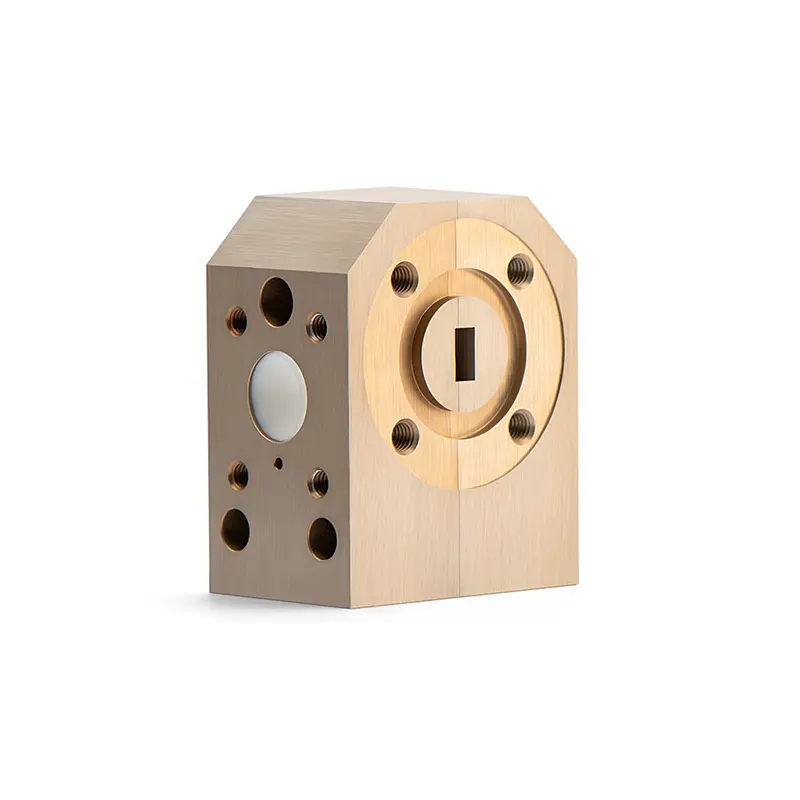
Waveguide isolators are valuable at higher powers and in bands where waveguide remains the preferred transmission medium. They can offer strong performance in radar, satcom, and other microwave or millimeter-wave applications.
Design Trade-Offs and Limitations
No RF isolator is perfect. The first cost is insertion loss. Every tenth of a dB matters somewhere. In a transmit chain, it robs output power and adds thermal burden. In a receive chain, it hurts noise figure if placed too early. The second cost is size and packaging, especially for higher power or lower frequency devices. The third is magnetic bias and ferrite dependency, which can influence temperature behavior and design complexity.
Bandwidth is another trade-off. Some isolator types are relatively narrowband; broadband performance is possible but not free. Higher isolation over a wider band often requires careful design and may involve compromises in size, matching, or insertion loss. Power handling also interacts with package, material choice, and termination design. In short, a ferrite isolator is wonderfully useful, but it still obeys physics rather than marketing.
How to Decide Whether Your RF System Needs an Isolator
- Use an RF isolator when protecting a PA or oscillator from reflected power matters.
- Use a microwave isolator when source pulling, stage interaction, or measurement repeatability is a concern.
- Choose a ferrite isolator when proven non-reciprocal passive performance is needed across demanding operating environments.
- Evaluate system location carefully: after a source, between stages, or near the output depending on whether protection, stability, or measurement integrity is the main goal.
Conclusion
RF isolators are used in RF systems because forward signal flow alone is never the whole story. Reverse energy can destabilize oscillators, stress amplifiers, distort measurements, and reduce reliability. A microwave isolator solves that by allowing energy to move in the intended direction while suppressing or absorbing the reverse wave. In many practical products, the ferrite isolator remains the workhorse solution because ferrite-based non-reciprocal behavior provides a reliable, passive, and field-proven way to protect sensitive RF hardware.
From communications transmitters to radar modules, from synthesizer outputs to test benches, the isolator earns its place by making systems less fragile and more predictable. It is not merely a protective accessory. It is a stability component, a measurement aid, a reliability tool, and a practical acknowledgment that the outside world does not care about your perfect simulation. In the poetry of microwave engineering, the RF isolator is the quiet bouncer at the door: forward traffic gets in, trouble gets turned around.
FAQ
1. What is the main purpose of an RF isolator?
The main purpose of an RF isolator is to pass RF energy in the forward direction while attenuating reverse energy, thereby protecting sensitive sources such as amplifiers and oscillators from reflections and load mismatch.
2. Is an RF isolator the same as an attenuator?
No. An attenuator is reciprocal and reduces power in both directions. A microwave isolator is non-reciprocal and is designed to preserve forward transmission while suppressing reverse transmission.
3. Why is a ferrite isolator commonly used?
A ferrite isolator uses magnetically biased ferrite materials to create non-reciprocal behavior in a passive device. This makes it effective, reliable, and widely used in practical microwave hardware.
4. Where should an RF isolator be placed in an RF chain?
It is often placed after an oscillator or power amplifier, or between gain stages, depending on whether the main design goal is source protection, stage isolation, or measurement stability.
5. Does an isolator always improve system performance?
Not automatically. It improves many RF systems when reverse isolation and mismatch protection are important, but it also adds insertion loss, cost, and space. The decision should be based on system sensitivity, power level, and stability needs.
6. What are the most important specs to check?
Check frequency range, insertion loss, isolation, VSWR, average and peak power handling, operating temperature, package type, and environmental reliability.
References
- Pasternack, “RF Isolators.”
- Pasternack Blog, “What are RF Isolators and RF Circulators?”
- Pasternack, “High Power and Performance RF Circulators and Isolators.”
- Smiths Interconnect, “High Power Isolators and Circulators for Space in L-Band.”
- Wikimedia Commons, “Ferritisolator2.jpg.”
- Wikimedia Commons, “Displacement isolator in rectangular waveguide topology.”
- Wikimedia Commons, “WR-112 Circulator with Bullets.”
Recommended Products
 Article Tags
Keith Wong
Marketing Director, Chengdu Hertz Electronic Technology Co., Ltd. (Hzbeat)
Keith has over 18 years in the RF components industry, focusing on the intersection of technology, healthcare applications, and global market trends.