L-Band Isolator Design for Space Applications: Engineering Implementation of a Wideband High-Power Coaxial Isolator
This article presents an engineering-oriented analysis of L-band isolator design for space applications, focusing on wideband high-power coaxial isolators. It discusses structure, circuit topology, thermal management, multipactor control, and validation strategies, incorporating HzBeat’s experience in ultra-wideband coverage and miniaturization.
 Updated on: Jan 16, 2026
 Author:
In space and satellite communication systems, the reliability of the RF front end often determines the fate of the entire signal chain. For high-power transmit systems operating in the L band, a coaxial isolator is not merely a protective component for power amplifiers—it must remain stable and predictable under vacuum, high power, and long-term mission conditions. This is why the L-band isolator has long been regarded as a system-critical component in aerospace engineering.
Engineering practice shows that most high-power isolators are not mysterious standalone devices. Their core architecture is typically derived from a coaxial circulator, in which non-reciprocal ferrite behavior is combined with a matched termination to absorb reflected power. However, when the design targets simultaneously include wide bandwidth, high power handling, and miniaturization, conventional design experience quickly reaches its limits.
This article follows a practical engineering perspective to systematically analyze the design of space-grade L-band isolators. Key implementation challenges of wideband high-power coaxial isolators are discussed, including structural design, circuit topology, thermal management, and multipactor mitigation. In addition, HzBeat’s engineering practices in ultra-wideband coverage and miniaturized designs are incorporated to illustrate a scalable and verifiable design route.
Design Objectives and Engineering Constraints of L-Band Isolators
Unlike terrestrial applications, the design objective of a space-grade L-band isolator is not limited to meeting a nominal set of S-parameter specifications. Instead, it must maintain predictable behavior under worst-case operating conditions.
- Operating frequency and bandwidth: Continuous coverage or multi-sub-band operation within the L band, rather than optimization at a single narrow frequency.
- Insertion loss: Low insertion loss directly affects link budget and internal thermal dissipation.
- Isolation: Stable isolation performance across the entire operating bandwidth.
- Power handling capability: Safe operation under rated forward power and worst-case reflection phase conditions.
- Environmental robustness: Vacuum compatibility, thermal cycling, vibration, shock, and long-term on-orbit reliability.
Under these combined constraints, the coaxial isolator continues to play a critical role in high-power L-band aerospace systems, compared with microstrip or stripline alternatives.
Overall Architecture and Implementation of Coaxial Isolators
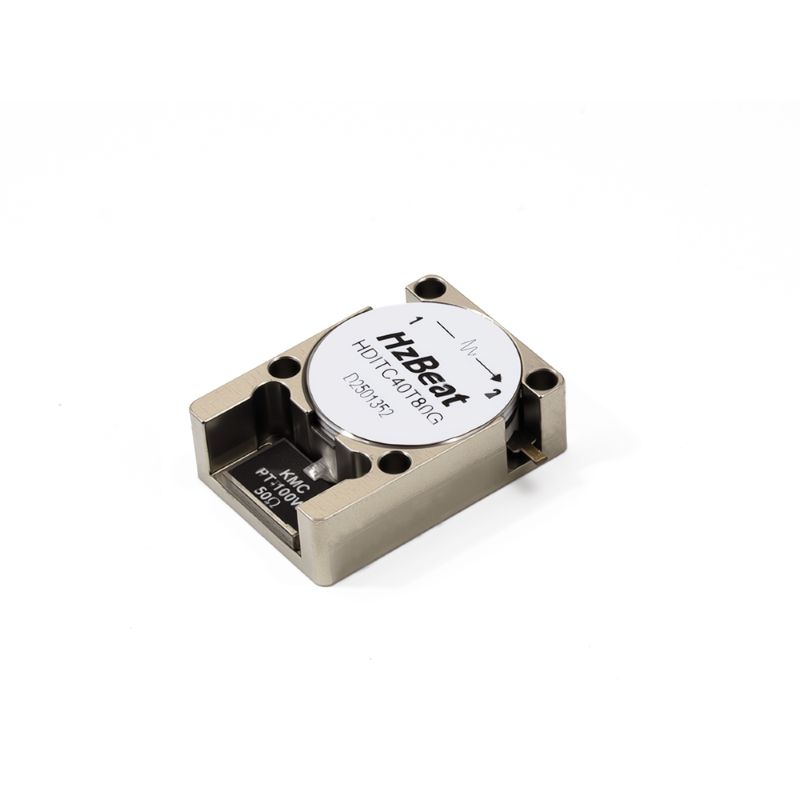
From an engineering standpoint, most high-power coaxial isolators can be understood as a combination of a coaxial circulator and a matched termination. By utilizing the non-reciprocal properties of ferrite materials under static magnetic bias, forward power is transmitted with low loss, while reflected power is redirected to the termination and dissipated as heat.

Key Structural Design Considerations
In space applications, the structural design of an isolator simultaneously serves electromagnetic performance, thermal management, and mechanical reliability.
- Housing configuration: Upper and lower metal enclosures secured by screws or welding to ensure long-term structural stability.
- Center conductor layout: Symmetrical structures are preferred to reduce parasitic modes and electric field concentration.
- Termination placement: Ensuring efficient heat conduction from absorbed reflected power to the housing and mounting interface.
Based on HzBeat’s experience across multiple frequency bands, high-density internal integration allows significant size reduction without compromising power handling capability—an increasingly important advantage for space payload optimization.
Achieving Wideband Performance: From Coaxial Circulator to Wideband Coaxial Isolator
Wideband performance is not achieved through a single design trick, but rather through a series of coordinated engineering decisions. Starting from a coaxial circulator architecture, the realization of a wideband L-band isolator typically depends on the following aspects.
Circuit Topology and Impedance Matching
In high-power coaxial structures, symmetrical junction-based circuit topologies combined with equivalent LC matching networks are commonly employed to extend bandwidth and flatten return loss characteristics. Compared with single-junction designs, symmetrical structures offer advantages in power distribution and electric field control.
Magnetic Bias Uniformity and Frequency Stability
The frequency response of ferrite devices is highly sensitive to magnetic bias uniformity. In wideband coaxial isolators, magnetic field gradients may introduce ripple or instability across the band, making magnetic circuit design as critical as RF circuit design.
Suppression of Parasitic Modes and Structural Resonances
As bandwidth increases, parasitic modes and cavity resonances are more likely to fall within the operating band. Proper geometric proportions, smooth transitions, and controlled dielectric placement are effective measures to suppress unwanted resonances.
High-Power Design Challenges: Thermal and Vacuum Effects
In space environments, high-power operation is not merely a matter of power rating—it represents a comprehensive energy management challenge.
Thermal Dissipation Strategy
In an L-band isolator, heat primarily originates from two sources: forward insertion loss and reflected power absorbed by the termination.
From an engineering perspective, isolators are often treated as devices with an implicit “third port” for heat. Clear thermal conduction paths must be established to transfer heat efficiently to the system’s thermal interface.
Multipactor and Vacuum Breakdown Mitigation
Under vacuum conditions, high RF electric fields may trigger multipactor discharge phenomena. Therefore, geometric spacing, surface treatment, and internal dielectric configuration all directly affect the power safety margin of a coaxial isolator.
By optimizing electric field distribution, avoiding sharp edges, and evaluating high-risk regions during design, the vacuum reliability of an L-band isolator can be significantly improved.
Simulation and Experimental Validation
Any isolator intended for space use must be validated through both simulation and experimental testing.
- Electromagnetic simulation: Verification of bandwidth, insertion loss, and isolation.
- Thermal simulation: Evaluation of temperature rise under worst-case power conditions.
- Environmental testing: Thermal cycling, vibration, shock, and long-term stability assessments.
In HzBeat’s engineering workflow for coaxial isolators, a closed-loop process of “simulation–prototype–resimulation” is commonly adopted to ensure strong correlation between predicted and measured performance.
Engineering Trends: Ultra-Wideband Coverage and Miniaturization
As satellite payload integration continues to increase, L-band isolators are evolving along two parallel directions: broader frequency coverage to support multi-standard platforms, and higher integration levels to reduce size and mass without sacrificing power capability.
Within this trend, HzBeat applies its ultra-wideband design philosophy and miniaturization expertise to coaxial circulator and isolator products, aligning them with the practical demands of modern space RF systems.
Conclusion
The design of space-grade L-band isolators is fundamentally a system-level engineering challenge. It requires a balanced optimization of electromagnetic performance, thermal management, structural integrity, and long-term reliability.
By adopting a coaxial circulator-based architecture and integrating wideband matching, high-power thermal design, and multipactor risk control, a robust and space-qualified coaxial isolator can be realized. This engineering-driven approach forms a solid foundation for the continued evolution of aerospace RF components.
What is the role of a coaxial isolator in L-band space RF systems?
A coaxial isolator protects high-power RF transmitters by absorbing reflected energy caused by load mismatch. In L-band space applications, it ensures stable operation of power amplifiers under worst-case reflection and vacuum conditions.
Why are coaxial isolators preferred over planar structures for high-power L-band applications?
Coaxial isolators offer higher power handling capability, better thermal conduction paths, and improved electric field control. These characteristics make them especially suitable for L-band isolators used in space and satellite platforms.
How is a coaxial circulator related to a coaxial isolator?
A coaxial isolator is commonly implemented by terminating one port of a coaxial circulator with a matched load. This configuration allows forward RF power to pass with low loss while redirecting reflected power to the termination.
What limits the power handling capability of an L-band isolator?
Power handling is limited by a combination of thermal dissipation, electric field strength, and vacuum-related effects such as multipactor. Proper structural design and thermal management are critical to achieving reliable high-power performance.
Why is wideband performance important for modern L-band isolators?
Modern space systems often support multiple standards or missions within the L band. Wideband coaxial isolators simplify system architecture and improve flexibility without requiring multiple narrowband components.
References
- A. G. Fox, S. E. Miller, “Ferrite Devices and Their Applications in Microwave Systems,” Bell System Technical Journal.
- ECSS-E-HB-20-01A, Space Engineering – Multipactor and RF Breakdown.
- NASA GSFC EEE-INST-002, Instructions for EEE Parts Selection, Screening, Qualification, and Derating.
- ASTM E595, Standard Test Method for Total Mass Loss and Collected Volatile Condensable Materials.
Recommended Products
.png)
.jpg)
 Article Tags
Sara
Sara is a Brand Specialist at Hzbeat, focusing on RF & microwave industry communications. She transforms complex technologies into accessible insights, helping global readers understand the value of circulators, isolators, and other key components.