RF Isolators Protecting the World’s Communication Systems: A Deep Dive into Non-Reciprocal Components
Updated on:
Keywords: RF Isolators, Microwave Isolators, Communication Systems Protection, Non-Reciprocal Components, Ferrite Devices, Isolation, Insertion Loss, High-Power RF, 5G Infrastructure, Satellite Communications
Introduction
In the vast architecture of global telecommunications, from terrestrial 5G networks to deep-space satellite links, the integrity of the radio frequency (RF) chain is paramount. Any reflected signal or impedance mismatch can severely degrade performance or, worse, cause catastrophic failure of expensive active components, such as high-power amplifiers (HPAs) and low-noise amplifiers (LNAs). This is where RF Isolators—unsung heroes of modern connectivity—step in. These non-reciprocal components are vital for ensuring one-way signal propagation, thus offering essential Communication Systems Protection.
This comprehensive, engineering-focused article explores the magnetic physics behind Microwave Isolators, detailing how advanced Ferrite Devices are engineered to deliver high Isolation with minimal Insertion Loss. We will examine their crucial role in managing impedance in High-Power RF applications and their indispensable contribution to the reliability of 5G and satellite infrastructure. These robust components are the foundation of modern Telecommunication Reliability, working silently to manage VSWR issues and maintain signal fidelity.
The Foundation
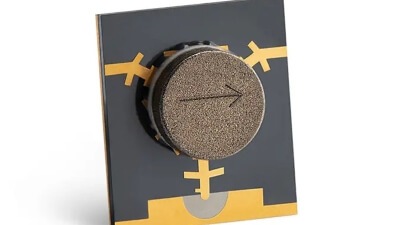
An RF Isolator is fundamentally a two-port non-reciprocal component that permits energy flow in one direction (forward) while heavily attenuating any energy traveling in the reverse direction. This essential one-way street is made possible by the unique properties of magnetically biased ferrite devices, typically Yttrium Iron Garnet (YIG) or doped spinel ferrites.
The operational principle is based on the Faraday Rotation effect, modified for transmission lines, which dictates that the plane of polarization of an electromagnetic wave is rotated when passing through a magnetized ferrite material. In an isolator design (often derived from a three-port circulator with one port terminated), the magnetic field is precisely tuned so that the reverse-traveling reflected signal arrives at a resistive load (a termination) where it is absorbed, providing high Isolation to the source. The magnetic bias point is critical; even slight variations can lead to significant degradation in Insertion Loss or reflected power absorption efficiency.
Tips:
The core material (ferrite) must exhibit high permeability and low loss tangent at the operating frequency. For millimeter-wave applications, the magnetic tuning and material selection for Microwave Isolators become exponentially more critical to ensure performance, demanding precision in both material science and component assembly. This precision is key to maintaining Telecommunication Reliability.
The selection of the ferrite material and the configuration of the external magnet assembly are the two most decisive factors in achieving optimal performance. Modern RF Isolators now incorporate smaller, lighter rare-earth magnets to reduce overall weight, which is especially important for airborne or space-based systems.
Critical Performance Metrics for RF Isolators
The effectiveness of an RF Isolator in providing Communication Systems Protection is quantified by three principal technical parameters. Engineers must carefully balance these specs against cost and size constraints. Achieving high performance involves minimizing the forward-path loss while maximizing the reverse-path attenuation, a classic engineering trade-off:
- Isolation (dB): Measures the attenuation of the reverse signal (Port 2 to Port 1). High Isolation (typically $>20 \text{ dB}$) is essential for protecting the preceding active stage (e.g., an HPA) from damaging reflected power caused by a high VSWR load.
- Insertion Loss (dB): Measures the power lost as the signal passes in the intended forward direction (Port 1 to Port 2). Low Insertion Loss (ideally $<0.5 \text{ dB}$) is crucial for maintaining the system’s overall power efficiency and noise figure, particularly in sensitive receive chains.
- VSWR (Voltage Standing Wave Ratio): The input and output impedance match. A low VSWR (typically $<1.3:1$) ensures that the isolator itself presents a good match to the system, minimizing its own contribution to reflections. This is critical for maintaining amplifier stability.
In High-Power RF environments, the power handling capability is an equally critical metric. The resistive termination within the isolator must be capable of dissipating the maximum expected reflected power without overheating or suffering catastrophic thermal degradation. Modern RF Isolators designed for base stations or radar must manage tens to hundreds of watts of continuous wave (CW) or pulsed power, making thermal design as important as the magnetic design.
Engineers often employ a technique called "over-designing" the magnetic circuit to ensure performance stability over temperature and power variation. This approach adds weight and cost but guarantees the long-term Telecommunication Reliability required for critical infrastructure.
Indispensable Role in 5G Infrastructure and Satellite Systems
The proliferation of high-data-rate wireless standards, especially 5G and advanced Satellite Communications (SatCom), has made the RF Isolator a cornerstone of reliable network operation. Their ability to manage reflected energy is directly linked to the operational uptime of complex systems. Isolators are crucial for systems employing Duplexing methods where high transmission power can easily interfere with the receive path.
| Application Sector | Specific Challenge | RF Isolators' Contribution |
|---|---|---|
| 5G Infrastructure | High peak-to-average power ratio (PAPR) and wideband operation stressing HPAs. | Provides stable impedance for the HPA, absorbing reflections caused by antenna mismatch or cable faults, ensuring HPA survival and spectral purity. Essential for minimizing out-of-band emissions. |
| Satellite Communications | Extremely high-reliability requirements in inaccessible locations (LEO/GEO satellites). | Used in both uplink (High-Power RF Tx protection) and downlink (maintaining LNA stability) to ensure continuous operation against unpredictable load fluctuations due to atmospheric effects. |
| Radar Systems | Handling massive power pulses and protecting sensitive receiver components from Tx leakage. | Acts as a buffer, ensuring the magnetron or TWT amplifier sees a constant impedance and protecting the receiver from high-energy reflections, thereby enhancing target acquisition reliability. |
| Test and Measurement | Protecting expensive signal generators from accidental reflection damage. | Acts as a sacrificial component, absorbing reflected energy and ensuring that the measurement source is shielded from varying load conditions. |
The integration of RF Isolators immediately addresses system variability. By absorbing reflected power, they stabilize the load impedance seen by the preceding amplifier stage. This stabilization is paramount for maintaining the linearity and efficiency of the amplifier, a crucial requirement for complex modulation schemes like QAM used extensively in modern Communication Systems Protection strategies.
Engineering Challenges for Modern Microwave Isolators
As communication systems push into higher frequencies (mmWave) and demand smaller form factors, the engineering of high-performance Microwave Isolators faces two primary conflicting challenges: miniaturization and increased power handling.
Firstly, the Isolation bandwidth is fundamentally dependent on the size and shape of the ferrite devices and the strength of the external magnetic bias. Shrinking the physical size of the isolator often compromises the effective interaction length for the magnetic field, making it harder to maintain high isolation across wide frequency bands. Compensating for this requires complex magnetic circuit design and the use of sophisticated, temperature-stable ferrite materials, specifically engineered for high-frequency operation.
Secondly, managing heat dissipation in a small package is critical for High-Power RF applications. When an impedance mismatch causes reflected power, the isolator's internal termination converts this energy into heat. In a standard coaxial or drop-in isolator, thermal paths are relatively straightforward. However, in Surface Mount Technology (SMT) variants, specialized thermal management techniques—such as mounting the ferrite assembly directly to a large thermal pad or using heat sinks—are essential to prevent the temperature rise from degrading the ferrite's magnetic properties (Curie temperature effect), which would, in turn, reduce Isolation.
Future research is focused on developing non-reciprocal components that are integrated directly onto the semiconductor substrate (on-chip isolators) using magneto-electric materials, aiming for zero footprint, but current technology still heavily relies on macro-scale ferrite devices for high power and high performance.
Conclusion
The RF Isolator remains an essential and highly sophisticated component in modern wireless engineering. By leveraging the non-reciprocal physics of ferrite devices, they offer essential Communication Systems Protection, shielding expensive and sensitive active components from damaging reflected power. As 5G, Satellite Communications, and emerging mmWave applications continue to increase power density and bandwidth, the focus on developing Microwave Isolators with improved High-Power RF handling, wider operating bandwidth, and consistent Isolation will only intensify. Ultimately, the stability and Telecommunication Reliability of the world's connected infrastructure depend heavily on the robust performance of these critical non-reciprocal components.
FAQ
How is an RF Isolator different from an RF Circulator?
An RF Isolator is effectively a two-port device derived from a three-port circulator, where the third port is internally terminated with a 50-ohm load. While a circulator routes signals sequentially (Port 1 to 2, 2 to 3, 3 to 1), an isolator strictly enforces one-way transmission (Port 1 to 2), absorbing all reflections to provide maximum Isolation to the input source.
Why is the VSWR specification important for an RF Isolator?
While an RF Isolator protects the preceding stage from reflections, its own VSWR specification must be low (near 1:1) to ensure the device does not introduce significant reflections into the system itself. A low VSWR guarantees that the isolator operates as a near-perfect match in the forward direction, which is vital for Telecommunication Reliability.
What is the primary factor limiting the power handling of a High-Power RF Isolator?
The primary factor limiting the power handling of a High-Power RF Isolator is the thermal capacity of the internal termination (load) and the thermal stability of the ferrite devices. If the reflected power generates excessive heat, the magnetic properties of the ferrite degrade, causing the Isolation to drop rapidly and potentially leading to component failure.
References
- Pozar, David M. (2012). Microwave Engineering, 4th Edition. Wiley. (Fundamental theory on Ferrite Devices and Non-Reciprocal components).
- In-depth analysis of high-power RF passive component design for 5G Infrastructure. IEEE Microwave Theory and Techniques.
- Carter, Paul E. (1998). The Evolution of Microwave Isolators and Circulators. Artech House.
- Technical application notes on thermal management in High-Power RF Isolators from leading manufacturers.
Relateds


About the Author

HzBeat Editorial Content Team
Marketing Director, Chengdu Hertz Electronic Technology Co., Ltd. (Hzbeat)
Keith has over 18 years in the RF components industry, focusing on the intersection of technology, healthcare applications, and global market trends.