Can Circulator Selection Errors Be Corrected by Tuning?
Can an incorrectly selected RF circulator be fixed through tuning? Learn which problems can be optimized and when replacing the circulator is necessary.
 Updated on: Aug 26, 2026
 Author:
Minor performance deviations can sometimes be improved through tuning, but major circulator selection errors usually cannot be corrected.
Whether tuning is effective depends on the type of selection error, how far the actual requirements are from the circulator’s specifications, and whether the problem originates inside the circulator or elsewhere in the RF system.
If the selected circulator is already close to the required frequency, bandwidth, power, and isolation specifications, engineers may be able to improve its installed performance by optimizing the external matching network, cables, connectors, PCB transitions, grounding, or termination.
However, if the circulator has the wrong operating frequency, insufficient power-handling capability, an incompatible mechanical configuration, or an unsuitable environmental rating, replacing it is generally the safer and more reliable solution.
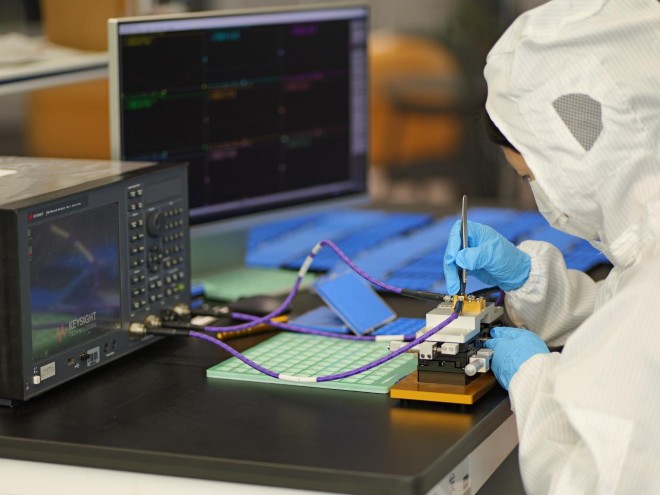
What Problems May Be Improved Through Tuning?
Tuning may be worth considering when the circulator is basically suitable for the application but shows a small performance deviation after installation.
Potentially correctable problems include:
- A small shift in the optimum operating frequency
- Slightly excessive insertion loss near the band edge
- Reduced isolation caused by port mismatch
- Poor return loss introduced by connectors or PCB transitions
- Performance degradation caused by cables or adapters
- Inadequate grounding or enclosure contact
- An unsuitable load or termination connected to one port
- Minor differences between the laboratory fixture and the final assembly
Possible corrective actions include:
- Optimizing the external impedance-matching network
- Adjusting PCB transmission-line dimensions
- Improving connector and microstrip transitions
- Replacing unsuitable cables or adapters
- Improving grounding and shielding
- Installing a correctly rated 50-ohm termination
- Improving the antenna or load match
- Requesting factory retuning from the circulator manufacturer
The available tuning range depends on the circulator’s design. External matching may improve performance at a particular frequency, but it can also reduce bandwidth or degrade performance elsewhere.
Which Selection Errors Usually Cannot Be Fixed?
Tuning cannot compensate for fundamental differences between the circulator specifications and the application requirements.
1. Incorrect frequency range
A circulator designed for a substantially different frequency band normally cannot be shifted to the required band through external tuning. Its ferrite material, magnetic bias, resonant structure, and physical dimensions are designed for a specific operating range.
A small frequency offset may be adjustable in some designs, but a large frequency difference usually requires another model.
2. Insufficient power-handling capacity
Tuning cannot increase the circulator’s rated forward or reflected power.
Using an underrated circulator can cause:
- Excessive temperature rise
- Ferrite saturation
- Increased insertion loss
- Internal arcing
- Permanent performance degradation
- Complete device failure
Both continuous and peak power must be considered. In transmitter systems, the reflected-power rating is especially important because antenna mismatch can return significant energy to the circulator.
3. Insufficient bandwidth
A narrowband circulator cannot normally be converted into a broadband device by adding an external matching circuit.
Tuning may improve performance around one center frequency, but insertion loss, isolation, or return loss may deteriorate at the edges of the required band.
4. Incorrect impedance
Most RF circulators are designed for 50-ohm systems. If the device impedance does not match the system, an external transformer or matching network may improve performance over a limited range, but it will not necessarily provide stable broadband operation.
Selecting a circulator with the correct characteristic impedance is preferable.
5. Incorrect circulation direction
The required signal path must match the circulator’s direction, such as:
Port 1 → Port 2 → Port 3 → Port 1
If the application requires the opposite circulation direction, electrical tuning cannot reverse the device. A circulator with the correct direction or port configuration must be selected.
6. Incompatible mechanical configuration
Tuning cannot correct mechanical selection errors such as:
- Incorrect connector type
- Wrong port orientation
- Unsuitable package dimensions
- Incompatible mounting holes
- Wrong drop-in interface
- Insufficient cooling or heat dissipation
Mechanical compatibility should be confirmed before ordering the device.
7. Unsuitable environmental rating
A circulator that does not meet the required temperature, humidity, vibration, altitude, or sealing requirements should be replaced.
Good room-temperature test results do not guarantee stable operation under the application’s actual environmental conditions.
How Can You Determine Whether Tuning Is Possible?
Before attempting any adjustment, compare the application requirements with the complete circulator specifications.
Verify the following parameters:
- Operating frequency range
- Required bandwidth
- Maximum insertion loss
- Minimum isolation
- Port return loss or VSWR
- Continuous forward power
- Peak forward power
- Maximum reflected power
- System impedance
- Circulation direction
- Connector or drop-in configuration
- Operating temperature range
- Cooling and mounting conditions
The system should then be tested with a calibrated vector network analyzer. Measurements should include:
- Forward insertion loss
- Reverse isolation
- Return loss at all three ports
- Performance across the complete operating band
If the circulator meets its specifications in a proper test fixture but performs poorly after installation, the problem is more likely related to the cables, connectors, PCB layout, load, grounding, or termination.
If the circulator cannot meet the required performance even in a controlled test setup, replacement is usually more appropriate than continued tuning.
Can the Circulator Be Internally Retuned?
Some circulators can be retuned internally, but this work should normally be performed by the manufacturer.
Internal tuning may involve changing magnetic bias conditions, resonant elements, matching components, or other design-specific parameters. Unauthorized adjustment may damage the ferrite structure, reduce reliability, affect production consistency, or invalidate the warranty.
For this reason, users should avoid opening or modifying a circulator unless the manufacturer has provided an approved tuning procedure.
When Should the Circulator Be Replaced?
Replacement is recommended when:
- The required frequency is outside the adjustable range
- The application bandwidth is too wide
- Forward or reflected power exceeds the device rating
- Isolation remains inadequate after system optimization
- Insertion loss causes unacceptable heating
- The circulation direction is incorrect
- The connector or mounting configuration is incompatible
- Environmental requirements cannot be met
- The proposed tuning solution is unstable or difficult to reproduce
- Every production unit would require individual adjustment
For production systems, a correctly selected circulator is generally more reliable and economical than repeatedly tuning an unsuitable model.
Conclusion
Circulator selection errors can sometimes be partially corrected when the problem is limited to a small frequency deviation, impedance mismatch, connector transition, grounding issue, or improper termination.
However, tuning cannot reliably solve fundamental errors involving frequency range, bandwidth, power capacity, circulation direction, mechanical structure, or environmental performance.
The best approach is to identify the source of the problem through S-parameter measurements and realistic operating tests. If the circulator is only slightly mismatched, tuning may be practical. If its core specifications do not meet the application requirements, replacing it is the safer long-term solution.
For help selecting the appropriate RF circulator for your application, visit the HzBeat official website.
 Article Tags
Keith Wong
Marketing Director, Chengdu Hertz Electronic Technology Co., Ltd. (Hzbeat)
Keith has over 18 years in the RF components industry, focusing on the intersection of technology, healthcare applications, and global market trends.