Circulator in RF System: Why Should Engineers Care?
Learn why RF circulators matter in modern RF systems—from reducing VSWR-induced stress and improving link budget to enabling T/R switching, ESD resilience, and stable field performance. A practical, engineer-focused guide with design trade-offs, test tips, and future trends.
 Updated on: Dec 09, 2025
 Author:
1. Why circulators matter in real RF systems
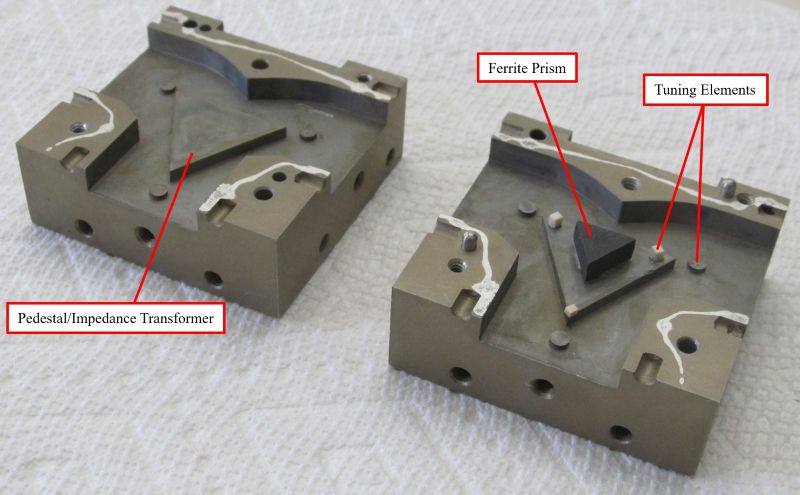
Circulators are system silencers. They keep reflected energy from a poorly matched antenna or filter from slamming back into your PA. Less back-reflection means fewer compression events, less AM/PM distortion, and a calmer receiver front-end. In radar or full-duplex links, that stability translates to cleaner range profiles and higher dynamic range.
- Protect the PA: High isolation to the RX port prevents receiver saturation; low return loss to the PA reduces risk of foldback and thermal spikes.
- Enable T/R sharing: A single antenna can serve TX and RX paths without bulky mechanical switches or high-loss solid-state alternatives.
- Field resilience: Antennas detune in rain/ice/hand-effect. A circulator absorbs mismatch drama so the radio stays stable.
- Link budget: Every 0.2–0.3 dB IL you save is real coverage. On crowded roofs and ships, that’s the difference between “it works” and “it jitters.”
2. Performance knobs engineers actually control
The five parameters that matter—and how they cascade into system KPIs:
- Insertion Loss (IL): Drives PA back-off and RX noise figure. Target the lowest practical IL; verify across the true operating temp and VSWR spreads.
- Isolation: Separates TX/RX. More isolation suppresses desense and intermod. Beware of narrow peaks—demand flat isolation across the band.
- Return Loss / VSWR: Impacts PA stability and harmonic growth. Good circulators show well-matched ports—less post-tuning pain.
- Power Handling: Average, peak, and load-pull survival. Ask for data under mismatch (e.g., 2:1, 3:1, or open/short) at temperature.
- Temperature Drift: Ferrite bias and magnet stack shift with temp/aging. Require drift plots, not just room-temp spec points.
3. Selecting the right circulator for your application
Choosing the right circulator starts with architecture and constraints:
- Package: Microstrip/SMT for compact radios and modules; drop-in for robust thermal/mechanical coupling; coaxial for bench/field rework; waveguide for low-loss at mmWave/high power.
- Frequency & Bandwidth: Define your true occupied bandwidth and blockers. Broadband designs cut SKU count but may cost a bit more IL.
- Power & Mismatch: Specify average/peak power and the worst-case VSWR you will tolerate in the field.
- Size & Integration: SMT footprints win in phased arrays and small cells; waveguide/wr-xx shines in high-power radar/links.
- Qualification: Vibration, shock, humidity, and thermal cycling matching your mission profile (telecom vs. aerospace/defense).

4. Integration & layout tips that move the needle
Layout & mechanical tips that really help:
- Controlled impedance: Keep transitions short; apply anti-pads and via fences to box fields.
- Grounding: Many failures stem from poor ground contact—treat the body as RF ground; maximize solder/wave contacts.
- Thermal path: Use copper coins/frames; simulate rise vs. duty cycle. Ferrites hate hotspots.
- Cable/connector strain: In coax/waveguide units, cap torque and support heavy runs to avoid micro-fractures.
- EMC: Provide magnetic spacing from sensitive components; beware magnetic steel standoffs.
5. Validation & production test: what to measure
Validation & production test must reflect reality, not only the datasheet fixture:
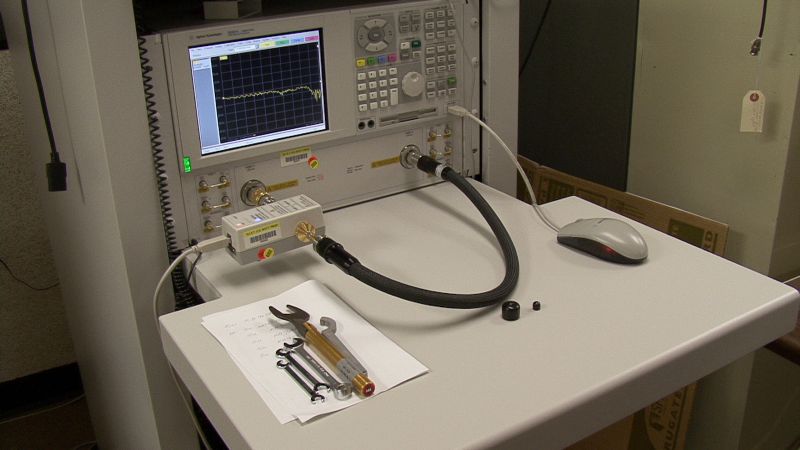
- S-parameters: Measure IL, isolation, and return loss across temperature. Include fixture de-embedding and connector repeatability.
- Mismatched power: Sweep power under 2:1/3:1/∞ VSWR at hot/cold corners; monitor compression, drift, and failure modes.
- Linearity: For wideband radios, verify IMD with realistic tones and crest factors.
- System tests: Conduct EVM/ACLR and blocking with/without the circulator to quantify system-level benefit.
6. Reliability, power handling, and thermal design
Reliability & power handling are materials + mechanics:
- Ferrite & magnet stack: Material choice governs Curie margin and drift. Ask for long-term aging/thermal soak data.
- Bond lines & adhesives: Verify reflow profiles for SMT; check for voiding and CTE mismatch.
- Environment: Salt fog, humidity bias, and vibration can detune biasing—qualify to your field reality.
- Qualification reports: Push suppliers for HALT/HASS evidence and Weibull insights, not anecdotes.
7. What’s next: broadband & miniaturized trends
Where the tech is going:
- Broadband miniaturization: SMT circulators now cover multi-octave spans for agile radios.
- Lower IL designs: New ferrites and magnet geometries squeeze another 0.1–0.3 dB at mid-bands.
- Thermal-aware packaging: Drop-ins with integrated heat-spreaders simplify PA co-design.
- mmWave & waveguide: WR-xx circulators extend to Ka-/Q-/V-band for satcom backhauls and compact radars.
- Custom OEM/ODM: Application-tuned bias and matching outperform generic catalog parts in hard environments.
8. Summary
Summary: In real deployments, an RF circulator is cheap insurance for link stability. Choosing a part with low insertion loss, flat isolation, solid return loss, and credible thermal data improves PA longevity, RX headroom, and site uptime. Integrate it like a high-power RF component—mechanically grounded, thermally pampered, and electrically well matched—and verify under the same abuse your field will deliver.
FAQ
Q1: Circulator vs. isolator—when should I use which?
Use an isolator (circulator with a matched load on port 3) when you only need one-way protection (e.g., PA → antenna). Use a circulator for three-port routing (TX-ANT-RX) or for cascading isolation stages.
Q2: How much isolation is “enough”?
For many sub-6 GHz radios, 18–23 dB is a minimum; 25–30 dB reduces desense risk. In radar, aim even higher or cascade parts.
Q3: Does 0.2 dB IL really matter?
Yes—accumulated IL steals link budget and heats the PA. Over large networks, 0.2–0.3 dB can be the difference between one and two repeaters.
Q4: What about full-duplex and 5G?
Circulators help linearize the front-end and protect sensitive LNAs during TDD switching and coexistence scenarios.
References
- Pozar, D. M., Microwave Engineering, 4th ed.
- Rudolf F. Harrington, Time-Harmonic Electromagnetic Fields.
- Vendor application notes on ferrite circulators/isolators and power mismatch testing.
© HzBeat — RF circulator & isolator insights for engineers.
 Article Tags
Sara
Sara is a Brand Specialist at Hzbeat, focusing on RF & microwave industry communications. She transforms complex technologies into accessible insights, helping global readers understand the value of circulators, isolators, and other key components.