When Do You Need an RF Circulator?
Not sure if your RF design needs a circulator? Learn 7 clear signs—reflected power, PA instability, shared antenna paths, high-power testing, and more—plus quick selection tips.
 Updated on: Jan 06, 2026
 Author:

RF systems are built on a hopeful assumption: the load will behave. In the real world, antennas detune, cables heat up, connectors age, and test loads do the occasional “surprise.” When that happens, reflected energy can turn into instability, distortion, or hardware stress. This is the moment engineers reach for one quiet hero: the RF circulator.
What a Circulator Solves (Without the Sales Talk)
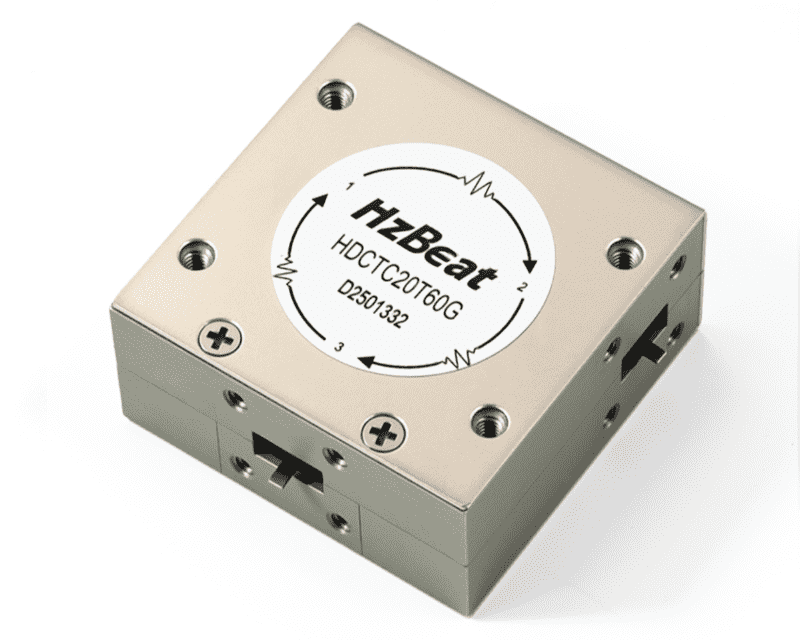
A circulator is a passive, non-reciprocal device that routes RF energy from one port to the next in a fixed direction. In typical transmitter chains, it sends forward power toward the antenna while steering reflected power away from sensitive stages (often into a matched termination). It doesn’t “improve” a signal like a filter; it controls where energy is allowed to go.
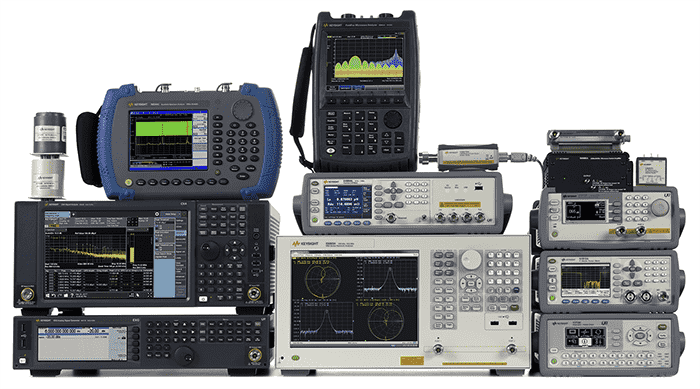
7 Real-World Triggers: When a Circulator Becomes Necessary
1) Your antenna match changes in the field
Antennas rarely stay perfectly matched across all conditions. Nearby metal, enclosure effects, moisture, temperature, and installation variance can shift VSWR. If the match can drift, a circulator becomes practical risk-control.
2) You’re running medium-to-high power
Reflected power scales with transmit power. What looks like a small mismatch at low power can become heat, stress, and failure risk in higher-power chains. If the PA is valuable (or repair cycles are painful), isolation pays for itself quickly.
3) You’re sharing a path (T/R or TDD systems)
Shared antenna architectures demand isolation. A circulator can protect the receive path from transmit leakage, simplify front-end routing, and reduce the complexity of protective switching or filtering in certain designs.
4) You see instability, oscillation, or “mystery spurs”
Reverse signals can push amplifiers into uncomfortable regions, especially when impedance swings or cables move. If behavior changes with load, a circulator at the PA output (or between stages) can be a fast stability lever.
5) Your DUT impedance is unknown during testing
Validation and production screening often involve devices with imperfect, changing impedance. A circulator improves repeatability and helps prevent reflected power from stressing drivers or test gear.
6) You have tight linearity / EVM requirements
Reflections can distort operating points and modulate gain, worsening ACPR, spectral regrowth, or EVM. If you’re chasing clean modulation under varying loads, isolation can stabilize the “RF environment” seen by the PA.
7) You want the simplest route to reliability
Yes, you can fight reflections with heroic matching, sensing, and firmware control. But if your load is unpredictable, a circulator is often the cleanest hardware shortcut to robust operation.

Quick Decision Guide
Usually a “Yes”
- PA output to antenna with variable VSWR
- High-power transmit chains (radar, satcom uplink, industrial RF)
- Shared antenna front ends (T/R, TDD)
- Power testing and burn-in with uncertain DUT impedance
- Field deployments with temperature swings and installation variance
Sometimes a “No”
- Very low-power modules with tightly controlled loads
- Fixed lab-only setups with verified matching
- When size/cost constraints dominate and risk is acceptable
- Isolation already achieved by another architecture
Selection Tips That Engineers Actually Use
If you’ve decided you need a circulator, keep selection simple—but realistic:
- Frequency band: choose a model centered where you operate, with margin for drift and bandwidth.
- Insertion loss: lower loss preserves link budget and reduces heat.
- Isolation: higher isolation improves PA protection and stability.
- Power handling: plan for worst-case reverse power, not just forward power.
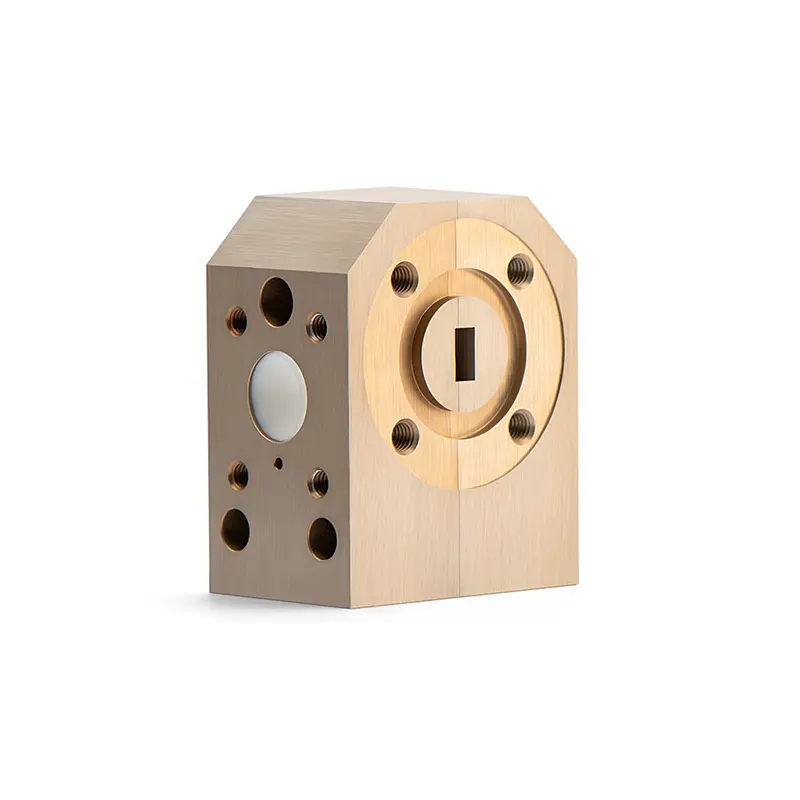
- Package & integration: microstrip / drop-in / coaxial / waveguide depending on power and mechanical constraints.
FAQ
Is a circulator the same as an isolator?
They’re related. A circulator routes energy among multiple ports; an isolator is often a circulator with one port terminated, behaving like a two-port “one-way” protection device.
Where should I place a circulator?
Most commonly between the PA and the antenna. In some designs, adding isolation between amplifier stages can also improve stability when impedance variation is the root cause.
What happens if I don’t add one when I should?
Best case: more ripple and less repeatable performance. Worst case: amplifier stress, thermal issues, spectral problems, or hardware damage during mismatch events.
Recommended Products
.jpg)
 Article Tags
Sara
Sara is a Brand Specialist at Hzbeat, focusing on RF & microwave industry communications. She transforms complex technologies into accessible insights, helping global readers understand the value of circulators, isolators, and other key components.