What Applications Require an RF Circulator
A practical, application-driven guide to where RF circulators are truly required—radar T/R sharing, high-power PA protection, satellite and test setups, duplex architectures, and more. Includes selection triggers, pitfalls, and FAQs.
 Updated on: Jan 06, 2026
 Author:
Not every RF chain needs a circulator. But in the right places, it’s the quiet component that prevents loud failures: burnt LNAs, unstable power amplifiers, distorted measurements, and duplex systems that behave like they have a mind of their own.
1) The “Need It” Criteria: When a Circulator Is Not Optional
A circulator is a non-reciprocal, direction-steering component—typically a 3-port device—that routes RF energy in a defined rotation. In application terms, it becomes “required” when your system must do one or more of the following:
If you see any of these conditions, a circulator is worth serious consideration:
- Shared antenna paths: you must transmit and receive through the same antenna or aperture.
- High reflected power risk: antenna VSWR can swing (weather, ice, hand effects, tuning drift, mechanical misalignment).
- Fragile front-end components: LNAs, mixers, or ADCs can be damaged by reverse power or strong leakage.
- Measurement integrity matters: you need repeatable results under mismatch without instrument self-interference.
- Power chain stability: you want a PA to behave consistently, not “moody” with every load change.
Notice what’s missing: “because it’s nice to have.” In most production designs, a circulator earns its place by preventing costly failures or by enabling an architecture that would otherwise require more complex switching, filtering, or isolation networks.
2) Radar & Shared-Antenna T/R Architectures
Radar is one of the most classic “circulator-required” domains because it frequently combines a high-power transmitter and a sensitive receiver on a shared antenna. In pulsed radar, you might transmit kilowatts (or more, depending on the system) and then immediately listen for a whisper-level echo. A circulator helps enforce that separation.
Where the circulator earns its keep
- Leakage control: reduces the amount of TX energy that reaches the RX chain during transmission windows.
- Receiver survival: directs reflected power away from sensitive stages, especially when the antenna is mismatched or detuned.
- Simplified routing: avoids complex switching arrangements in many practical T/R implementations.
In phased-array systems, the story continues at the module level: T/R modules often need predictable non-reciprocal routing and isolation behavior under varying impedance conditions and temperature. That’s exactly where a well-specified circulator becomes a system-level stabilizer.
3) Power Amplifier Protection in Real-World Antenna Conditions
On paper, antennas are 50 Ω. In the field, antennas are… optimistic. They detune with rain, ice, proximity to enclosures, installation angles, cable flexing, and aging. When the load moves, a PA can see higher reflected power, altered bias behavior, and in worst cases, damage.
How a circulator helps PAs
- Absorbs reflections: routes reflected energy to a matched load, reducing reverse power at the PA output.
- Improves repeatability: makes output power, linearity, and spectral regrowth more consistent across load variations.
- Reduces stress: lowers the probability of thermal and electrical overstress due to high VSWR events.
This is especially valuable in deployments where maintenance is expensive (remote towers, maritime, airborne) or where downtime has outsized costs. The circulator is basically a bodyguard: it doesn’t make the hero stronger, but it prevents ambush damage.
4) Satellite Ground Terminals & Space-Adjacent RF Front Ends
Satellite communications often blend high EIRP uplinks with sensitive downlink reception, sometimes within compact terminal constraints. Even when uplink and downlink are separated by frequency plans, practical RF front ends still face leakage, reflection, and isolation challenges.
Circulator roles commonly seen in satcom-related systems
- Front-end isolation: improves robustness when transmit and receive chains share physical apertures or close-coupled antenna structures.
- Mismatch tolerance: helps tolerate environmental and mechanical factors that shift the antenna match.
- System reliability: reduces the likelihood of intermittent issues that are painful to debug in the field.
If your terminal must operate across temperature extremes or dynamic pointing conditions (especially in mobile or maritime satcom), a circulator can reduce “mystery failures” caused by load variation and reflected power spikes.
5) Test & Measurement: Cleaner Data, Safer Instruments
In RF test environments, a circulator is often used for a different reason than in fielded systems: measurement integrity. When you test power amplifiers, antennas, or non-linear devices, the DUT’s impedance can vary across frequency and power level. A circulator helps keep the test system stable and protects expensive equipment.
High-value test use cases
- PA characterization: reduces sensitivity of results to load pull artifacts and reflection-induced distortions.
- Antenna evaluation: makes it easier to observe and separate forward and reflected behavior in practical measurement chains.
- Instrument protection: helps prevent reverse-power events from reaching sources, analyzers, or sensitive front ends.
6) Duplex, Full-Duplex Experiments, and Multi-Path RF Routing
RF circulators can enable or simplify certain duplexing and signal-routing arrangements—especially in prototyping and experimental systems where you want directional behavior without building a complex switching or filter network.
Where circulators show up
- Shared-path prototypes: quickly validate architectures that reuse antennas or apertures for multiple roles.
- Directional routing: separate forward and reverse signal paths when reflections or backscatter are part of what you’re measuring.
- Interference management experiments: support lab work where isolation and routing must be configurable and repeatable.
Important note: a circulator is not a magical full-duplex solution by itself. Full-duplex systems typically require additional cancellation methods (analog, digital, or both). But a circulator can be a practical building block that reduces the baseline leakage and makes the rest of the system’s job easier.
7) Industrial, Medical, and “Hostile Load” Environments
Some RF applications operate into loads that are naturally unstable: plasma processes, RF heating, certain medical modalities, or systems where the load’s impedance changes rapidly with time. In these cases, reflections aren’t an exception—they’re part of daily life.
Why a circulator matters in unstable-load systems
- Protects the generator/PA: reflected energy is steered away from sensitive output stages.
- Stabilizes operation: reduces feedback-like behavior that can cause oscillations or power swings.
- Improves uptime: fewer component failures and fewer unexplained shutdown events.
8) Application-to-Spec Mapping: What to Check First
“Which circulator should I choose?” is a long question wearing short clothes. The fast way is to map your application to the specs that actually move the needle.
Start with these five
- Frequency band & bandwidth: the circulator must cover your operational range with margin.
- Power handling: consider forward power, reflected power, and duty cycle (especially in pulsed systems).
- Isolation: impacts leakage into sensitive paths; it’s often critical in radar and shared-path systems.
- Insertion loss: directly reduces link budget and increases system noise figure (especially near LNA inputs).
- VSWR/return loss: affects matching and stability—don’t ignore it if your system is already match-sensitive.
Then check what your environment will punish
- Temperature range: especially for outdoor or airborne systems.
- Size/weight constraints: many modern platforms demand miniaturization without sacrificing RF performance.
- Connector/packaging: microstrip, drop-in, coaxial, or waveguide should match your mechanical and assembly reality.
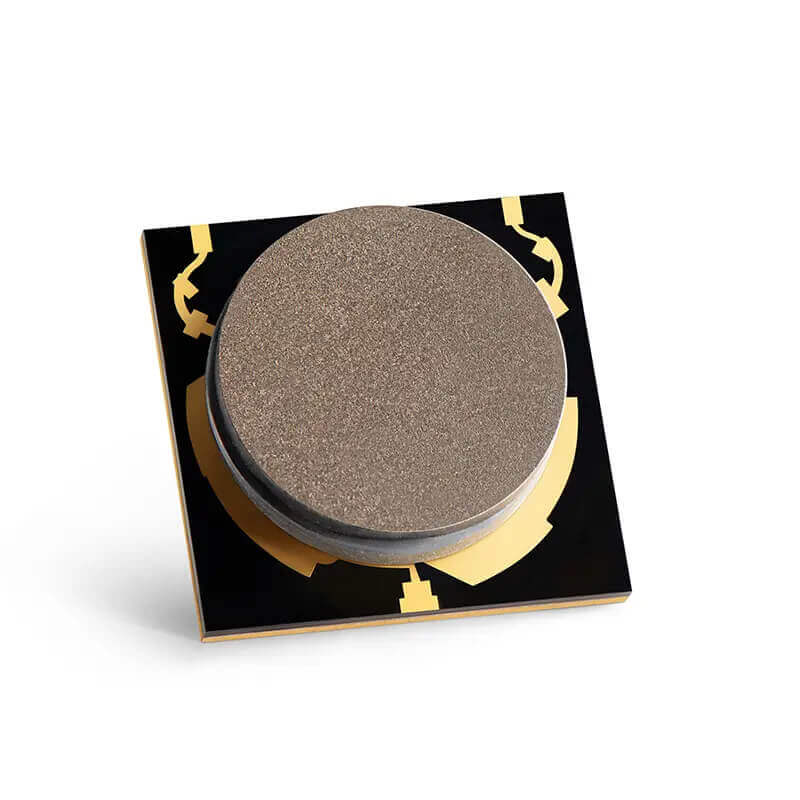
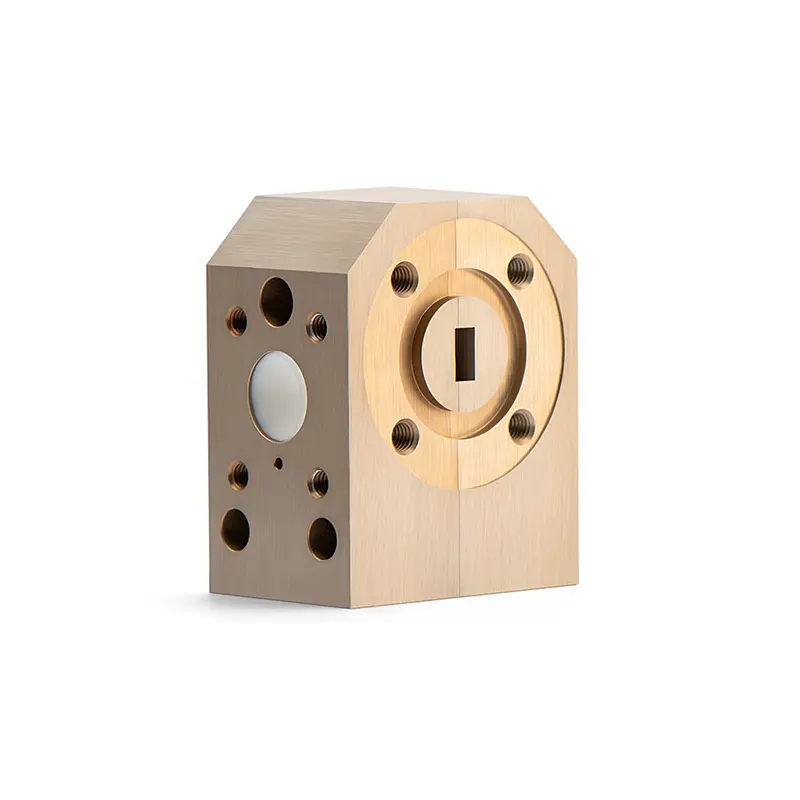
If you’re sourcing options, keep your internal linking tidy for SEO and user flow. For example: HzBeat maintains multiple circulator form factors (microstrip, drop-in, coaxial, waveguide) that can be filtered by band and power level. (Swap this link to your preferred product category landing pages.)
9) Common Mistakes (and How to Avoid Them)
Mistake A: Treating isolation as a “nice number”
Isolation is not decorative. It determines how much unwanted energy reaches the wrong place—often the receiver front end. In shared-path systems, isolation can be the difference between “works” and “compresses.”
Mistake B: Underestimating reflected power
Engineers often budget forward power carefully and then treat reflections as rare. Real antennas drift. Real cables bend. Real environments get wet. Design like reflections will happen—because they will.
Mistake C: Choosing a circulator without considering the load
The third port often needs a matched load that can safely absorb energy. If you underspec the load, you’ve just moved the failure point, not eliminated it.
Mistake D: Ignoring insertion loss near sensitive receivers
Placing a high-loss component right before an LNA can quietly degrade noise figure and sensitivity. In receiver-adjacent positions, low insertion loss is not a luxury.
FAQ
Is an RF circulator always better than an RF isolator?
Not always. An isolator is typically a 2-port device designed primarily to protect against reflections in one direction. A circulator gives you routing capability (e.g., steering reflections to a load or separating paths). If you only need one-way protection, an isolator may be simpler. If you need shared-path routing or separation of forward/reflected behavior, a circulator is often the better tool.
What’s the most common reason systems “require” a circulator?
Shared-path architectures (TX and RX sharing an antenna) and high-power PA protection under variable VSWR are the two most common drivers. After that, test setups and unstable-load environments are frequent reasons.
Where should the matched load go, and why does it matter?
The matched load is typically connected to the circulator’s third port to absorb reflected energy. Its power rating and thermal design matter because it may dissipate substantial energy during mismatch events. If it fails, your protection path collapses.
What parameters should I prioritize for mmWave or wideband systems?
Wideband coverage and low insertion loss are common priorities, along with stable isolation across the band. In compact platforms, package size and thermal performance also become more important than you might expect.
Can a circulator solve full-duplex by itself?
No. It can reduce baseline leakage and provide useful routing, but practical full-duplex typically requires additional cancellation techniques (analog, digital, or both). Think of a circulator as a helpful foundation, not the entire building.
Conclusion
RF circulators are most “required” where the RF world is least polite: shared antennas, high power, unstable loads, and precision measurements. If your system must survive mismatch events, protect sensitive receivers, or route signals predictably under real conditions, a circulator is often the simplest reliable answer.
If you want, tell me your band, power level, packaging preference (microstrip / drop-in / coaxial / waveguide), and whether the load VSWR can swing— I can turn this into a short, application-matched selection checklist you can paste into your product page or inquiry form.
Recommended Products
.jpg)
 Article Tags
Keith Wong
Marketing Director, Chengdu Hertz Electronic Technology Co., Ltd. (Hzbeat)
Keith has over 18 years in the RF components industry, focusing on the intersection of technology, healthcare applications, and global market trends.