Why Use an RF Circulator?
Why use an RF circulator? Explore how circulators reduce load-pulling sensitivity, improve spectral cleanliness (EVM/ACLR margins), calm ALC/DPD control loops, and tighten production yield across GaN-era RF systems.
 Updated on: Jan 06, 2026
 Author:
RF hardware design is getting less romantic and more measurable. Wider occupied bandwidths, tighter spectral masks, higher power density, and more aggressive integration are turning “small RF uncertainties” into visible system penalties. In many programs, the success metric is no longer simply output power—it is EVM headroom, ACLR margin, thermal predictability, and the ability to ship consistent units at scale.
That is why the RF circulator keeps appearing in serious architectures. Not as a nostalgic microwave accessory, but as a practical method to reduce sensitivity to the external interface. When the environment shifts, the goal is for your RF chain to behave as if it did not. This news brief walks through the modern reasons engineers still specify circulators—especially in high-performance, high-volume, or high-consequence platforms.
1) Spectral Cleanliness: Compliance Is a Moving Target
Modern transmitters live under strict spectral rules. Mask compliance, adjacent channel performance, and modulation quality can degrade when the RF chain is pushed away from its intended operating condition. Even if the baseband and digital processing are excellent, the RF path can still inject unwanted behavior: gain/phase drift, nonlinear memory effects, and unpredictable intermodulation under real installation conditions.
A circulator helps by making the RF chain less sensitive to what happens beyond it. In practical terms, designers pursue more stable spectra: better chance of passing compliance across temperature corners, installation variability, and long-term aging. When your schedule includes certification, stability is not a preference—it is time saved.
2) Load-Pulling Sensitivity: The Field Loves to Re-Optimize Your PA
Load-pull is not just a lab technique. Real deployments constantly apply “accidental load-pull” through changing antenna impedance: mounting geometry, nearby structures, weather, handling, and frequency agility. When the effective load changes, the operating point of the output stage shifts, and so do linearity, efficiency, and thermal stress distribution.
Circulators are commonly used to reduce how aggressively the active chain “feels” these variations. The value is not a single number on a datasheet; it is fewer unpleasant surprises in the field. For teams shipping to multiple integrators or multiple installation styles, reducing sensitivity is a direct path to stronger customer satisfaction.
3) Control Loop Behavior: Calmer ALC, DPD, and Power-Leveling
Many transmitters rely on control: ALC loops, temperature compensation, power leveling, and DPD-based linearization. These systems assume the RF chain stays inside a predictable behavior envelope. When the external interface becomes a moving target, the control logic can spend more time chasing the system than controlling it, causing slow settling, overshoot, or edge-case instability that is difficult to reproduce.
Adding a circulator is one way to narrow the envelope. The best outcome is simple: less re-tuning of control parameters, fewer site-specific patches, and fewer “one customer only” anomalies that soak engineering time.
4) GaN Power Density: Less Forgiveness, More Need for Predictability
GaN technology enables impressive power density, but it also compresses the margin for error. When the system is stable, GaN amplifiers are brilliant. When the system is pushed into unexpected conditions, that brilliance can turn into heat quickly. In high duty-cycle or high ambient scenarios, “rare corner cases” stop being rare—because field conditions are a creative adversary.
For many teams, a circulator becomes part of a broader robustness strategy: thermal design, layout discipline, filtering, and packaging all matter, but predictable RF behavior remains a cornerstone. In other words, robustness is a product feature—not a lab result.
5) Production Yield & Repeatability: The Quiet KPI That Wins Programs
RF manufacturing is a distribution game. If performance is highly sensitive to external conditions, unit-to-unit spreads widen: more tuning effort, more borderline failures, and more inconsistent behavior across sites and technicians. Even when units pass in-house tests, different installations can reveal different performance—an expensive feedback loop.
By reducing sensitivity, circulators can tighten those distributions. This matters not only for high-end defense or space programs, but also for serious commercial systems where scaling and support costs are real. The downstream benefits show up as smoother calibration, fewer returns, and more stable KPIs in acceptance testing.
- Less manual tuning: narrower spreads reduce time-per-unit and technician dependency.
- Fewer edge-case fails: higher chance to keep margins across temperature and installation diversity.
- Lower support friction: fewer “works here, fails there” situations that drain program momentum.
6) Miniaturization Trends: Keeping RF Discipline in Smaller Modules
Integration pressure is relentless. Designers want smaller modules, lighter systems, and fewer assemblies, but the RF chain still needs discipline. That is why miniaturized circulator formats remain relevant: they allow compact platforms to preserve predictable behavior without oversized mechanical volume.
From a supply perspective, two trends are becoming clearer: ultra-wideband coverage to support multi-band platforms, and miniaturization to fit into modern enclosures. The more these devices can move closer to the active stages inside the module, the more practical it becomes to maintain stable RF behavior in real deployments.
7) Selection Keywords Engineers Actually Search (SEO-Helpful Checklist)
If you are specifying or sourcing a circulator, these are the phrases that commonly appear in requirements and search queries. Aligning documentation to these terms makes product discovery easier and reduces procurement ambiguity.
- Frequency band: “L-band circulator,” “S-band circulator,” “C-band circulator,” “X-band circulator,” “Ku/Ka-band circulator,” “mmWave circulator.”
- Performance: “low insertion loss circulator,” “high isolation circulator,” “low VSWR circulator,” “high power handling circulator.”
- Linearity context: “EVM margin,” “ACLR margin,” “spectral regrowth,” “mask compliance,” “stable linearity under load variation.”
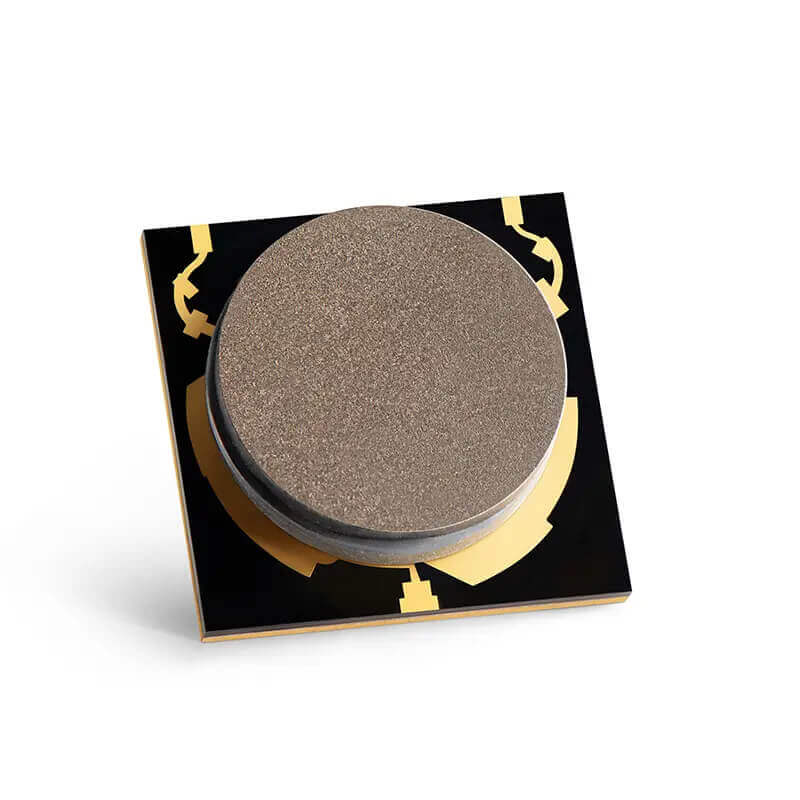
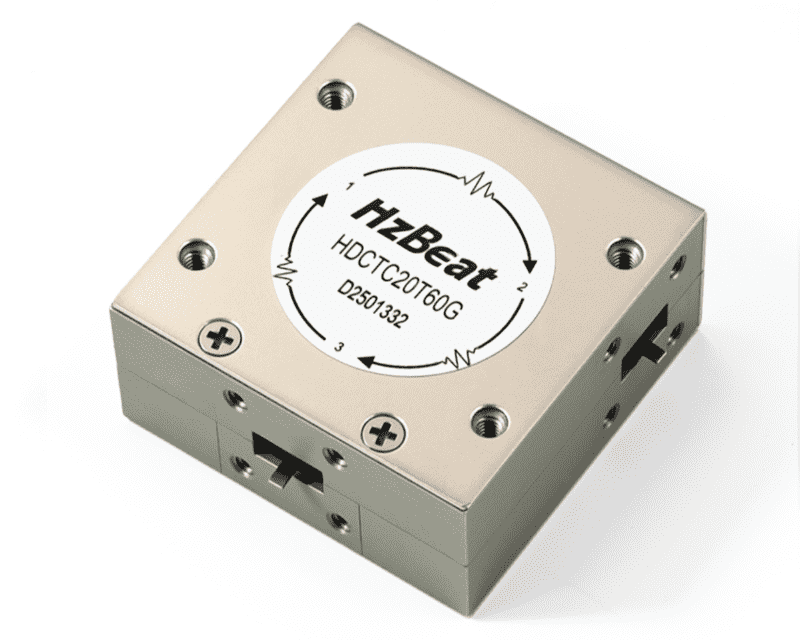
- Packaging: “drop-in circulator,” “coaxial circulator,” “waveguide circulator,” “microstrip circulator,” “miniaturized circulator.”
- Environment: “wide temperature range,” “rugged RF,” “high reliability,” “aerospace-grade,” “outdoor base station.”
Conclusion
The strongest reason to use an RF circulator in 2026 is not tradition—it is the economics of predictability. Cleaner spectra reduce rework. Stable linearity reduces last-minute tuning. Tighter distributions improve yield. And a calmer RF chain keeps program risk under control when the field does what the field always does: change the rules.
FAQ
Q1: Does a circulator guarantee better EVM and ACLR?
No single component guarantees system metrics. A circulator can reduce sensitivity to external variation, which often helps keep margins stable. The actual outcome also depends on PA design, filtering, layout, and linearization strategy.
Q2: Are circulators still relevant when systems move toward higher integration?
Yes, especially in compact platforms where external variability can dominate behavior. Miniaturized formats allow designers to preserve predictable RF behavior without large mechanical penalties.
Q3: What should I write in a procurement spec?
Start with frequency band, power level, insertion loss, isolation, VSWR/return loss, temperature range, and package type. If your program is compliance-driven, include the stability intent: maintaining linearity and spectral margins under installation variability.
Q4: What common pitfalls cause disappointing real-world results?
Integration details: connectors, grounding, thermal paths, mechanical stress, and assembly tolerances can all shift behavior. Treat the circulator as part of the system environment, not a standalone magic part.
References
- Microwave engineering references on ferrite non-reciprocal devices (circulators and their implementation considerations).
- RF power amplifier literature on load-pull sensitivity, operating point shifts, and linearity trade-offs.
- Wireless communications guidance on EVM/ACLR measurement interpretation and spectral regrowth mechanisms.
- Manufacturing-focused RF notes on distribution tightening, calibration repeatability, and design-for-yield practices.
Recommended Products
.jpg)
HzBeat Newsroom • RF & Microwave Components • Power in Every Small Beat
 Article Tags
Sara
Sara is a Brand Specialist at Hzbeat, focusing on RF & microwave industry communications. She transforms complex technologies into accessible insights, helping global readers understand the value of circulators, isolators, and other key components.