How Can I Choose the Right RF Circulator for My Application?
A practical engineer’s guide to choosing RF circulators: types (microstrip, drop-in, coaxial, waveguide), frequency bands, power handling, insertion loss, VSWR, thermal design, and supplier selection for 5G, radar and satellite links.
 Updated on: Dec 09, 2025
 Author:
Short answer: Match your band, power, form factor, and environment, then verify with real S-parameter data and a supplier who can tune to spec. The right RF circulator preserves PA health, boosts link margin, and keeps receivers quiet under stress.
1. Understanding RF Circulators
An RF circulator is a three-port, non-reciprocal device that routes energy 1→2→3→1 while isolating reverse power. Choosing well requires a structured pass through: frequency band, power capacity, mechanical form, environmental conditions, and supplier expertise.
2. Match the Frequency Band and Bandwidth
- L–C Band (1–8 GHz): Use drop-in or coaxial circulators for radar and communication systems.
- X–Ku Band (8–18 GHz): Microstrip circulators excel for compact phased arrays.
- Ka Band (26–40 GHz+): Waveguide circulators deliver lowest loss and highest power density.
Verify fractional bandwidth versus your filter design to ensure smooth handoffs between transmitter and antenna.
3. Power Handling, Insertion Loss, and VSWR
High-power transmitters demand ferrite volumes and biasing that endure heat and duty cycles. Aim for 0.2–0.5 dB insertion loss and VSWR ≤ 1.3 over temperature. The better the match, the cooler the PA—and the higher your effective EIRP.
4. Choose the Right Form Factor
- Microstrip / SMT: tiny, surface-mountable, ideal for integrated PCBs.
- Drop-in: screw-mounted, balances loss and mechanical strength.
- Coaxial: connectorized, perfect for test or outdoor modules.
- Waveguide: extremely low loss; for radar, satcom, high-power links.
5. Thermal, Bias, and Environmental Design
Ferrite bias shifts with temperature. Ensure stable isolation between −40 °C and +85 °C. In marine / aerospace use, hermetic sealing and corrosion-resistant platings are mandatory.
6. Data Matters: Measurement & Supplier Capability
Request full S-parameter data over temperature and power. Choose suppliers who offer OEM/ODM tuning and strict quality consistency. HzBeat provides coverage from 20 MHz to 200 GHz with flexible footprints and high-power options.
7. Quick Selection Checklist
- Band & BW — center freq, fractional BW
- Power — CW/peak, duty cycle, thermal limit
- IL / VSWR / Isolation targets over temperature
- Form factor — microstrip / drop-in / coax / waveguide
- Environment — humidity, vibe, salt-fog
- Lifecycle — RoHS, lead time, EoL policy
8. FAQ
Q1: Circulator vs Isolator?
A: A circulator is 3-port; an isolator is a 2-port variant to block reverse signals.
Q2: What is a “good” insertion loss?
A: ~0.2–0.5 dB is excellent; below 0.3 dB for premium radar bands.
Q3: Can microstrip replace waveguide?
A: Not at identical power levels or loss targets; waveguide still rules for Ka-band.
9. Conclusion
Choosing the right RF circulator is both art and engineering. Start from frequency and power, validate thermal behavior, and collaborate with a trusted supplier to ensure longevity and performance. With the right choice, your system stays linear, efficient, and ready for next-generation links.
10. References / Image Credits
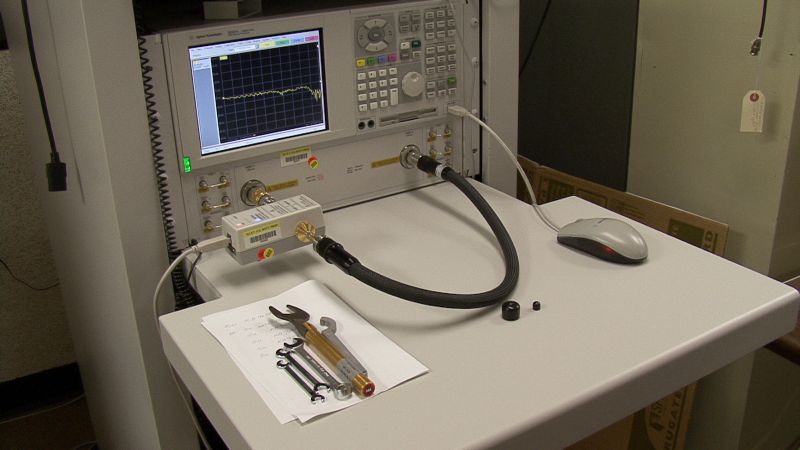
- NIST VNA Calibration Photo – Public Domain (Source)
- Satellite & Radar Images – Unsplash (H6y8NyHvrSs, 1mfpqBx7zI0), free for commercial use
 Article Tags
Keith Wong
Marketing Director, Chengdu Hertz Electronic Technology Co., Ltd. (Hzbeat)
Keith has over 18 years in the RF components industry, focusing on the intersection of technology, healthcare applications, and global market trends.