RF Circulator and Isolator Price Trends
Updated on:
Keywords: RF circulator, RF isolator, RF circulator price, RF isolator price, RF circulators and isolators market, RF circulator pricing trends, Ka-band isolator price, Ku-band circulator price
Introduction: Why RF Circulator and RF Isolator Pricing Matters
RF circulators and RF isolators control RF energy flow, protect active stages from reflected power, and stabilize transmitter chains. Because these functions span wireless infrastructure, radar, satcom user terminals, and test systems, the RF circulator price and RF isolator price directly influence project economics. Over 2023–2025, engineering teams have faced two opposing forces: steady demand growth (5G densification, LEO constellations, phased‑array modernization) and supply‑side volatility (materials, machining, plating, labor, logistics, testing).
Catalog circulators/isolators ship in modest batch sizes with diverse option codes and qualification footprints. Distributor “sticker prices” are informative anchors, not volume quotes. Actual transaction prices depend on volume, custom drawings, environmental screening, reliability testing, and lead‑time expectations.
Global Market Status and Growth Signals
Independent market snapshots indicate a healthy mid‑single‑digit growth profile for RF isolators and RF circulators. Representative baselines place the combined market in the several‑hundred‑million to low‑billion‑dollar range with 5–7% CAGR, driven by mmWave radios, E‑steered arrays, and defense radar upgrades.
Growth does not automatically create price inflation. In standardized, low‑power bands, competition and scale can flatten prices. Where performance density is challenging—tight IL, higher isolation, broader bandwidth, miniature footprints, significant power handling—manufacturers invest in better ferrites, process control, and stricter tests, preserving pricing power for premium SKUs.
Retail Price Samples and What They Reveal
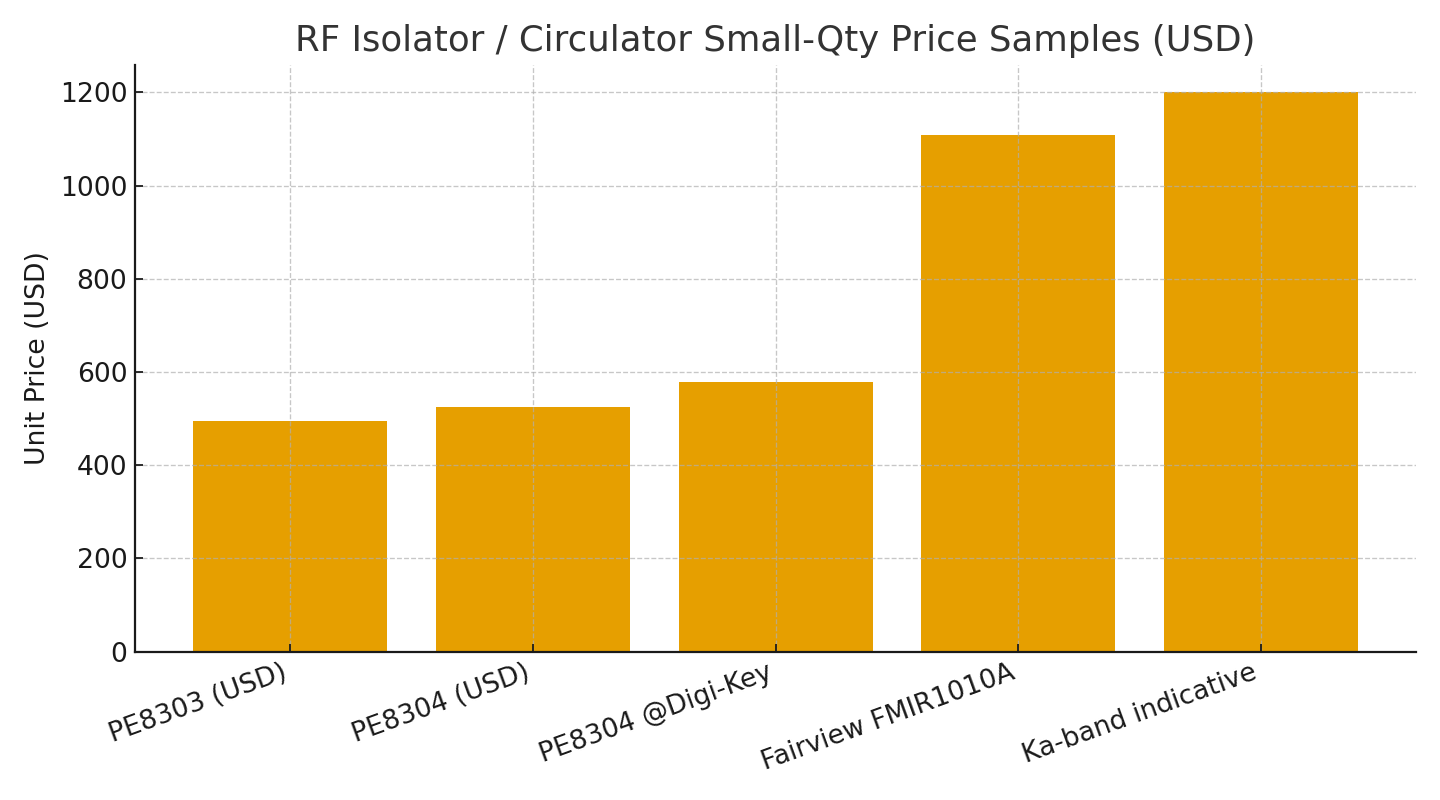
Notes: Distributor/retail list prices (small quantities). Engineering volume, custom specs, qual, and lead time materially change transaction prices. Values vary by region/time.
| Part / Link | Band | Power | Key Spec | Unit Price Tiers |
|---|---|---|---|---|
| Pasternack PE83IR005 (Mouser SG) | 2–4 GHz | 10 W | ~18 dB isolation | 1: SGD 665.34; 10: SGD 591.70; 25: SGD 534.09 |
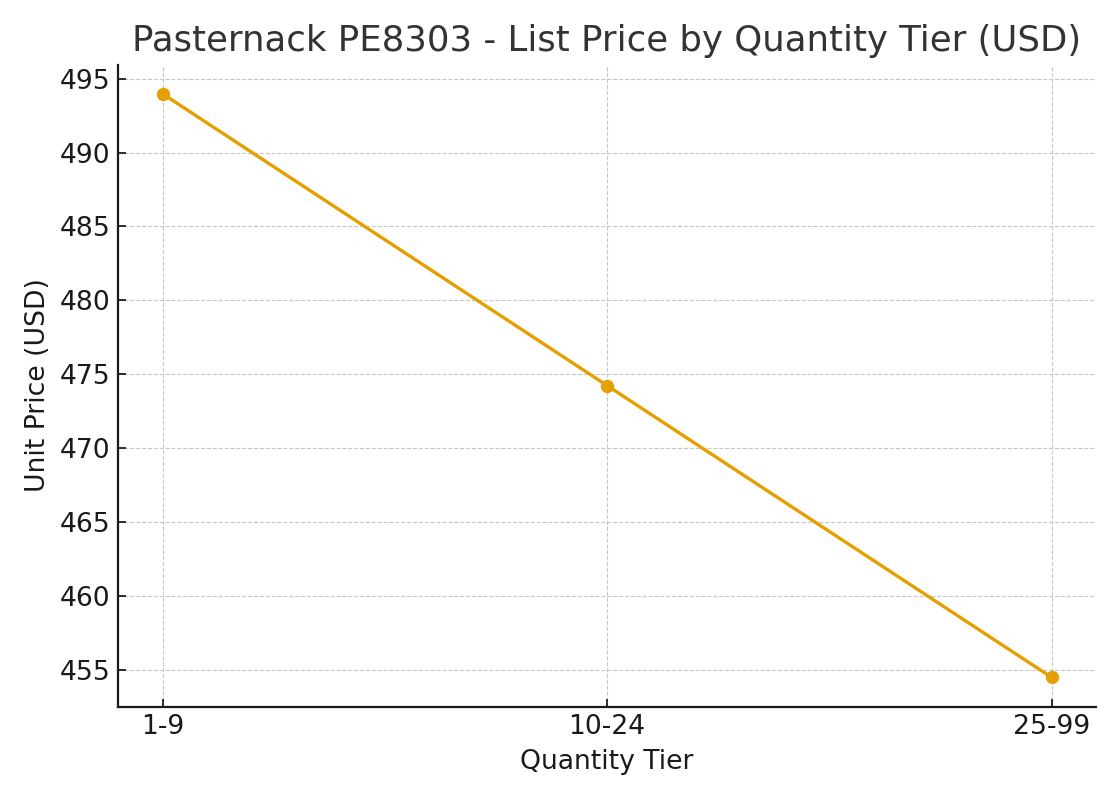
| Pasternack PE8303 | 7–12.4 GHz | 1–20 W (series) | ~18–20 dB isolation | 1–9: USD 493.99; 10–24: USD 474.23; 25–99: USD 454.47 |
| Pasternack PE8304 | 8–18 GHz | ~1–20 W (series) | ~16 dB isolation | 1–9: USD 525.00; 10–24: USD 504.00; 25–99: USD 483.00 |
| Pasternack PE8304 (Digi‑Key) | 8–18 GHz | — | — | 1: USD 578.69; 10: USD 515.41 |
| Pasternack PE8405 (Mouser US) | 11–18 GHz | 10 W | 20 dB isolation | Typical small‑qty pricing ≈ USD 600 class for similar SKUs |
| Fairview FMIR1010A (Newark CA) | 8–12 GHz (series) | High‑power | ~16 dB isolation | 1: USD 1,108.74 |
| Fairview FMIR1034 (Newark) | 18–26.5 GHz | 10 W | 14–15 dB isolation (series) | Ka‑band SKUs commonly > USD 1,000 in small qty |
Tips:
Use retail list prices only as negotiation anchors; publish clear MOQ/lead-time ladders to move from list to volume tiers.
Key Drivers Behind Pricing
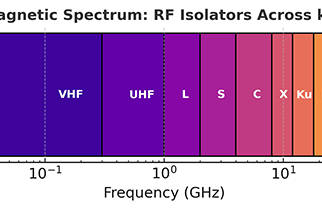
Frequency & bandwidth. At Ku/Ka band, ferrite properties, line geometries, and tolerances are unforgiving. Achieving target IL, isolation, and VSWR across wide passbands requires precise material selection, machining, and magnetic biasing—raising cost.
Power handling & thermal design. High‑power isolators dissipate reflected energy as heat. Robust bases, heat spreaders, plated finishes, and quality fasteners add cost and weight.
Miniaturization & integration. Compact microstrip/SMD builds with demanding isolation are process‑intensive. Smaller size often commands a premium because the yield window narrows.
Qualification & screening. Aerospace/defense/satcom programmes add environmental screens (thermal cycling, vibration, life tests), extending cycle time and test coverage.
Materials & supply chain. Ferrite composition, magnets, precision machining, plating, currency, and logistics all shift final quotes.
Regional Differences and Channel Effects
Distributors show different currencies and freight/handling policies (USD, SGD, EUR). Tiered pricing (1–9, 10–24, 25–99) reinforces the use of list prices as anchors rather than commit‑to‑quote numbers. VAT/duties can push landed cost above list, while framework agreements with approved vendors may reduce effective prices by 10–25% for stable annual volumes.
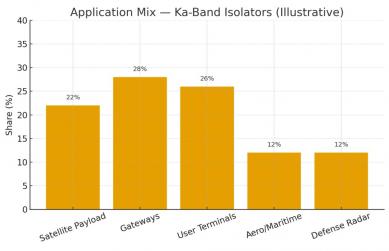
Ka‑band catalog availability has improved via major distributors, widening the premium gap versus lower‑band SKUs. Communicate specification deltas (passband width, IL targets, isolation vs. temperature) to explain why a Ka‑band RF isolator price may exceed USD 1,000 in small quantity while X/Ku remains ~USD 500–700.
2025–2033 Outlook: What to Watch
Three forces shape the outlook: (1) 5G‑Advanced rollouts and early 6G trials; (2) LEO/MEO user terminals with electronically steered arrays emphasizing low‑profile, high‑isolation ferrite designs; (3) defense radar modernization with higher power density in TR modules. Standardized L/S/C‑band SKUs may remain flat or gently decline; high‑spec, high‑power, and Ka‑band parts likely maintain pricing power.
Manufacturing leverage points—automation in ferrite processing, improved fixtures, tighter SPC—can trim overhead and improve yield. Buyers should lock framework pricing and buffer for material volatility; OEMs should invest in metrology to reduce rework and preserve margin while keeping catalog pricing competitive.
Procurement Takeaways for Buyers and OEMs
- Segment the portfolio: keep standard SKUs price‑competitive; preserve margin on high‑power and Ka‑band via value communication (IL, isolation, bandwidth, qual).
- Use list prices as anchors: steer from retail anchors toward volume tiers; publish MOQ/lead‑time ladders.
- Quantify screening: enumerate environmental tests in quotations to justify premiums.
- Watch inputs: track ferrite supply, machining capacity, plating lead times, and test bottlenecks.
- Shorten loops: provide standard drawings and parametric options to reduce custom NRE.
Tips:
For enquiries and volume quotes, email [email protected] with band, bandwidth, IL/Isolation targets, VSWR, power under mismatch, screening, and delivery constraints.
FAQ
What is a realistic small‑quantity price for a standard RF isolator or RF circulator?
Distributor list prices for X/Ku‑band catalog parts often sit around USD 500–700. Ka‑band and high‑power units often list at USD 800–1,500+. Treat these as anchors; volume and screening alter final quotes.
Why do Ka‑band parts carry a premium?
Ka‑band tightens design windows on ferrites, line geometries, and assembly precision. Achieving low IL and high isolation across wide passbands demands higher‑grade materials and rigorous QA.
How should buyers compare quotes across vendors?
Normalize: band & bandwidth, IL/Isolation at temperature, VSWR, power under worst‑case mismatch, environmental screening, warranty, delivery. Without alignment, price comparisons mislead.
Are secondary‑market listings useful?
Not for programme procurement. They may reveal bargains or legacy PNs but typically lack traceability, warranty, and predictable supply.
Relateds

About the Author

HzBeat Editorial Content Team
Sara is a Brand Specialist at Hzbeat, focusing on RF & microwave industry communications. She transforms complex technologies into accessible insights, helping global readers understand the value of circulators, isolators, and other key components.