Microwave Circulator Manufacturer: What Really Matters?
Selecting a microwave circulator manufacturer isn’t about the prettiest datasheet—it’s about repeatability, test discipline, material control, thermal realism, and support when your system is on fire. Use this deep guide to evaluate specs, QA, compliance, customization, and supplier risk.
 Updated on: Jan 07, 2026
 Author:
A deep buyer’s guide for engineers and procurement teams who want predictable RF performance—not surprise drama at final test.
Picking a microwave circulator manufacturer often starts with a familiar ritual: compare datasheets, filter by frequency range, choose “low insertion loss” and “high isolation,” then hope production parts look like the marketing sample. Sometimes you win. Sometimes you learn why engineers drink coffee like it’s a survival skill.
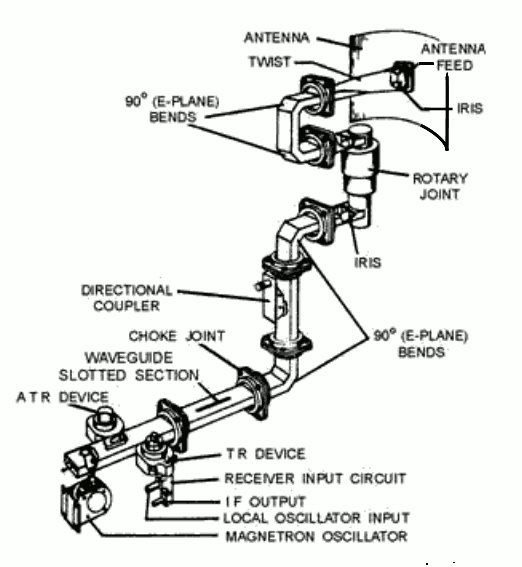
The uncomfortable truth: for circulators, the manufacturer is part of the design. Their ferrite material control, magnet/bias approach, machining discipline, tuning know-how, test setup, and QA culture can matter as much as the topology itself. If you’re buying for radar, satellite, high-power amplifiers, T/R modules, or production test systems, you don’t need “a circulator.” You need a repeatable device with known behavior under your real operating conditions.
1) Start With the “Use Case Truth,” Not the Datasheet Fantasy
Before you compare suppliers, write down what the circulator must survive and what it must guarantee. The most common mistake is using the vendor’s “typical” conditions as if they match your system. They rarely do.
Define the operating envelope (in painful detail)
- Frequency plan: center frequency, bandwidth, edge performance expectations, and any out-of-band stress.
- Power reality: average power, peak power, duty cycle, mismatch scenarios, and reflected power behavior.
- Temperature: ambient range, internal hot-spots, warm-up drift, and thermal cycling.
- Linearity & cleanliness: IMD/PIM concerns, phase stability, ripple limits.
- Mechanical: package, mounting, vibration, shock, sealing.
- Regulatory & reliability: RoHS/REACH, lot traceability, MTBF, documentation.
2) The Specs That Matter Most (and How Manufacturers Can Game Them)
Circulator specs look simple: insertion loss, isolation, VSWR, power. But many suppliers can “win” on paper by choosing measurement conditions that flatter the device.
| Spec | What it really means | Questions that reveal manufacturer strength |
|---|---|---|
| Insertion Loss | Loss becomes heat; heat becomes drift. | At what temperature? What calibration? What is the production distribution? |
| Isolation | Protection margin against reflections. | Guaranteed across band or just at center? Drift vs temperature? |
| VSWR | Mismatch drives ripple and instability. | Fixture definition? Stability after torque and thermal cycling? |
| Power Handling | Depends on mismatch, duty, and cooling. | What VSWR assumed? Derating curves? Thermal realism? |
| Linearity | Hidden system killer. | PIM/IMD capability? Connector and plating control? |
3) Materials & Magnetic Bias
Ferrite devices live and die by materials and bias control. Two manufacturers can build the same geometry and still ship parts with very different behavior.
4) Manufacturing Reality: Repeatability, Not Hero Units
Tuning is normal. The risk is when tuning becomes artisanal rather than controlled.
- Process control: documented steps and checkpoints.
- Fixture discipline: calibrated VNAs and verified adapters.
- Incoming inspection: ferrite, magnet, and plating control.
- Tuning philosophy: bounded adjustments.
- Yield visibility: known by model and band.
5) Testing: Your Best Defense Against Beautiful Lies
- Calibration details: SOLT/TRL, reference planes.
- Fixture transparency: adapters and transitions disclosed.
- Temperature & power sweeps: beyond room temperature.
- Data format: raw touchstone files.
6) Reliability & Environmental
- Thermal cycling: tracked RF performance before/after.
- Vibration & shock: mechanical integrity proof.
- High-power aging: burn-in and drift data.
- Failure analysis: real corrective actions.
7) Compliance, Documentation, and Traceability
- RoHS / REACH declarations
- Lot traceability
- Certificates and revision control
- Change control discipline
8) Customization
- Direct engineering interface
- Prototype-to-production clarity
- Design margin discussion
- Simulation-to-measurement correlation
9) Lead Time, Capacity, and Supply Chain Risk
- Single-sourced materials
- Legacy model availability
- Safety stock and forecast support
- Surge capacity
10) Manufacturer Qualification Checklist
- Production distributions
- Test transparency
- Thermal realism
- Power realism
- Process maturity
- Materials control
- Reliability proof
- Documentation
- Support model
- Supply risk mitigation
FAQ
- Is lower insertion loss always better? Only if repeatable across lots and stable over temperature.
- How should I compare test reports? Normalize calibration, reference planes, and request raw data.
- What’s the most overlooked risk? Silent process changes.
- How many samples for qualification? Enough to observe variation across lots.
References
- RF test & measurement application notes
- Microwave engineering textbooks on ferrite devices
- Radar and waveguide system references
Recommended Products
.jpg)
 Article Tags
Sara
Sara is a Brand Specialist at Hzbeat, focusing on RF & microwave industry communications. She transforms complex technologies into accessible insights, helping global readers understand the value of circulators, isolators, and other key components.