How the Global Defense Electronics Boom Is Driving Demand for RF Circulators
Defense electronics expansion is turning RF circulators and RF isolators into schedule-critical components across radar, electronic warfare, and SATCOM. This news-style deep dive focuses on demand signals, qualification reality, and the specs that now decide bids.
 Updated on: Mar 06, 2026
 Author:
The current defense electronics build cycle is expanding demand for RF front-end hardware, and RF Circulators are being pulled into the spotlight. The main shift is not “what a circulator is,” but how it is bought and qualified: thermal behavior, duty-cycle stress, lot consistency, and screening evidence now frequently decide supplier selection—alongside classic metrics such as insertion loss and isolation.
Introduction: when conflict escalates, defense electronics becomes the first bottleneck
In late February 2026, the United States and Israel began a military campaign against Iran, a reminder that regional escalation can rapidly translate into accelerated demand for air-defense, ISR, and electromagnetic-spectrum capabilities. Such moments tend to put defense readiness under stress—especially the “invisible infrastructure” of sensing and communications that keeps modern forces coordinated and survivable.
In modern operations, the visible platforms—aircraft, ships, missiles—depend on defense electronics: radar networks, electronic warfare suites, secure communications links, and integrated command-and-control systems. These subsystems determine whether forces can detect, communicate, and operate effectively under contested conditions. Public reporting around the March 2026 escalation illustrates how quickly airspace control, strike-tempo, and retaliation dynamics can drive sustained emphasis on sensors and electronic warfare capacity.
When radar and electronic-warfare readiness becomes urgent, procurement rapidly shifts toward high-frequency RF front ends—where protection, isolation, and stability are non-negotiable. That is exactly where RF Circulators and RF Isolators move from routine passives to schedule-critical components.
Recent order and backlog signals from defense-electronics suppliers also support the view that demand is multi-year rather than a short spike.
This article focuses on what changed in 2025–2026: not the basic theory of circulators, but the procurement and engineering realities that increasingly decide adoption. Across radar modernization, electronic warfare duty-cycle stress, and SATCOM/terminal scaling, RF Circulators and RF Isolators are frequently evaluated around thermal drift, lot consistency, qualification readiness, and real-world mismatch behavior—because these factors directly impact reliability and delivery schedules.
Defense electronics market
>$250B in 2026
Public market reports estimate 2026 size in the mid-$250B range.
Demand profile
Radar · EW · SATCOM
Most “pull” comes from sensing and spectrum dominance investments.
Supply constraint
Qualification + test
Test throughput and screening/traceability often set shipment pace.
Market figures differ by segmentation and methodology; references are provided for verification and context.
Market & program signals behind RF Circulators demand
The defense electronics build cycle funnels spending toward radar sensing, electronic attack/defense, secure communications, and networked ISR. These subsystems require robust RF front ends, and RF Circulators are frequently embedded in protection and isolation strategies across those architectures.
- Earlier locking of RF Circulators in the program schedule to reduce delivery risk.
- Second-source qualification to avoid single-supplier exposure in critical frequency bands.
- Specification tightening around thermal drift, duty-cycle stress, and screening evidence.
Why RF Circulators became “critical path” components
In high-power RF systems, reflected energy is not an edge case; it is an operating reality. Antenna mismatch changes with temperature, moisture, installation tolerance, platform motion, cable aging, and connector wear. Those reflections can compress PA performance, shift calibration, or damage stages in severe cases.
| Pressure | What is changing | Why it increases demand for RF Circulators |
|---|---|---|
| AESA densification | More T/R modules per aperture, higher integration density, tighter thermal headroom. | More protection points; insertion loss becomes thermal load; drift control becomes more valuable. |
| EW duty-cycle | Wider coverage and longer transmit time-on-target in certain profiles. | Wideband RF Circulators must remain stable under sustained heat and stress. |
| Terminal fleets | More SATCOM/ground terminals and higher availability expectations. | Protection and stable routing reduce outage risk and maintenance interventions. |
Radar modernization: AESA density & PA protection
Radar is a major volume driver for RF components because modernization programs expand both new builds and upgrade kits. In many radar architectures, RF Circulators support transmitter protection and help preserve receiver sensitivity by isolating paths and reducing leakage. In some front ends, RF Isolators are also used where one-way protection is preferred.
Evaluation themes that frequently show up in radar RFQs
- Power under realistic conditions: pulsed behavior + average heating and power cycling.
- Isolation stability: drift across temperature and over operating life.
- Insertion loss as heat: small IL differences translate into thermal load in dense modules.
- Mechanical robustness: vibration/shock plus interface repeatability for production lots.
Electronic warfare: wideband + high duty-cycle = tougher RF Circulators
_129_N40562-21.jpg)
Electronic warfare systems concentrate complexity: broader frequency coverage, high transmit power, and operational profiles that can sustain heat. In this context, RF Circulators are frequently selected with emphasis on wideband stability, thermal behavior, and predictable isolation across band.
EW-specific stress factors influencing RF Circulators demand
- Wideband operation: maintaining isolation and return loss across the operational band.
- High average power: thermal behavior can dominate performance stability.
- Retrofit cycles: upgrades and countermeasure refresh programs can create demand spikes for qualified RF Circulators.
- GaN power density: higher power density amplifies the cost of reflection events; protection becomes more valuable.
SATCOM & ground terminals: uptime, survivability, and stable RF chains
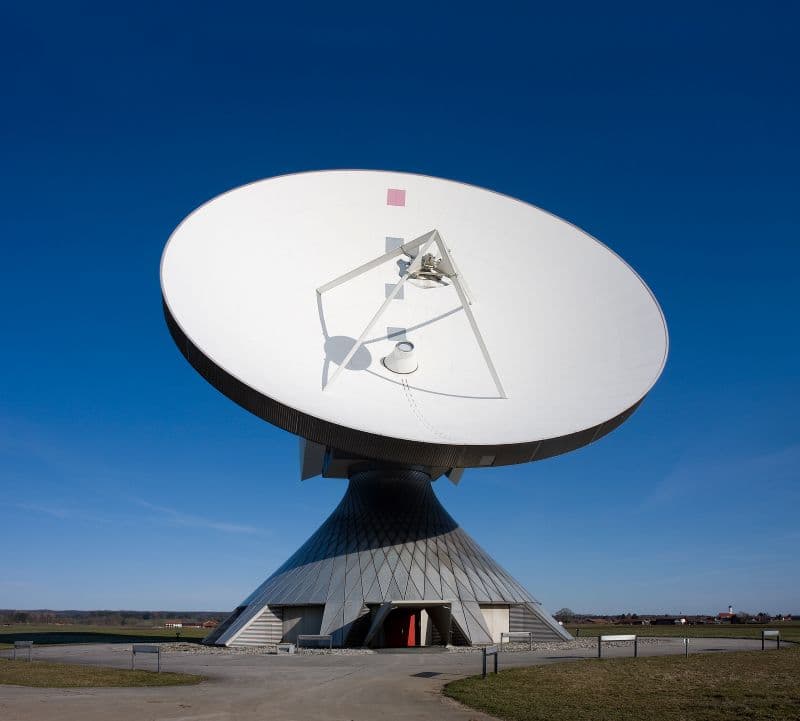
SATCOM terminals and ground infrastructure scale with defense networking priorities. Availability and maintainability matter: intermittent faults, drift, or reflection-driven stress can become operational problems when fleets are large. RF Circulators and RF Isolators are often used in protection and routing strategies that reduce sensitivity to mismatch and transient conditions.
Exact architecture depends on band and terminal design, but availability pressure is broadly consistent.
Supply chain constraints: ferrite, test capacity, and qualification lead-time
Supply availability for RF Circulators is shaped by practical constraints: ferrite material and magnetic bias control, high-frequency process tolerance, and test/verification throughput. Defense programs frequently add screening and traceability requirements that increase qualification and delivery complexity.
Common constraints seen in the RF Circulators supply chain
- Qualification & screening: added tests, traceability, and documentation increase time-to-ship.
- High-frequency yield: mmWave tolerances tighten; small process changes can move IL/ISO and return loss.
- Test throughput: calibration, power testing, thermal verification, and repeatability checks constrain capacity.
Scenario spec matrix: what matters for radar vs EW vs SATCOM
“High performance” means different things across defense applications. The matrix below summarizes evaluation themes that frequently appear in program RFQs. Exact targets vary by band, package, and system architecture.
| Scenario | RF Circulators priorities | Failure risks being managed | Evidence commonly requested |
|---|---|---|---|
| Radar (AESA / phased array) | Isolation stability, low IL for thermal headroom, power cycling robustness, interface repeatability. | PA stress from reflections, receiver desense, calibration drift across temperature. | Thermal drift characterization, pulsed/average power derating notes, lot distribution data, vibration considerations. |
| Electronic warfare | Wideband behavior, sustained-duty stability, predictable isolation across band, robustness under heat. | Compression under sustained load, reflection-driven PA damage, isolation collapse under temperature rise. | Wideband plots, temperature sweep data, duty-cycle-aware power guidance, screening/traceability flow. |
| SATCOM / ground terminals | Reliability, maintainable variants, stability under varying mismatch, consistent production lots. | Intermittent faults in fleets, mismatch-driven stress, field replacement variability. | Lot consistency metrics, screening evidence, return loss behavior, environmental stability notes. |
Defense RFQ checklist for RF Circulators
The checklist below aligns RF Circulators requirements with common defense program realities and helps reduce schedule and reliability exposure.
| RFQ Category | Questions to include | Why it matters |
|---|---|---|
| Operating profile | Frequency range, waveform profile, duty cycle, peak and average power, expected mismatch/VSWR events. | RF Circulators behavior is stress-dependent; realistic profiles prevent underspec or over-derating. |
| Thermal & drift | Temperature range, thermal cycling expectation, allowable IL/ISO drift, stabilization time requirements. | Drift impacts isolation margin and protection behavior in radar and EW systems. |
| Power derating | Derating guidance for average power, pulsed power, and worst-case mismatch; thermal path assumptions. | Reduces reflection-driven overstress events in high-power chains. |
| Screening & traceability | Screening flow, serialization/traceability, lot acceptance approach, certificates and data retention. | Qualification, sustainment, and second-source strategies require evidence trails. |
| Production consistency | Lot-to-lot distribution data, yield stability, process controls, corrective action process. | Consistency reduces calibration variation and simplifies fleet maintenance. |
| Integration & mechanics | Package constraints, interfaces, mounting, shock/vibration notes, handling instructions. | Mechanical integrity and interface repeatability directly affect RF stability and field reliability. |
| Lead time & capacity | Standard lead time, surge capacity, test throughput constraints, long-term supply commitment. | Programs often treat RF Circulators as schedule risk; capacity transparency supports planning. |
When possible, request application-relevant plots (temperature sweep, wideband IL/ISO, and repeatability) rather than relying only on single-point room-temperature values.
Conclusion
The global defense electronics build cycle is expanding demand for RF front-end hardware, and RF Circulators and RF Isolators are increasingly treated as schedule-critical components in certain bands and power classes. Radar modernization, electronic warfare duty-cycle profiles, and SATCOM terminal scaling all amplify the value of stable protection and predictable routing.
Supplier selection is frequently influenced by stress-relevant stability (thermal drift, duty-cycle behavior), qualification readiness, and evidence of lot consistency—alongside classic metrics such as insertion loss and isolation. As modernization programs continue, demand for RF Circulators is likely to remain structurally supported by both new deployments and sustainment needs.
FAQ
Why are RF Circulators increasingly treated as “critical path” items?
RF Circulators often sit at the protection boundary in high-power RF chains. In accelerated modernization programs, qualification readiness and delivery timing for a small set of RF Circulators can constrain subsystem schedules.
What procurement requirements have become more important than before?
Beyond basic datasheet metrics, many defense RFQs emphasize screening and traceability, lot-to-lot stability, temperature drift behavior, and duty-cycle-aware power derating guidance.
Why does GaN amplification increase attention on RF Circulators?
Higher power density increases sensitivity to reflected-power events. RF Circulators are commonly used to reduce reflection stress on power amplifier stages and help maintain stable routing behavior under demanding conditions.
Which applications are pulling the most RF Circulators demand?
Radar modernization (especially phased-array upgrades), electronic warfare platforms with wideband requirements, and expanding SATCOM terminal deployments are major contributors.
How do radar and EW requirements differ for RF Circulators?
Radar procurement often focuses on stability and low insertion loss for dense modules, while EW programs frequently prioritize wideband behavior and sustained-duty robustness. Exact targets depend on band, package, and system architecture.
References
- IISS online analysis on the U.S.–Israel campaign in Iran (Feb 2026)
- Reuters reporting on the duration and scope of the campaign (Mar 3, 2026)
- Reuters reporting on defense-electronics demand signals (Hensoldt orders, Nov 7, 2025)
- Defense electronics market overview and forecast (2026 report page)
Note: market figures vary by segmentation and methodology across sources; references are provided for verification and context.
Recommended Products
.jpg)
 Article Tags
Keith Wong
Marketing Director, Chengdu Hertz Electronic Technology Co., Ltd. (Hzbeat)
Keith has over 18 years in the RF components industry, focusing on the intersection of technology, healthcare applications, and global market trends.