How Are RF Circulators Used in Aerospace and Missile Systems?
A deep article explaining how RF circulators are used in aerospace and missile systems, with emphasis on radar systems, transmit/receive isolation, packaging, materials, reliability, and design trade-offs.
 Updated on: Mar 26, 2026
 Author:
In modern aerospace systems and missile systems, the humble RF circulator is often invisible to outsiders yet indispensable to engineers. This article explains where RF circulators sit in real signal chains, why they remain critical in demanding radar systems, and how packaging, ferrite materials, thermal control, shock resistance, and bandwidth trade-offs shape their value in mission-critical platforms.
Introduction
Discussions about advanced defense electronics usually revolve around active devices: power amplifiers, low-noise amplifiers, beamformers, T/R modules, digital receivers, or guidance processors. Yet every experienced microwave engineer knows that passive components decide whether the architecture is elegant on paper or durable in the real world. Among those passive components, the RF circulator holds a unique place. It is not glamorous. It does not generate gain. It does not digitize data. But it quietly routes energy in one direction, isolates sensitive receive paths from high transmit power, and prevents damaging reflections from folding back into expensive RF chains.
That is exactly why RF circulators continue to matter in aerospace systems and missile systems. Whether the platform is an airborne fire-control radar, a spaceborne communications payload, a seeker front end, a telemetry subsystem, or a ruggedized high-power RF assembly, the challenge is the same: one antenna path often has to support transmit and receive functions that are close in frequency, close in space, and violently different in power level. An RF circulator offers a compact, passive, and highly reliable way to separate those paths.
In a typical example, a transmitter sends a pulse or continuous-wave signal into port 1 of the circulator; the energy exits port 2 and goes to the antenna. The return echo from the antenna enters port 2 and is redirected to port 3, where the receiver sits. Ideally, the transmitter never sees the receive return directly, and the receiver never sees the full forward power pulse. That simple routing principle is one of the reasons circulators are still common in radar duplexing, T/R front ends, active electronically scanned arrays, satellite communications payloads, and high-reliability microwave subsystems.
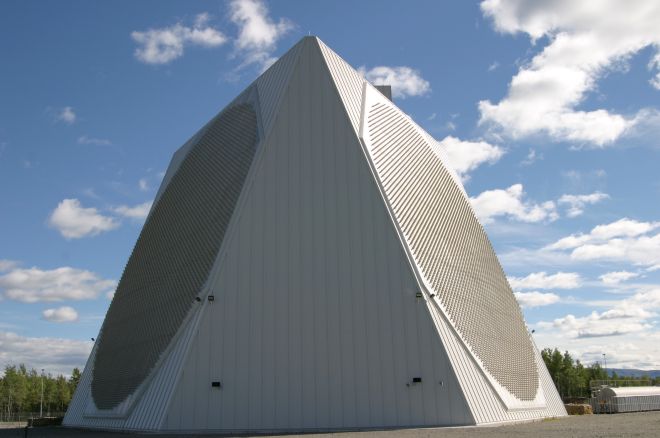
Why RF Circulators Matter in Aerospace and Missile RF Chains
The central reason an RF circulator is valuable in aerospace design is brutally practical: transmit power and receive sensitivity do not coexist peacefully. Radar transmitters may generate pulses or continuous-wave energy that would overwhelm or damage a low-noise receive chain if no isolation existed. Even when protection circuitry is added elsewhere, every unnecessary reflection and leakage path degrades dynamic range, raises noise concerns, and complicates calibration. In radar systems, where target returns can be extremely weak compared with transmitted power, isolation is not a luxury. It is structural.
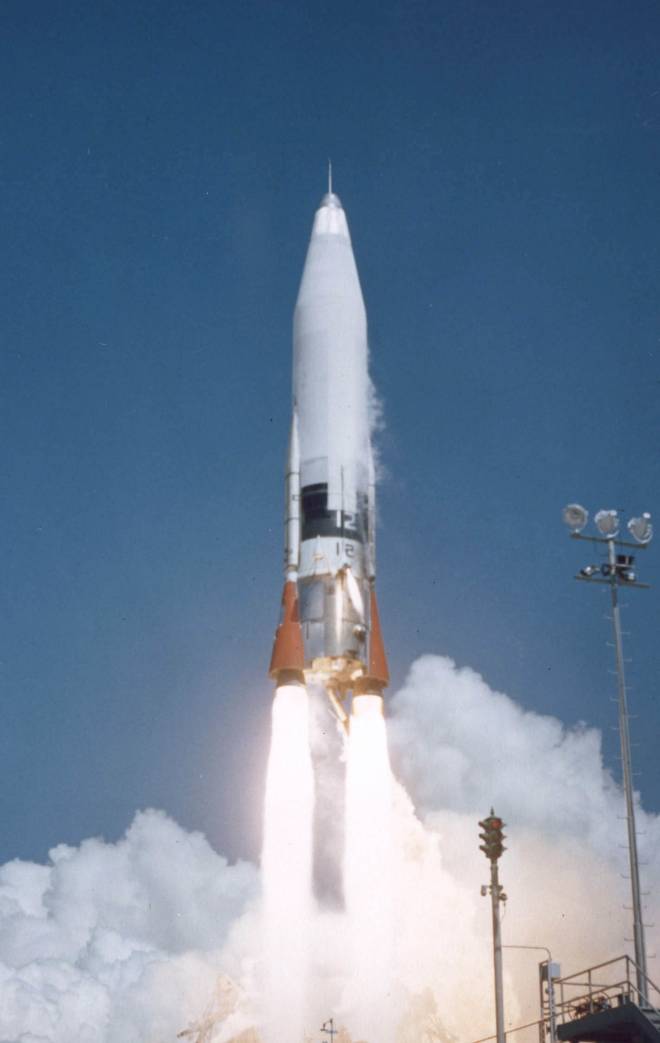
In missile systems, the constraints tighten further. Volume is limited. Mass is precious. Thermal headroom is narrow. Mechanical shock and vibration are severe. The RF front end must survive storage, launch, acceleration, and sometimes intense thermal cycling before it ever performs its actual mission. A circulator is attractive here because it delivers a passive, bias-free or low-complexity routing function that avoids the burden of more complex switching or filtering architectures in some bands and use cases.
In aerospace systems more broadly, especially in airborne and space applications, engineers also care about phase stability, insertion loss, repeatability across temperature, and reliability over long service intervals. Every fraction of a decibel matters in a receive budget. Every gram matters in airborne and satellite payloads. Every extra connector or active switching stage creates another failure opportunity. That is why circulators remain compelling even in an age full of digital beamforming and advanced semiconductors.
Four recurring reasons engineers specify an RF circulator
- Transmit/receive isolation: keeps high forward power away from sensitive receiver circuitry.
- Shared antenna architecture: allows one antenna path to support both transmit and receive functions.
- Reflection management: helps control reverse energy that would otherwise destabilize upstream hardware.
- Compact system integration: reduces the complexity of bulky or frequency-limited alternatives in certain RF chains.
Where RF Circulators Are Used in Aerospace and Missile Systems
1) Radar duplexing and front-end isolation
This is the most familiar application. In pulsed and continuous-wave radar systems, the RF circulator behaves as a duplexing element. The outgoing signal is sent from the transmitter toward the antenna, while echoes returning from the antenna are redirected toward the receiver. The result is a cleaner architecture than trying to run separate antennas for every function. This matters in airborne surveillance radar, maritime radar, fire-control radar, weather radar, and many compact high-frequency sensing systems.
In missile-borne radar seekers or proximity sensing front ends, the same logic applies at a smaller and often harsher scale. The sensor assembly must remain compact while preserving enough isolation to protect the receive path and maintain usable sensitivity. The circulator is not the whole answer—limiters, filters, detectors, and careful packaging still matter—but it is often one of the quiet heroes of the signal chain.
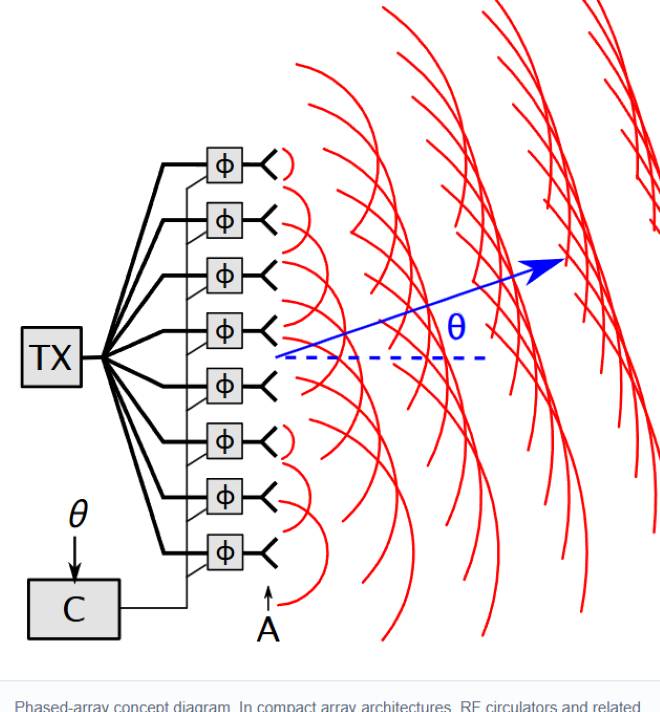
2) AESA and phased-array subsystems
Active electronically scanned arrays push circulator requirements into a more demanding regime. Arrays need consistency across many channels, stable amplitude and phase behavior, and packaging that fits into dense module layouts. In some architectures, the circulator or isolator is integrated near power amplifiers, low-noise amplifiers, or antenna feeds to preserve channel integrity and reduce reverse-coupled energy. This is especially relevant in dense aerospace systems where designers are fighting for low mass, low profile, and wide operating bandwidth.
For airborne or spaceborne arrays, the component cannot merely work at room temperature on a bench. It must maintain electrical behavior across qualification temperatures, vibration environments, and long-life deployment. That is why suppliers serving defense and aerospace emphasize phase stability, temperature stability, high-power capability, and ruggedization rather than only quoting headline isolation numbers.
3) Space communications and payload microwave assemblies
In satellite and other orbital communications payloads, an RF circulator may be used in microwave assemblies that handle transmit/receive separation, amplifier protection, or routing stability in tightly packaged subsystems. Space-qualified circulators must balance low mass, compact size, stable performance, material compatibility, magnetic control, and strict qualification requirements. This is one reason why aerospace circulator development often focuses on low-profile microstrip, waveguide, or hybrid configurations depending on band and power level.
At higher frequencies, especially in millimeter-wave sensing and data-link applications, bandwidth becomes a more difficult problem. Traditional Y-junction behavior can become harder to maintain with low loss and wide operating range as frequency rises. That is why NASA-supported work on low-mass self-biased circulators and broadband millimeter-wave hybrid circulators is notable: the agency is signaling that improved circulator architectures still matter for future radar and communications payloads.
4) Amplifier and receiver protection
Aerospace RF chains are full of expensive and fragile active devices. A high-power amplifier does not enjoy seeing uncontrolled reverse energy. A low-noise amplifier absolutely does not enjoy accidental transmitter leakage. In missile systems and other defense electronics, the cost of one damaged front-end stage is not just a repair invoice; it can mean mission failure. Circulators configured as isolating elements, or combined with matched loads to behave like isolators, help absorb or reroute unwanted reverse power before it destabilizes or damages active devices.
Why RF Circulators Still Beat Simpler Alternatives in Many Cases
At first glance, one might ask why not just use a fast RF switch, a diplexer, or a more elaborate filtering network. The answer lies in frequency proximity, power handling, linearity, instantaneous routing, and environmental ruggedness. A switch can certainly play a T/R role, but it introduces its own insertion loss, switching logic, transient behavior, and survivability considerations. Diplexers are excellent when transmit and receive bands are well separated, but many radar systems and some sensing architectures operate with transmit and receive frequencies that are too close for clean separation through ordinary frequency-domain filtering alone.
A circulator does not depend on time gating in the same way a switch does, and it does not require wide frequency separation in the same way a diplexer does. It is a magnetic routing device that can be continuously present in the chain. That simplicity becomes powerful in harsh, mission-critical environments. The trade-off, of course, is that circulators are not magically broadband, lossless, or infinitesimal in size. Engineers choose them not because they are perfect, but because in many applications they offer the best balance of compactness, passive reliability, and usable isolation.
| Approach | Main Strength | Main Limitation | Typical Fit |
|---|---|---|---|
| RF circulator | Passive T/R isolation with shared antenna path | Bandwidth and size depend on band, ferrite, and package | Radar systems, aerospace systems, compact high-reliability RF chains |
| RF switch | Controlled routing and timing flexibility | Requires control logic and can add switching transients | Time-gated architectures and some T/R modules |
| Diplexer/duplexer | Excellent band separation when frequencies are distinct | Less suitable when Tx/Rx frequencies are very close | Separated communication bands |
The Real Engineering Demands: Materials, Packaging, and Survivability
Ferrite physics still matters
A classic RF circulator relies on magnetically biased ferrite behavior. The nonreciprocal nature of the structure enables energy to favor one rotational direction over another, which is what gives the device its port-to-port routing characteristic. That simple statement hides a jungle of material science. Ferrite composition, magnetic bias design, resonator geometry, transmission-line realization, and matching structures all influence insertion loss, isolation, power handling, and usable bandwidth.
For aerospace systems, the ferrite is not judged only by peak bench performance. It is judged by how repeatably it behaves after thermal cycling, how stable it remains across mission temperatures, and whether the mechanical build protects the magnetic circuit from drift under vibration or shock. The wrong material or package can turn a lovely datasheet into a painful qualification failure.
Package type changes the application window
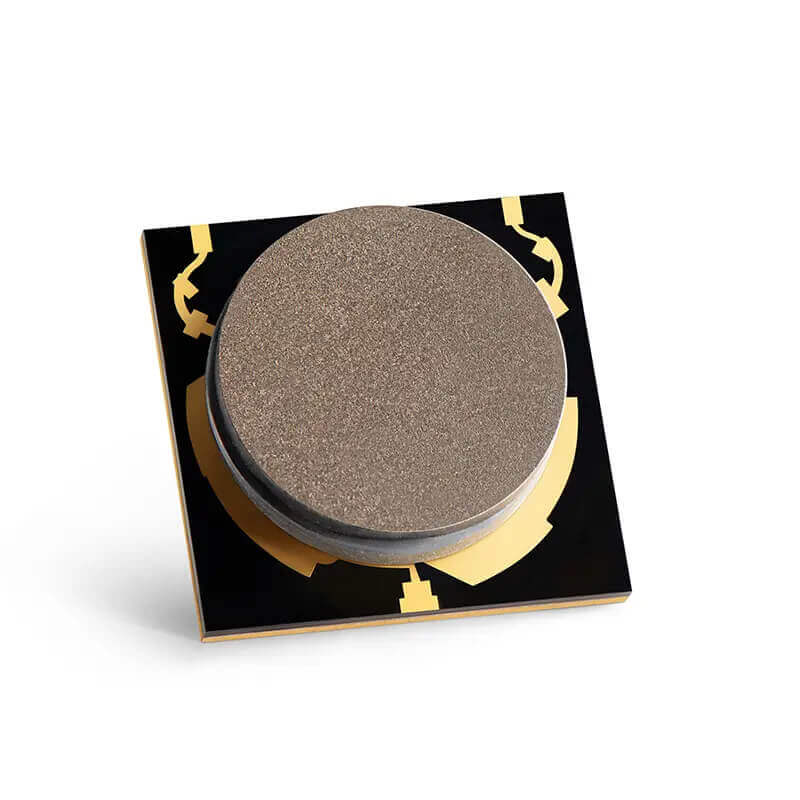
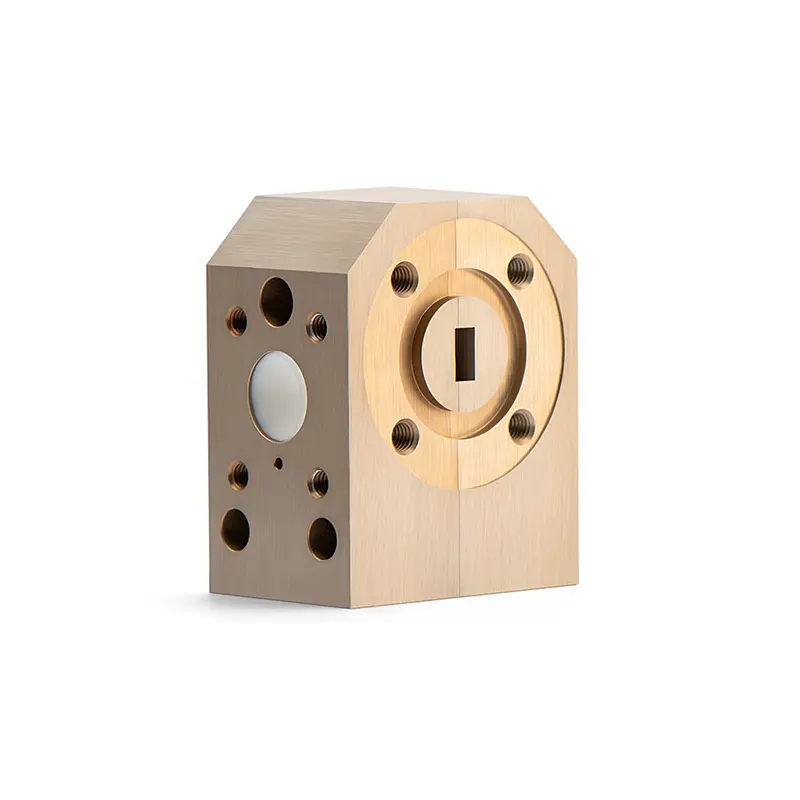
Package style is never cosmetic. It defines how the component can be used. Microstrip and drop-in formats favor compact integration and lower profile assemblies. Coaxial formats are often convenient for modular RF chains and test assemblies. Waveguide formats dominate where very low loss, high frequency, or high power are required. In defense and aerospace supply catalogs, it is common to see all of these variants because no single package solves every mission profile.
In missile systems, compactness and rugged mounting often push designers toward miniature drop-in or microstrip-compatible styles, but the power and bandwidth targets still decide what is realistic. In higher-power radar systems, coaxial or waveguide assemblies may still be preferred. The right answer is rarely ideological. It is a negotiation among frequency, power, thermal path, available space, assembly flow, and long-term reliability.
Thermal and mechanical design are part of RF performance
A circulator can be electrically correct and still fail at the system level if heat is not handled properly. Reverse energy, termination losses in isolator-like configurations, nearby amplifiers, and environmental heating all influence temperature rise. In high-duty-cycle or pulse-power use, thermal design is inseparable from RF design. Similarly, a unit that passes insertion-loss targets in a lab but shifts under shock loading is not an aerospace component; it is merely a microwave sample with ambitions.
This is why high-reliability product literature often emphasizes qualification temperature ranges, peak power capability, shock or environmental robustness, and phase stability. Those details may look dull next to frequency coverage, but they are the difference between catalog RF and flight-worthy RF.
Design Trade-Offs in Aerospace and Missile Applications
No competent engineer asks for infinite bandwidth, zero insertion loss, tiny size, huge power handling, perfect isolation, and bargain pricing all at once. The world is not that kind. An RF circulator in aerospace systems is always a trade study in disguise.
Insertion loss versus isolation
Lower insertion loss preserves system noise figure and output power. Higher isolation protects downstream stages. Achieving both simultaneously across wider bandwidths becomes harder as the operating band climbs and the package shrinks. In many real designs, the acceptable balance depends on mission priorities: some front ends prize receive sensitivity above all, while others accept a little more loss to gain ruggedness or bandwidth.
Bandwidth versus frequency
Traditional ferrite circulators can perform excellently, but wideband performance becomes progressively harder at very high frequencies. That challenge is one reason hybrid mmWave circulator research is attracting attention. For future sensors and high-data-rate links, especially in advanced radar systems and space payloads, wider bandwidth without unbearable loss is a meaningful technology target, not an academic hobby.
SWaP versus margin
Small, light, low-profile components are desirable in every airborne and missile platform. But extreme miniaturization tends to compress thermal margin, narrow bandwidth, and tighten tolerances. The art is to shrink wisely rather than recklessly. A part that looks impressively small in a brochure but gives away too much insertion loss or temperature stability can become a very expensive mistake wrapped in attractive geometry.
Cost versus qualification
Commercial microwave parts can be useful references, but aerospace-grade selection depends on documentation, process control, repeatability, environmental testing, and application confidence. For a news article, this may sound unromantic. For a procurement engineer, it is the whole opera.
What the Latest Industry and NASA Signals Tell Us
Two themes stand out in recent technical and market signals. First, defense and aerospace suppliers continue to market circulators and isolators specifically for rugged radar, communications, airborne, shipboard, and AESA applications. That means the component class is not fading into irrelevance; it is being refined for narrower, harsher, and more valuable use cases. Second, NASA-backed work on low-mass self-biased circulators and broadband millimeter-wave hybrid circulators shows that there is still active demand for better nonreciprocal routing at the frontier of SWaP and frequency.
In plain English: the RF circulator is old, but not old-fashioned. The requirements around it are changing. Future aerospace systems want lighter parts, broader bandwidth, less magnetic complexity, and better behavior at millimeter-wave frequencies. Future missile systems want even more shock tolerance, tighter packaging, and stable performance under punishing thermal and mechanical stress. Future radar systems want clean duplexing in denser, faster, and more integrated front ends. The component survives because the problem it solves survives.
Conclusion
So how are RF circulators used in aerospace systems and missile systems? They are used as quiet gatekeepers of microwave order. They isolate transmitter power from receiver sensitivity. They enable shared antenna architectures in compact radar systems. They protect amplifiers from damaging reflections. They support phased-array and payload integration where space, mass, and reliability are tightly constrained. And they do all of this while surviving environments that would make ordinary commercial hardware lose its composure almost instantly.
The deep lesson is not simply that circulators route signals. It is that they route risk. Every decibel of isolation, every fraction of a decibel of insertion loss, every gram saved, every degree of temperature stability, and every shock-resistant assembly choice helps determine whether the wider system behaves predictably in flight. That is why RF circulators remain relevant in some of the most demanding microwave architectures on earth—and above it.
FAQ
1) Why is an RF circulator so important in radar systems?
An RF circulator allows the transmitter and receiver to share an antenna path while keeping forward transmit power away from the sensitive receive chain. In radar systems, this improves duplexing efficiency, protects hardware, and supports better target detection by controlling leakage and reflections.
2) Are RF circulators only used in missile systems?
No. Missile systems are only one application area. RF circulators are also used in aerospace systems such as airborne radar, satellite communications, phased-array modules, telemetry equipment, and other high-reliability microwave assemblies.
3) What is the difference between a circulator and an isolator?
A circulator is typically a three-port nonreciprocal device that routes energy sequentially from one port to the next. An isolator is commonly derived from a circulator by terminating one port with a matched load, creating a two-port function that allows forward transmission while dumping reverse energy into the load.
4) Which package style is best for aerospace systems?
There is no single best style. Microstrip and drop-in formats suit compact integration, coaxial formats are useful for modular assemblies, and waveguide versions often excel at higher power or higher frequency. The correct choice depends on frequency, power, bandwidth, thermal path, mass target, and qualification needs.
5) Why are new circulator architectures still being researched?
Because future radar systems and aerospace systems demand wider bandwidth, lower mass, smaller size, and stronger performance at millimeter-wave frequencies. Traditional ferrite solutions remain powerful, but advanced missions continue to push beyond their easiest operating window.
References
- Pasternack. What are RF Isolators and RF Circulators?
- Teledyne Microwave UK. Circulators.
- Smiths Interconnect. L, S & X-Band High Power Circulators and Isolators.
- Smiths Interconnect. Coaxial Isolators and Circulators for Space and Terrestrial AESA Applications.
- NASA TechPort. Small, Low Mass, Self-Biased Circulators for Aerospace Phased Arrays.
- NASA TechPort. Broadband Millimeter-Wave Hybrid Circulators for Aerospace Systems.
- NASA NTRS. Doppler Radar with Multiphase Modulation of Transmitted and Reflected Signal.
- everything RF. Microstrip Circulators Search Overview.
Recommended Products
.jpg)
 Article Tags
Keith Wong
Marketing Director, Chengdu Hertz Electronic Technology Co., Ltd. (Hzbeat)
Keith has over 18 years in the RF components industry, focusing on the intersection of technology, healthcare applications, and global market trends.