RF Circulator Structures: From Miniaturized Integration to High-Power Design
Explore how RF circulator structures and materials influence power handling, size, and system performance—from integrated microstrip designs to high-power coaxial and waveguide circulators.
 Updated on: Jan 29, 2026
 Author:
RF circulators are fundamental non-reciprocal passive components widely used in modern RF and microwave systems. From wireless communication infrastructure to radar and satellite ground stations, RF circulators and RF isolators play a critical role in protecting sensitive active devices from reflected power while enabling efficient signal routing.
As RF systems continue to evolve toward higher frequencies, increased integration, and greater power density, the structural design of RF circulators has become more important than ever. While electrical specifications such as insertion loss, isolation, and bandwidth are often emphasized, it is ultimately the physical structure—combined with material selection—that defines power handling capability, thermal stability, and long-term reliability.
The Relationship Between RF Circulator Structure and Power Capability
An RF circulator is inherently a three-port, non-reciprocal device whose behavior depends on the interaction between electromagnetic fields and magnetically biased ferrite materials. However, the maximum usable power of a microwave circulator is not determined solely by ferrite properties. Instead, it is governed by how electromagnetic energy is distributed, confined, and dissipated within the structure.
How Signal Path Geometry Shapes Power Handling
Different RF circulator structures create fundamentally different field distributions. In compact structures, electromagnetic energy is confined to smaller volumes, resulting in higher power density. Localized field concentration increases the risk of ferrite saturation, dielectric heating, and conductor losses. By contrast, larger geometries allow electromagnetic fields to spread more evenly, reducing peak stress on materials.
This structural effect explains why microstrip circulators, despite using similar ferrite materials, generally support much lower power levels than coaxial or waveguide circulators. The signal path geometry directly controls how power density scales with input power.
Why Thermal Dissipation Becomes the Real Limiting Factor
In many RF circulators, failure does not occur due to immediate electrical breakdown but rather due to thermal runaway. As insertion loss converts RF energy into heat, insufficient thermal dissipation leads to rising ferrite temperature, shifting operating points and degrading isolation.
Microstrip and Integrated RF Circulator Structures
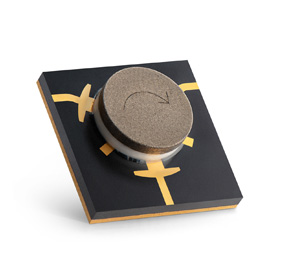
Microstrip circulators represent the most compact and integration-friendly class of RF circulator structures. They are widely used in phased-array antennas, compact transceiver modules, and communication subsystems where size and weight are primary constraints.
Structural Characteristics of Microstrip Circulators
A typical microstrip circulator consists of planar transmission lines arranged in a Y-junction or T-junction geometry, coupled through a thin ferrite disk magnetically biased by permanent magnets. This planar configuration enables seamless integration with other RF components on printed circuit boards.
The advantage of this structure lies in its minimal footprint and compatibility with automated assembly. However, the same planar geometry concentrates electromagnetic fields within a limited volume, which restricts achievable power handling.
Material Constraints in Integrated Designs
Ferrite materials used in microstrip circulators are typically thin and optimized for low-loss operation at moderate power. At higher power levels, localized heating and magnetic saturation become dominant limiting factors. Additionally, substrate materials impose further constraints on thermal conductivity and dielectric breakdown.
As a result, microstrip RF circulators are best suited for low to medium power applications, where integration density outweighs absolute power capability.
Typical Power and Application Scenarios
Microstrip circulators are commonly found in:
- Phased-array antenna modules
- Small cell and wireless communication equipment
- Compact RF front-end subsystems
In these systems, RF isolators based on microstrip circulator structures are often employed to protect low-noise amplifiers and power amplifiers from moderate reflections.
Coaxial RF Circulator Structures
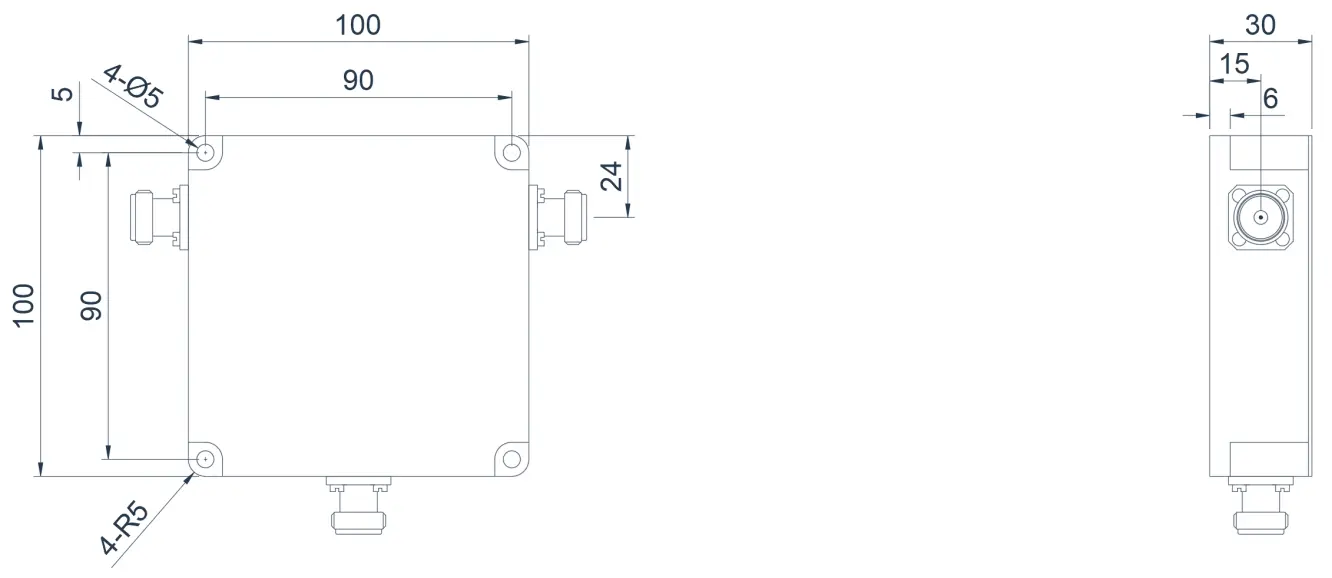
Coaxial circulators occupy a middle ground between compact microstrip designs and large waveguide implementations. They offer significantly improved power handling while maintaining relatively moderate size.
Why Coaxial Structures Handle Higher Power
The defining feature of coaxial RF circulators is their rotationally symmetric geometry. This symmetry produces more uniform electromagnetic field distribution, reducing localized hotspots that limit power handling in planar structures.
By allowing greater ferrite volume and improved heat spreading, coaxial circulators achieve higher continuous-wave and peak power ratings.
Ferrite Utilization in Coaxial Circulators
In coaxial designs, ferrite materials operate closer to their optimal region, where magnetic bias and field strength remain stable over a wider power range. This stability translates directly into consistent isolation and insertion loss across varying operating conditions.
Common Use Cases in RF Systems
Coaxial RF circulators and RF isolators are widely used in:
- Test and measurement equipment
- Medium-power communication transmitters
- Laboratory and production test setups
Their mechanical robustness and connectorized interfaces make them particularly suitable for flexible system configurations.
Waveguide RF Circulator Structures for High-Power Applications
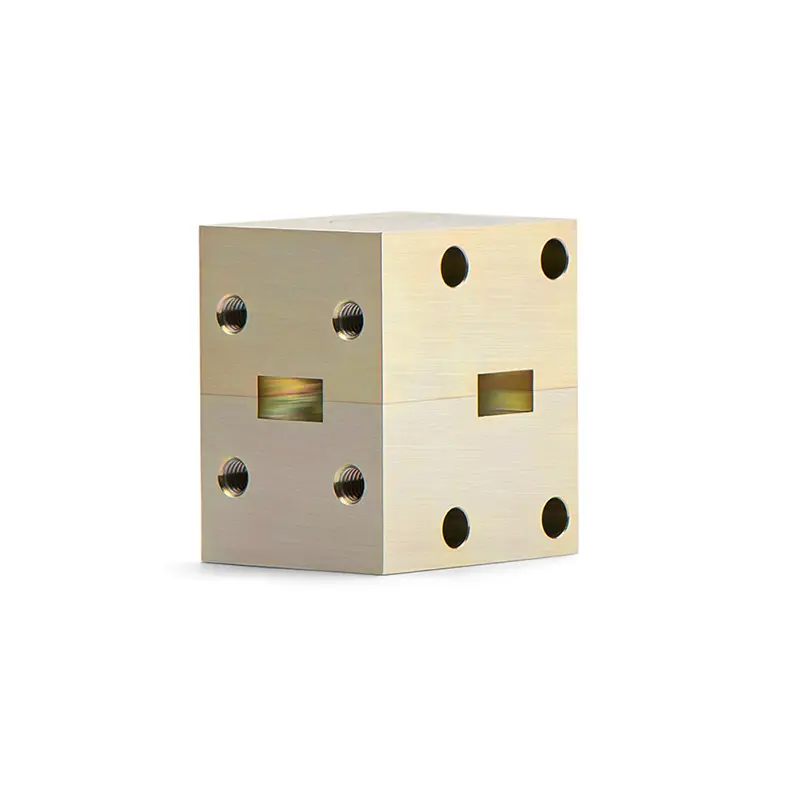
Waveguide circulators represent the highest power-capable class of RF circulator structures. They are essential in applications where kilowatt-level power handling and extreme reliability are required.
Waveguide Geometry and Field Distribution Advantages
Waveguide structures inherently support large electromagnetic field volumes, dramatically reducing power density for a given input power. This characteristic minimizes ferrite heating and prevents dielectric breakdown.
The physical separation between conductors also eliminates many of the parasitic effects that limit planar and coaxial designs.
Material and Mechanical Considerations at High Power
High-power waveguide circulators employ large ferrite elements with carefully controlled magnetic biasing. Mechanical stability, thermal expansion, and long-term material aging become critical design considerations at these power levels.
Typical High-Power and Harsh Environment Applications
Waveguide RF circulators are commonly deployed in:
- Radar transmitters
- Satellite communication ground stations
- High-power broadcast and defense systems
Structure–Material Trade-Offs in RF Circulator Design
No RF circulator structure is universally optimal. Every design represents a compromise between size, power handling, bandwidth, cost, and reliability.
Miniaturization vs Power Handling
Bandwidth, Size, and Thermal Stability
Wideband operation often requires looser coupling and larger physical dimensions, further reinforcing the relationship between structure and achievable bandwidth. Thermal stability must be maintained across the entire operating band.
Cost and Manufacturing Complexity
High-power waveguide circulators offer superior performance but at the expense of increased size, weight, and manufacturing cost. System-level considerations ultimately determine the most appropriate structure.
How to Choose the Right RF Circulator Structure for Your Application
Selection Based on Power Level
Low-power integrated systems favor microstrip circulators, while medium-power applications benefit from coaxial designs. High-power environments almost exclusively rely on waveguide circulators.
Selection Based on System Integration Requirements
Mechanical integration, connector interfaces, and assembly constraints often dictate structural choices as much as electrical specifications.
Long-Term Reliability Considerations
In mission-critical systems, stability and lifetime performance are often more important than minimizing size or cost.
Conclusion
RF circulator performance is inseparable from structure. While ferrite materials enable non-reciprocal behavior, it is the physical implementation that determines power capability, thermal stability, and system reliability.
Understanding the structural differences between microstrip, coaxial, and waveguide RF circulators enables engineers to make informed, system-level decisions that balance integration, power, and longevity.
FAQ
What limits the power handling of an RF circulator?
Power handling is primarily limited by thermal dissipation, ferrite saturation, and field concentration.
Why are waveguide circulators preferred for high-power systems?
Their large field volume and superior thermal properties enable much higher power handling.
Can microstrip circulators be used in high-power applications?
Generally no, due to high power density and limited thermal dissipation.
How does ferrite material affect circulator performance?
Ferrite properties influence non-reciprocity, stability, and achievable power levels.
References
- R. E. Collin, Foundations for Microwave Engineering, McGraw-Hill.
- D. M. Pozar, Microwave Engineering, Wiley.
- IEEE Transactions on Microwave Theory and Techniques, selected papers on ferrite devices and non-reciprocal components.
- Microwave Journal, application and design articles on ferrite circulators and RF isolators.
Recommended Products
.jpg)
 Article Tags
Sara
Sara is a Brand Specialist at Hzbeat, focusing on RF & microwave industry communications. She transforms complex technologies into accessible insights, helping global readers understand the value of circulators, isolators, and other key components.