Miniaturized RF Circulators Become More Important in Dense RF Front-End Designs
Learn why miniaturized RF circulators are becoming more important in dense RF front-end designs. Explore their role in compact 5G, phased array, SATCOM, and high-density RF systems, plus the trade-offs between size, insertion loss, isolation, bandwidth, thermal management, and power handling.
 Updated on: Apr 16, 2026
 Author:
Dense RF front-end design is no longer a niche topic reserved for military radar labs or premium telecom platforms. It has become a baseline engineering condition across 5G radios, phased array systems, SATCOM terminals, electronic warfare payloads, compact wireless modules, and even advanced test fixtures. Designers are being asked to fit more RF functions into less physical space while still improving bandwidth, channel count, thermal reliability, and production consistency. That pressure changes the value of every component in the signal path, including the RF circulator.
For many years, a circulator could be discussed in simple terms: it routes microwave energy from port 1 to port 2 to port 3 in a defined direction, and it helps protect sensitive stages from reflected power by controlling where energy goes. In dense modern front ends, that description is still true, but it is no longer sufficient. A circulator is now evaluated as part of a spatial, thermal, and layout problem. If it is too large, it can block routing channels, force longer interconnects, increase parasitics, complicate shielding, and create a board-level compromise that ripples through the rest of the design. In other words, miniaturization is not cosmetic. It is architectural.
This is why miniaturized RF circulators are becoming more important in dense RF front-end designs. A smaller circulator can help engineers shorten RF paths, free board area for active devices, reduce packaging pressure, and support higher channel density. But there is a catch that separates good engineering from marketing noise: size reduction only matters when the device still preserves acceptable insertion loss, isolation, matching, temperature stability, and power handling. A tiny circulator that damages system margin is not an advantage. A compact circulator that preserves real RF performance is.
Why RF Front Ends Keep Getting Denser
The trend toward denser RF front ends is driven by a simple reality: more functionality must now live inside the same or smaller physical envelope. Qorvo describes integration as a way to reduce product footprint and improve system performance, and in its discussion of thermal challenges in Wi-Fi front ends, it notes that optimized integrated front-end modules can shorten line lengths and reduce extra tuning structures that otherwise contribute to insertion loss. The same logic applies well beyond consumer wireless. Whenever a system becomes more integrated, the space left for supporting passive components becomes tighter, and every millimeter reclaimed has system-level value.
Analog Devices makes the same point from another angle in phased array design. In planar phased arrays, placing RF circuitry and antenna elements on opposite sides of the same PCB creates a significant size advantage, but that advantage comes with new layout, power-management, and thermal challenges. That statement matters because it shows what miniaturization really does in practice: it solves one problem while making the design window less forgiving. Once front-end density rises, components that were previously “good enough” can become the reason the entire assembly is difficult to route, cool, calibrate, or manufacture.
As systems move toward higher levels of integration, the front-end designer is no longer choosing parts only by frequency band and datasheet headline values. The designer is balancing board area, assembly stack-up, shielding, heat spreading, control-line congestion, grounding, connector transitions, and repeatability under temperature stress. In this environment, smaller RF passives are not luxuries. They are part of the survival kit.
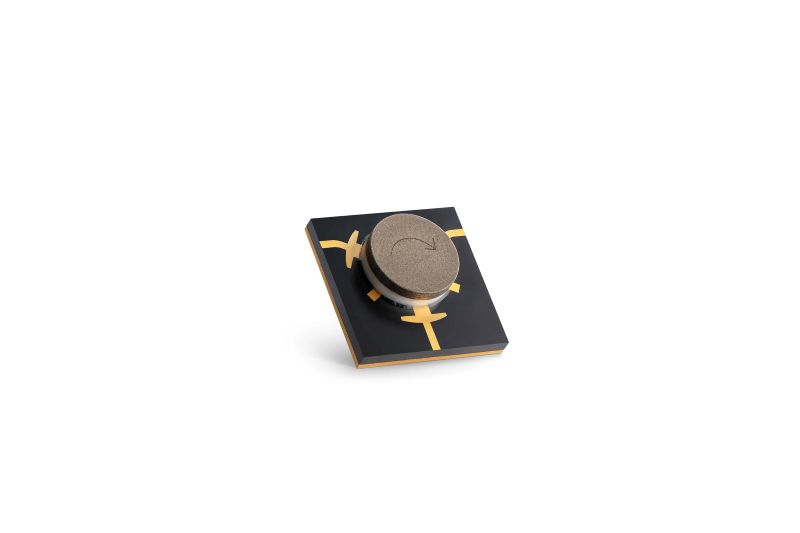
Why the Circulator Becomes More Critical as Space Shrinks
When board area is generous, engineers can often absorb the physical bulk of a passive component with creative routing, generous spacing, or a larger enclosure. Dense RF front ends do not offer that luxury. In compact architectures, the circulator sits in direct competition with amplifiers, filters, limiters, T/R modules, bias circuitry, connectors, shielding structures, and thermal hardware. Its size affects not just where it fits, but how everything else around it behaves.
Consider what happens when a circulator is too large for a given RF front-end cell. Interconnects become longer. Transitions become more awkward. The designer may need additional bends, crossovers, or layer changes. Each one can add loss, mismatch risk, and manufacturing sensitivity. Ground continuity may become harder to maintain. Nearby active devices may be pushed into thermally weaker zones. The mechanical package may need to grow. That is how one “slightly oversized” part can become a full-system penalty.
Now flip the situation. A properly miniaturized circulator can shorten the path between the power amplifier and the antenna-side network, or between the shared antenna interface and the receive protection path. It can allow tighter clustering of function blocks. It can create room for better shielding walls or keep-out zones. In multi-channel designs, it can be the difference between fitting a required channel count on one board and being forced into a more complex mechanical partition. That is especially important in phased arrays and compact transceiver modules, where repeated front-end cells multiply every small layout decision.
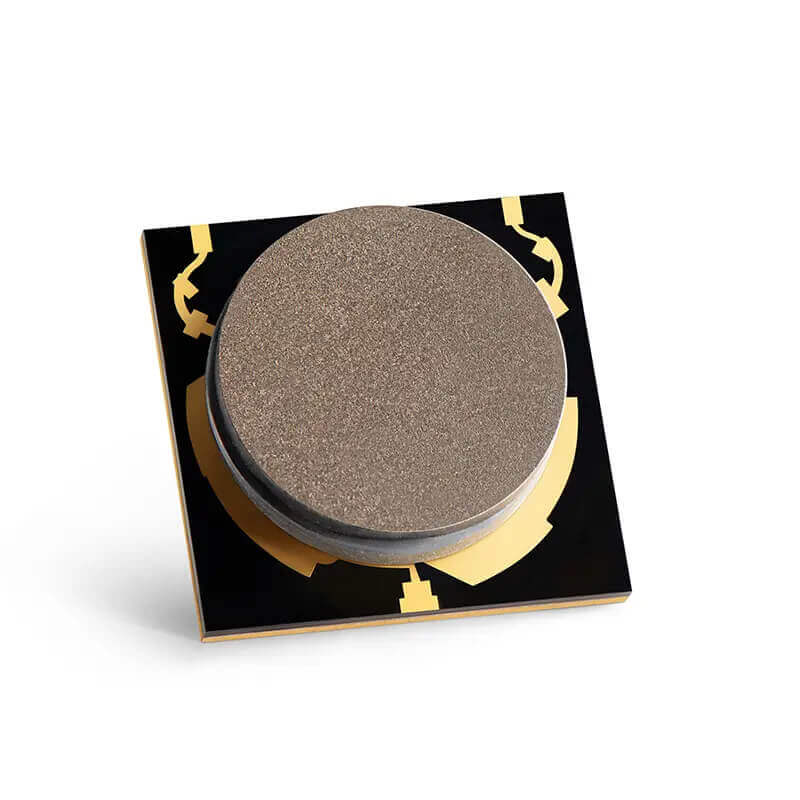
Smiths Interconnect describes microstrip isolators and circulators as broadband, low-profile, low-mass structures suited to hybrid applications and terrestrial AESA environments. That combination of low profile and functional RF routing is exactly why miniaturization matters. In modern front ends, the component that protects or directs RF energy must also coexist gracefully with a highly constrained physical ecosystem.
What Miniaturization Actually Solves in Dense RF Front Ends
1. It helps preserve shorter RF paths
Shorter paths are good engineering manners in almost any microwave design. When active devices, antenna interfaces, and protection networks can be placed closer together, the front end usually benefits from lower interconnect loss, less opportunity for unintended coupling, and fewer tuning headaches. In compact assemblies, the size of the circulator can directly influence whether that short path is even achievable. A smaller device gives the layout more room to stay clean.
2. It supports higher functional density
Modern RF systems keep asking for more: more channels, more beamforming capability, more filtering, more switching options, more monitoring, and more control. In a dense design, the area saved by a compact circulator can be redeployed into something else the product desperately needs. Sometimes that means extra shielding. Sometimes it means a more robust bias network. Sometimes it simply means the difference between passing and failing the packaging review.
3. It reduces mechanical pressure on the enclosure
RF front ends do not live on a schematic. They live in metal. Every cubic millimeter reclaimed in the RF section may ease constraints on lid height, connector approach, cable routing, or thermal interface stack-up. A lower-profile circulator can make it easier to maintain enclosure targets without sacrificing serviceability or structural rigidity. In sectors like aerospace, portable systems, and small terminals, that mechanical relief is often as valuable as the saved PCB area.
4. It can improve scaling in repeated front-end cells
Single-channel layout tricks do not always survive when repeated across dozens or hundreds of channels. Phased array systems make this brutally obvious. A front-end cell that is merely acceptable at one location can become impossible when copied many times. Miniaturization helps because the benefit compounds. Saving a modest amount of area per cell can produce a major gain across the full array, especially when routing, shielding, and power distribution must coexist in tight patterns.
The Real Trade-Offs: Small Is Harder Than It Looks
Anyone can ask for a smaller circulator. Delivering one without eroding critical RF behavior is the hard part. Miniaturization changes electromagnetic geometry, field distribution, thermal mass, packaging tolerances, and sometimes the practical limits of materials and assembly. That is why compact RF components deserve more respect than their footprint suggests.
The first trade-off is often insertion loss. As designs shrink, conductors, ferrite structures, and matching regions may become less forgiving. In a dense front end, even a few tenths of a decibel matter because the loss accumulates. The second trade-off is isolation. A circulator must still route energy decisively enough that reflected or reverse energy does not compromise nearby receive paths, destabilize amplifiers, or degrade front-end linearity. The third is bandwidth. Miniaturization is easiest when the performance target is narrow and fixed; it becomes more difficult when the device must cover wide bands, multiple operating conditions, or aggressive environmental requirements.
Then comes power handling and heat. A small package has less thermal mass and less forgiving surface area for managing temperature rise. If the application involves high average power, peak power, or harsh ambient conditions, thermal design becomes inseparable from RF design. Analog Devices notes that planar phased-array front ends bring thermal-management and bias-sequencing challenges precisely because so much function is packed together. A compact circulator placed inside this environment must be evaluated not as an isolated passive block, but as a thermal citizen of the whole assembly.
There is also a manufacturing trade-off. Very compact components often tighten assembly tolerances. The design may become more sensitive to solder volume, mounting flatness, interface quality, screw torque, grounding integrity, or surrounding metal proximity. This is where the fantasy of miniaturization usually crashes into the factory wall. A design that looks elegant in CAD but cannot be built consistently is only a nice drawing with a bad attitude.

Where Miniaturized RF Circulators Matter Most
Phased Array and AESA Systems
Phased arrays are one of the clearest examples of why compact circulators matter. NOAA’s public material on multifunction phased array radar explains that phased arrays use flat electronically steered antennas with very large numbers of elements. Analog Devices likewise notes that phased arrays can range from a few elements to thousands, and that planar implementations bring strong size advantages together with real layout and thermal challenges. This is the perfect storm for miniaturized front-end hardware. The denser the array-side electronics become, the more valuable every compact passive becomes.
In these systems, the design burden is repeated across many channels. A circulator that is slightly too large, slightly too hot, or slightly too lossy can multiply its penalty across the entire array. Conversely, a compact and well-balanced circulator can help support cleaner cell replication, better routing discipline, and improved packaging efficiency. This is why “small enough” is not a casual requirement in phased-array work. It is often a gating condition.
5G and High-Density Wireless Infrastructure
5G radios and related high-density wireless platforms continue to push for more integration, higher channel counts, and tighter space envelopes. Qorvo’s discussions of RF integration and compact front-end modules underline the same engineering logic: lower footprint and lower interconnect burden support better performance and more scalable designs. In practical terms, miniaturized circulators become attractive wherever directional signal management must coexist with tightly clustered amplifiers, filters, and switching functions.
This does not mean every 5G radio uses a circulator in the same way. It means the broader system trend is moving toward denser RF sections where passive size matters more than it did in older, roomier architectures. Once integration pressure rises, compact nonreciprocal components become easier to justify because the cost of wasted area rises as well.
SATCOM and Aerospace Platforms
In satellite communications and aerospace electronics, low profile, low mass, and predictable behavior under stress are never optional. Smiths Interconnect specifically positions microstrip circulator technology as suitable for space and terrestrial AESA applications because of its low-profile, low-mass broadband structure. That matters in systems where volume, mass, and integration efficiency are part of the design brief from the first day. A miniaturized circulator that also preserves environmental and RF stability can support more compact terminal architectures and more disciplined packaging in airborne or space-bound hardware.
Compact Test, Evaluation, and Prototyping Platforms
Even in the lab, miniaturization matters. As prototyping platforms become more integrated, engineers increasingly want more realistic front-end behavior in a smaller space. Compact evaluation assemblies, demonstration radios, and integrated test fixtures all benefit when key RF routing functions can be implemented without bulky mechanical overhead. This is not only about saving bench space. It is about building prototypes that look more like the final product and reveal real layout interactions earlier in the development cycle.
Why Testing Becomes More Important as Components Shrink
Miniaturization makes margins thinner, which makes validation more important. When a compact circulator is inserted into a dense front end, engineers must confirm more than the brochure values. They need to validate insertion loss across the real operating band, isolation under realistic mounting conditions, return loss within the full assembly, temperature behavior, and interaction with nearby active devices and shielding structures.
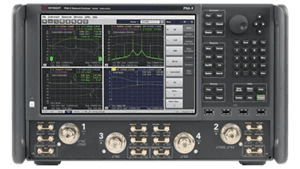
That is why serious RF measurement remains central to compact front-end development. Keysight describes its PNA-X class analyzers as integrated microwave test engines designed for active-device characterization and multi-measurement workflows. The brand and instrument class are less important than the underlying message: dense RF front ends cannot be trusted on intuition alone. As physical spacing shrinks, measurement discipline must grow. A compact circulator should be judged in the exact environment where it will live, not in an idealized corner of a datasheet universe.
How to Evaluate a Miniaturized RF Circulator for Real Projects
When engineers evaluate a compact RF circulator, they should ask harder questions than “How small is it?” A better evaluation framework includes the following:
- Footprint versus path benefit: Does the smaller package materially shorten RF routing or free meaningful board area, or is the size reduction too small to change the layout outcome?
- Insertion loss under system conditions: Is the loss still acceptable after real transitions, mounting, and temperature effects are included?
- Isolation in the actual architecture: Does the device still protect receive paths or sensitive stages once installed near amplifiers, beamformers, and shielding structures?
- Thermal compatibility: Can the device operate safely in the real heat map of the assembly, especially near PAs or other hot zones?
- Manufacturing tolerance: Is the design robust enough for repeatable production, or does performance swing too much with assembly variation?
- Scalability: If this front-end cell is replicated many times, does the compact device make the full product easier to realize?
What This Means for Future RF Front-End Design
The direction of travel is clear. RF front ends are becoming denser, more integrated, and more sensitive to every mechanical and electromagnetic compromise. That means the importance of miniaturized nonreciprocal components will continue to rise. As more functions are consolidated into tighter hardware, the front-end designer will place higher value on compact circulators that preserve directional control without stealing thermal headroom or routing freedom.
This does not mean the smallest device always wins. It means the best compact device wins: the one that balances size, loss, isolation, bandwidth, power handling, and stability in a form factor that genuinely improves the assembly. In that sense, the future belongs not to miniaturization alone, but to disciplined miniaturization.
For RF engineers working on 5G radios, phased arrays, SATCOM terminals, compact microwave subsystems, or high-density test platforms, the implication is simple. The circulator has moved from being “just another passive” to being a real architectural lever. In dense front-end design, that small component can decide whether the rest of the system breathes easily or spends its life fighting for space.
Conclusion
Miniaturized RF circulators have become more important because dense RF front-end design has changed the rules. Space, thermal margin, and routing simplicity are now strategic resources. In this environment, a compact circulator can improve layout feasibility, shorten RF paths, support higher functional density, and reduce packaging pressure. But the value only holds when RF performance remains credible.
That is the real story behind this trend. Engineers do not need smaller parts for vanity. They need smaller parts because modern RF systems are trying to do more in less space without surrendering insertion loss, isolation, bandwidth, or reliability. A miniaturized RF circulator that meets that challenge is no longer a convenience. It is a competitive design tool.
FAQ
Why are miniaturized RF circulators more important in dense front-end designs?
Because dense front ends leave less room for passive components, routing, shielding, and thermal hardware. A compact circulator can free board area, shorten RF paths, and make the overall front-end architecture easier to implement.
Does a smaller RF circulator always improve system performance?
No. A smaller package only helps when the device still maintains acceptable insertion loss, isolation, return loss, bandwidth, temperature stability, and power handling. Good miniaturization is balanced miniaturization.Learn more in the article ->
Which applications benefit most from compact RF circulators?
Phased arrays, AESA radar, SATCOM terminals, compact wireless infrastructure, and tightly integrated microwave subsystems benefit the most because they combine limited space with repeated front-end cells and strict RF performance targets.
What is the main engineering risk of aggressive miniaturization?
The main risk is hidden trade-offs. As size shrinks, the design may become more sensitive to loss, heat, tolerance, assembly variation, and limited bandwidth. That is why measurement and system-level evaluation are essential.Learn more in the article ->
How should engineers choose a miniaturized RF circulator?
They should evaluate more than package size. The best choice balances footprint, insertion loss, isolation, thermal behavior, manufacturability, and the actual layout benefit delivered inside the full RF front-end assembly.Learn more in the article ->
References
- Qorvo, RF Integration Technology Innovations.
- Qorvo, Overcoming MIMO Wi-Fi Front End Thermal Design Challenges.
- Analog Devices, Overcoming Common Planar Phased Array Circuit Design Challenges.
- Analog Devices, CN0566: Phased Array (Phaser) Development Platform.
- Smiths Interconnect, Microstrip Isolators and Circulators.
- Smiths Interconnect, The Anatomy of a Microstrip Isolator and Circulator.
- NOAA National Severe Storms Laboratory, Multifunction Phased Array Radar.
- Keysight Technologies, PNA-X Microwave Network Analyzer.
Recommended Products
 Article Tags
Keith Wong
Marketing Director, Chengdu Hertz Electronic Technology Co., Ltd. (Hzbeat)
Keith has over 18 years in the RF components industry, focusing on the intersection of technology, healthcare applications, and global market trends.