Why Phased Array Radars Need Thousands of RF Circulators
Engineering guide explaining why phased array radar systems require thousands of RF circulators and how circulators are used inside radar transmit receive modules.
 Updated on: Mar 09, 2026
 Author:
Introduction
Modern radar technology has undergone a major transformation over the past several decades. Traditional radar systems relied on mechanically rotating antennas and centralized transmitters to scan the surrounding environment. Today, however, many advanced radar systems use electronically steered phased array antennas capable of scanning vast areas almost instantly. This transition from mechanical radar architectures to phased array radar systems has significantly improved radar performance, enabling faster target tracking, improved reliability, and better detection accuracy.
One of the most important yet often overlooked components enabling this transformation is the RF circulator. RF circulators are non-reciprocal microwave devices used to control the direction of RF signals in radar front-end circuits. In modern phased array radar systems, these components are required in large quantities because each antenna element often includes its own transmit/receive module that requires signal isolation between the transmit and receive paths.
This article explains why phased array radars require thousands of RF circulators, how these devices function within radar architectures, and how different circulator technologies are used in various radar applications.
1. Radar System Architecture
Radar systems detect objects by transmitting electromagnetic waves and analyzing the signals that reflect back from targets. The radar transmitter generates microwave energy that is radiated through an antenna. When this energy encounters objects such as aircraft, ships, or weather formations, a portion of the signal is reflected back toward the radar receiver.
A major engineering challenge in radar systems is the enormous difference between transmit and receive signal power. Radar transmitters may generate signals ranging from several watts to kilowatts or even megawatts depending on the system design. In contrast, the reflected radar echoes received from distant targets may be extremely weak, sometimes billions of times weaker than the transmitted signal.
Because of this massive power difference, radar front-end circuits require strong signal isolation. Without proper isolation, high power transmit pulses could damage sensitive receiver components such as low noise amplifiers. RF circulators provide the directional signal routing necessary to prevent this from happening.
2. Traditional Radar vs Phased Array Radar
Traditional radar systems used mechanically rotating antennas to scan the environment. A single transmitter generated the radar signal, which was routed through a waveguide network to the antenna. Because the system contained only one transmit chain and one receive chain, the number of microwave components required in the front-end was relatively small.
In these early radar systems, only a few RF circulators were needed. Typically one circulator was placed between the transmitter and receiver to separate the transmit pulse from the received echo.
Phased array radar systems are fundamentally different. Instead of a single transmitter feeding the antenna, the antenna consists of many individual elements arranged in a grid. Each element transmits signals with slightly different phase shifts. By controlling these phase differences electronically, the radar beam can be steered in different directions without physically moving the antenna.
While this architecture offers many advantages, it also dramatically increases the complexity of microwave circuitry.
3. Radar Transmit Receive Modules
Each antenna element in a phased array radar is connected to a transmit receive module, often referred to as a T/R module. These modules contain the RF circuitry responsible for generating transmit signals and processing received echoes.
| Component | Function |
|---|---|
| Power Amplifier | Generates microwave transmit power |
| Low Noise Amplifier | Amplifies weak radar echoes |
| Phase Shifter | Controls beam steering |
| RF Circulator | Separates transmit and receive signals |
The RF circulator is a critical element within the T/R module. It ensures that transmit signals are directed toward the antenna while received signals are routed toward the receiver chain. Without proper signal routing, transmit pulses could interfere with the receiver and reduce radar sensitivity.
4. Why RF Circulators Are Essential in Radar
The primary purpose of an RF circulator in radar systems is to provide isolation between the transmitter and the receiver. Because radar transmit pulses are extremely powerful compared to received echoes, direct coupling between the transmit and receive paths would overwhelm the receiver.
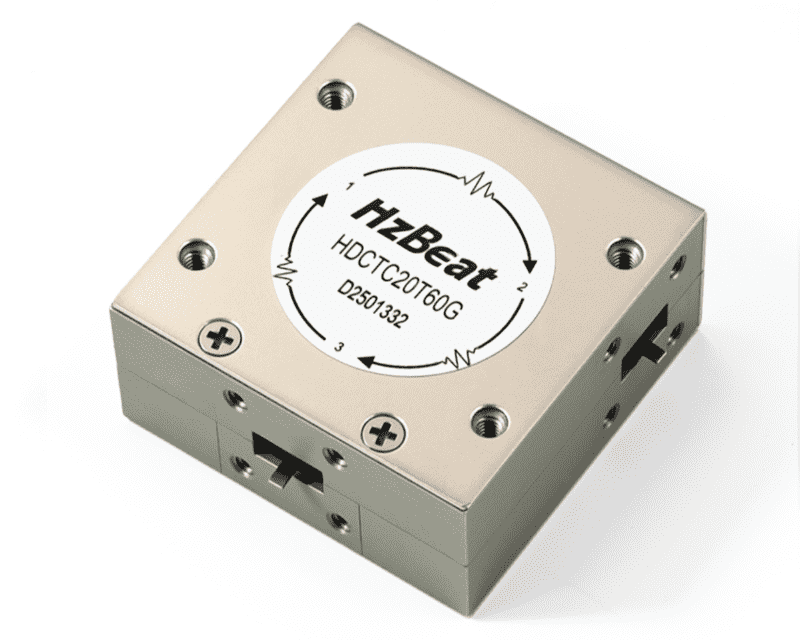
RF circulators use ferrite materials under magnetic bias to create non-reciprocal signal behavior. This allows microwave signals to flow from port 1 to port 2, from port 2 to port 3, and from port 3 back to port 1, but not in the reverse direction.
This directional routing ensures that transmit energy flows toward the antenna while received signals are routed toward the receiver.
5. Scaling Effects in Phased Array Radar
The most important reason phased array radars require thousands of RF circulators is the scaling effect created by distributed antenna elements.
| Radar Type | T/R Modules | Circulators Required |
|---|---|---|
| Drone radar | 64–256 | 64–256 |
| Airborne AESA radar | 1000–2000 | 1000–2000 |
| Naval radar | 2000–4000 | 2000–4000 |
| Missile defense radar | 5000+ | 5000+ |
Because each antenna element requires its own T/R module, and each T/R module typically requires a circulator, the number of circulators scales directly with the size of the antenna array.
6. Radar Frequency Bands
| Band | Frequency | Typical Radar Applications |
|---|---|---|
| L Band | 1–2 GHz | Long range surveillance radar |
| S Band | 2–4 GHz | Weather radar |
| X Band | 8–12 GHz | Airborne radar |
| Ku Band | 12–18 GHz | High resolution imaging radar |
| Ka Band | 26–40 GHz | Millimeter wave radar |
7. Types of RF Circulators Used in Radar
| Type | Application | Advantages |
|---|---|---|
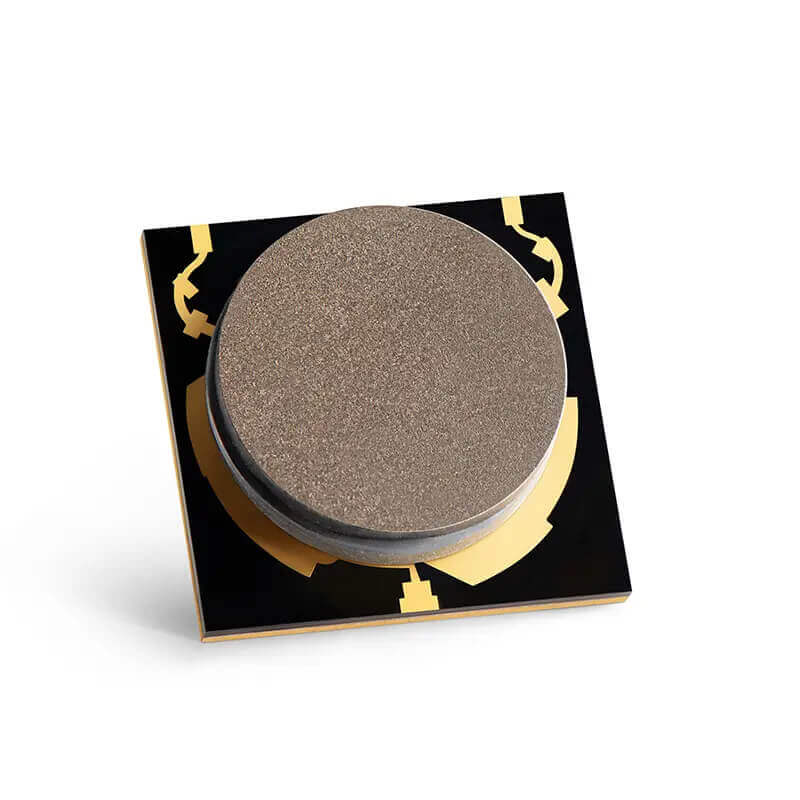
| Microstrip Circulator | T/R modules | Compact integration |
| Stripline Circulator | Wideband radar circuits | Broad bandwidth |
| Coaxial Circulator | Medium power radar transmitters | High power capability |
| Waveguide Circulator | Main radar transmit chain | Lowest insertion loss |
Conclusion
Phased array radar systems represent one of the most advanced applications of microwave engineering. By distributing transmit power across hundreds or thousands of antenna elements, these systems achieve remarkable performance improvements compared to traditional radar architectures. However, this distributed architecture also dramatically increases the number of RF components required in the radar front-end.
RF circulators play a vital role in ensuring that radar transmit signals and received echoes are routed correctly through the system. Because each transmit receive module typically requires its own circulator, large phased array radar systems may contain thousands of these devices. As radar technology continues to evolve toward higher frequencies and larger antenna arrays, the demand for high-performance RF circulators will continue to grow.
FAQ
What is an RF circulator used for in radar?
An RF circulator separates transmit and receive signals and protects radar receivers from high power transmit pulses.
Why phased array radar requires many circulators?
Each antenna element contains its own transmit receive module, which requires signal isolation provided by a circulator.
Which circulator type is commonly used in phased array radar modules?
Microstrip circulators are commonly used because they can be integrated directly into compact RF circuits.
References
- Skolnik, M. Radar Handbook
- Pozar, D. Microwave Engineering
- IEEE Microwave Theory and Techniques Society
Recommended Products
.jpg)
 Article Tags
Keith Wong
Marketing Director, Chengdu Hertz Electronic Technology Co., Ltd. (Hzbeat)
Keith has over 18 years in the RF components industry, focusing on the intersection of technology, healthcare applications, and global market trends.