Insertion Loss vs. Bandwidth: The Real Trade‑Off in RF Circulator Design
In-depth analysis of the trade-off between insertion loss and bandwidth in RF Circulator design, including Ferrite Circulators, Microwave Circulators, and their optimization strategies.
 Updated on: Jan 26, 2026
 Author:
With the rise of 5G, millimeter-wave communications, radar, and high-performance measurement systems, the importance of RF non-reciprocal devices, including RF Circulators, is becoming increasingly prominent. Among the key parameters, the trade-off between Insertion Loss and Bandwidth is central to determining the performance of an RF Circulator or Microwave Circulator. This article delves into the trade-off between these two critical factors, analyzing their importance in RF circulator design and exploring how to find an ideal balance between them for optimized performance.
What is Insertion Loss?
Insertion Loss refers to the signal power loss as it passes through a device, typically expressed in decibels (dB). For an RF Circulator, insertion loss encompasses several factors, including material loss, transmission line loss, magnetic loss, and port matching. Low insertion loss means that the signal is transmitted with minimal attenuation, which is especially crucial for high-frequency systems.
According to industry technical manuals, in an ideal RF system, insertion loss is typically maintained below 1 dB. However, in high-frequency or wide bandwidth designs, this value might increase.
What is Bandwidth?
Bandwidth refers to the frequency range over which an RF device operates effectively, maintaining specific performance characteristics such as low insertion loss and isolation. For a Microwave Circulator, bandwidth is often defined as the range over which the S-parameters stay within specified limits (such as 1 dB or 3 dB bandwidth).
In practical engineering design, wider bandwidth typically means the device can accommodate more frequency bands, but this often increases design complexity and insertion loss. Academic studies indicate that by adjusting ferrite material filling factors or DC bias fields, the bandwidth can be optimized within a range of 5% to 36%.
The Trade-Off Between Insertion Loss and Bandwidth
There is an inherent trade-off between Insertion Loss and Bandwidth when designing RF circulators. To achieve lower insertion loss, fine materials and smaller structural designs are usually required, minimizing energy loss. However, this optimization typically limits the device's bandwidth, restricting the frequency range over which the circulator can operate.
On the other hand, increasing bandwidth often introduces more design complexity, such as additional matching circuits and structural optimizations, which result in increased insertion loss.
Why Does This Trade-Off Exist?
The trade-off between insertion loss and bandwidth stems from the inherent physical limitations in electromagnetic energy transmission. For example, to optimize bandwidth, additional matching segments are often required, which increases loss. On the other hand, optimizing for lower insertion loss often results in narrower bandwidth due to fewer matching networks and simpler structures.
This means that achieving both wide bandwidth and low insertion loss simultaneously is a difficult challenge. In radar and 5G front-end links, the system prioritizes bandwidth coverage, whereas in satellite transponders or high-precision measurement devices, lower insertion loss is often more critical.
Ferrite Circulator vs. Microwave Circulator Design Differences
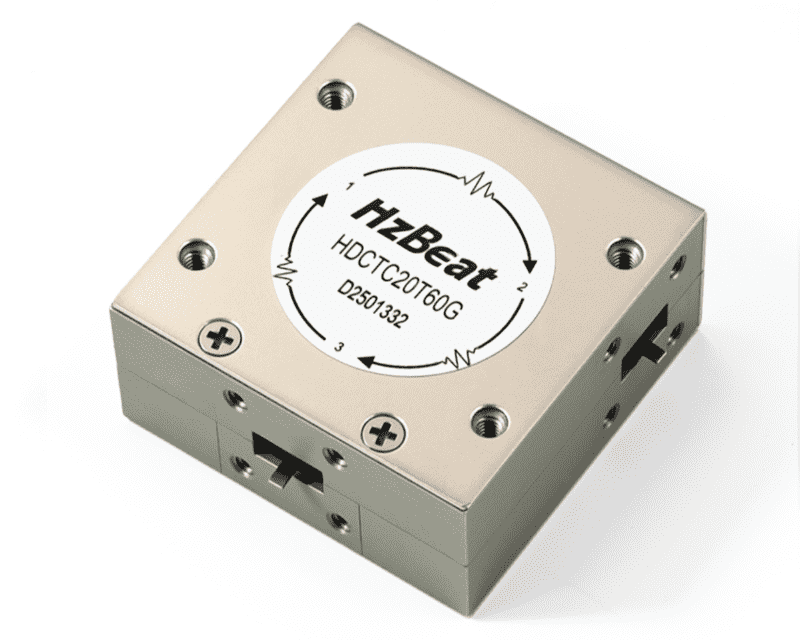
Ferrite Circulators traditionally rely on magnetic materials that provide non-reciprocal transmission, making them ideal for high-power applications with low insertion loss. However, ferrite circulators typically have narrower bandwidths compared to microwave circulators optimized for wideband performance.
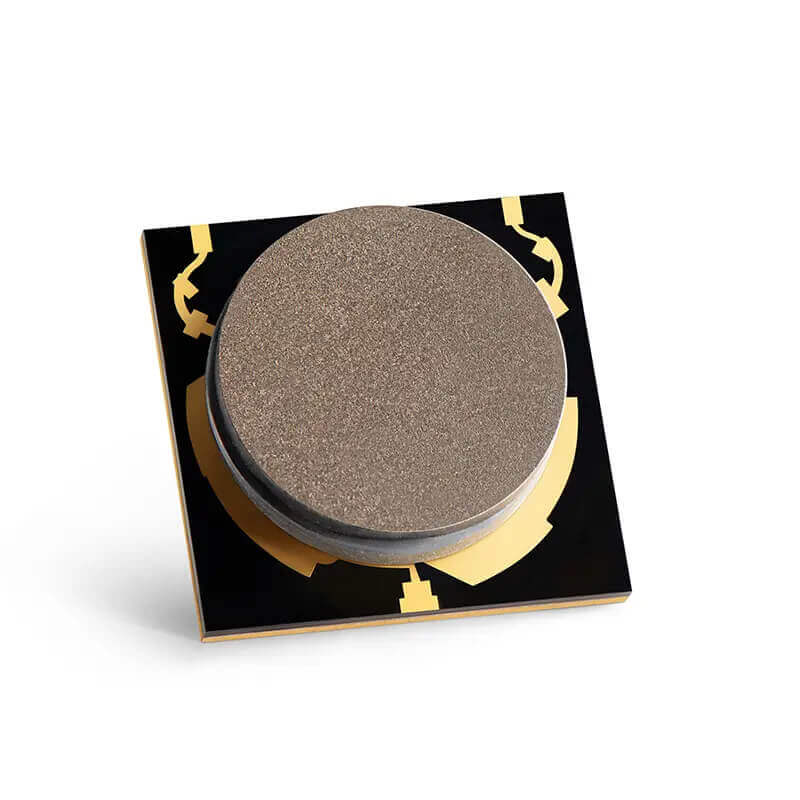
Microwave Circulators, on the other hand, are designed specifically to operate efficiently at microwave frequencies. They typically use low-loss ceramic materials and optimized geometries to handle higher frequencies while minimizing signal degradation. The design focuses on achieving both low insertion loss and wide bandwidth, making them ideal for modern communication systems, radar, and satellite systems.
At frequencies above 100 GHz, microwave circulators generally aim for insertion losses of less than 0.35 dB, ensuring high system performance for applications like radar, satellite communications, and high-precision measurement systems.
Optimization Strategies
To achieve an optimal balance between insertion loss and bandwidth, engineers use several optimization strategies:
- Magnetic Material Engineering: Adjusting the ferrite filling factor or magnetic bias field can optimize bandwidth while minimizing loss, although this often introduces new loss factors.
- Multi-stage Impedance Matching: Multi-stage matching networks can distribute impedance changes over multiple frequency bands, thus mitigating the impact of bandwidth expansion on loss.
- Geometric Structure Optimization: 3D electromagnetic simulations can be used to optimize cavity and transmission line sizes, reducing electromagnetic standing waves and optimizing transmission efficiency.
- Material Selection: Modern low-loss materials such as advanced ferrite and ceramic materials help reduce loss without significantly affecting bandwidth.
Practical Applications Comparison
In different applications, the trade-off between insertion loss and bandwidth has varying degrees of importance:
- Radar Systems: Radar systems prioritize bandwidth for fast pulse responses, but they can tolerate higher insertion losses to ensure system coverage.
- Satellite Communications: In satellite systems, low insertion loss is crucial, often with narrower bandwidth, to ensure long-distance transmission and system efficiency.
- RF Isolators and Ferrite Isolators: These devices, essential in preventing signal reflections, also need to balance isolation and insertion loss, with higher isolation often resulting in higher insertion loss.
Conclusion
The design of RF circulators is a complex and challenging task, particularly when balancing insertion loss and bandwidth. The inherent trade-off between these two parameters stems from electromagnetic energy transmission principles, and achieving both wide bandwidth and low insertion loss simultaneously remains a key challenge for RF engineers. As technology advances, the design of circulators will continue to improve, providing lower loss and broader bandwidth for next-generation RF systems.
FAQ
Why is there an inherent trade-off between insertion loss and bandwidth?
Because increasing bandwidth typically requires more complex matching structures or additional electromagnetic paths, which inherently introduces extra loss. On the other hand, optimizing for lower insertion loss often results in narrower bandwidth due to fewer matching networks and simpler structures.
Can new technologies reduce both insertion loss and increase bandwidth?
Research into advanced materials or integrated designs (such as non-magnetic time-domain modulation structures) has made significant progress, but there still exist inherent trade-offs in performance.
References
- Basic Facts About Circulators & Isolators — ESCIES Technical Manual.
- Bandwidth Design of Ferrite-Based Circulators — A. Ashley et al.
- Active Quasi Circulator Review — M. Hasan et al.
- Wideband Circulators Above 100 GHz — High Frequency Microwaves Analysis.
Recommended Products
 Article Tags
Keith Wong
Marketing Director, Chengdu Hertz Electronic Technology Co., Ltd. (Hzbeat)
Keith has over 18 years in the RF components industry, focusing on the intersection of technology, healthcare applications, and global market trends.