RF Circulator Market Outlook: Why Demand Is Rising in 5G, Radar, Satellite, and High-Power RF Systems
Explore why RF circulator demand is rising with 5G network densification, radar modernization, satellite communication growth, and high-power RF systems. Learn how HzBeat supports wideband, compact, low-loss RF circulator solutions for modern microwave applications.
 Updated on: May 07, 2026
 Author:
Introduction
The RF circulator market is no longer driven only by traditional microwave equipment. As wireless infrastructure, radar platforms, satellite communication networks, and high-power RF systems continue to expand, RF circulators are becoming increasingly important components in modern signal chains.
For many engineers, an RF circulator may look like a small passive component. But in real systems, it often performs a critical role: controlling signal direction, protecting power amplifiers, reducing reflected power risk, improving isolation, and supporting stable RF performance under demanding operating conditions.
Market research reports show steady growth in RF circulators and RF isolators, driven by telecom infrastructure, radar, satellite communication, and high-frequency RF applications. One RF isolators and circulators market forecast estimates growth from about USD 1.98 billion in 2026 to about USD 2.84 billion by 2033. Another RF circulator-specific report estimates growth from USD 1.23 billion in 2024 to USD 2.37 billion by 2033.
For buyers and RF system designers, this market growth sends a clear message: RF circulators are moving from standard catalog components toward more application-specific, performance-driven solutions.
HzBeat provides a full range of RF circulators, including microstrip, drop-in, coaxial, waveguide, and dual-junction designs for RF and microwave systems requiring wide frequency coverage, compact integration, low insertion loss, stable isolation, and reliable operation.
Why the RF Circulator Market Is Growing
The demand for RF circulators is rising because modern RF systems are becoming more complex, more compact, and more performance-sensitive. In older microwave systems, a circulator was often treated as a standard passive component selected from a catalog. Today, it is increasingly evaluated as part of a complete system design.
This shift is driven by several market forces. 5G networks require denser RF infrastructure and more advanced front-end architectures. Radar systems are moving toward higher performance, higher power, and more integrated designs. Satellite communication systems are expanding into higher frequency bands and more compact terminals. RF power amplifiers, test platforms, and high-power microwave systems all need better protection from reflected power and unstable load conditions.
In each of these areas, the RF circulator helps solve a practical engineering problem: how to guide RF energy safely, efficiently, and predictably through the system.
- Signal direction control: Guiding RF energy from one port to the next in a defined circulation direction.
- Power amplifier protection: Redirecting reflected power away from sensitive amplifier stages.
- Receiver protection: Reducing unwanted high-power leakage into sensitive receive paths.
- System stability: Improving performance under antenna mismatch, load variation, or high VSWR conditions.
- Reliable RF integration: Supporting stable performance across communication, radar, satellite, and test systems.
This is why market demand is not only growing in volume. It is also becoming more specialized. Buyers are not simply asking for “an RF circulator.” They are asking for the right RF circulator for a particular frequency range, power level, package type, thermal environment, and application scenario.
5G Network Expansion Is Increasing RF Component Demand
5G networks require more RF paths, higher frequency operation, denser base station deployment, and more advanced antenna systems than previous generations. As base stations, small cells, repeaters, and massive MIMO systems scale, the demand for stable RF signal routing and isolation also increases.
In these systems, RF circulators may be used to protect amplifier stages, manage reflected power, isolate signal paths, and support reliable front-end operation. This is especially important where antenna matching, temperature variation, high output power, or compact module design can affect system stability.
For the RF circulator market, 5G does not only mean higher volume. It also means stronger demand for components that can support compact, efficient, and repeatable RF system design.
- Compact RF circulators: Suitable for dense equipment layouts and miniaturized RF modules.
- Low insertion loss: Helps improve system efficiency and reduce unnecessary RF power loss.
- Stable isolation: Supports amplifier protection and signal path control.
- Broadband frequency coverage: Helps meet the needs of modern communication systems.
- Customized package structures: Supports integration into different RF front-end architectures.
GSMA’s Mobile Economy materials highlight continued growth in global mobile connectivity and 5G adoption toward 2030. For RF component manufacturers, this long-term network evolution continues to support demand for compact, reliable, and application-specific RF devices.
This is where microstrip circulators, drop-in circulators, and compact coaxial RF circulators become especially important. They help engineers balance performance, size, and integration flexibility in increasingly crowded RF systems.
Radar Modernization Is Creating Demand for High-Reliability Circulators
Radar systems remain one of the most important application areas for RF circulators. Whether used in defense radar, weather radar, marine radar, air traffic systems, or phased-array platforms, radar equipment often requires high power handling, stable isolation, low insertion loss, and strong environmental reliability.
In radar front ends, RF circulators are frequently used to separate transmit and receive paths or to protect sensitive components from reflected energy. In high-power radar systems, reflected power is not a small inconvenience. It can create thermal stress, reduce amplifier reliability, and affect the stability of the entire RF chain.
Radar applications often push RF circulator requirements beyond basic catalog specifications. Engineers may need to evaluate both electrical and mechanical conditions before choosing the right device.
- Peak power and average power: Pulsed radar systems often require careful evaluation of both values.
- Pulse width and duty cycle: These parameters affect thermal load and peak RF stress.
- High isolation: Helps protect receivers, amplifiers, and sensitive RF paths.
- Low insertion loss: Helps preserve transmitted power and reduce heat generation.
- Operating temperature: Radar systems may need stable performance under harsh environments.
- Connector or waveguide interface: The interface must match the system architecture and power level.
- Custom mounting dimensions: Many radar modules require application-specific mechanical design.
For this reason, many radar-related RF circulator projects require close cooperation between the system designer and the component manufacturer. A small passive device, if selected poorly, can become a loud problem inside a high-power system.
For radar applications, HzBeat can support different RF circulator structures, including drop-in circulators for compact RF modules, coaxial circulators, waveguide circulators, and dual-junction circulators.
Satellite Communication Growth Is Expanding the High-Frequency RF Market
Satellite communication is another major driver behind RF circulator demand. As satellite broadband, ground stations, terminals, and high-frequency communication links expand, RF front ends must support stable operation at microwave and millimeter-wave frequencies.
The global space economy reached a record USD 613 billion in 2024, according to Space Foundation, with commercial activity playing a major role in overall growth. This broader space economy expansion helps explain why satellite communication, ground infrastructure, and high-frequency RF systems continue to attract investment and engineering attention.
For RF circulators, satellite communication brings several important requirements: low insertion loss, high isolation, wide frequency coverage, compact structure, thermal stability, and long-term reliability. In satellite ground terminals and gateway systems, coaxial and waveguide RF circulators may be selected depending on frequency band, power level, and mechanical architecture.
In compact satellite communication modules, microstrip and drop-in circulators can support tighter integration. In higher-power ground station systems, coaxial and waveguide designs may provide stronger mechanical robustness and power-handling capability.
- C band and X band systems: Often require stable RF routing and reliable front-end protection.
- Ku band and Ka band systems: Place stronger emphasis on high-frequency performance and low loss.
- Ground terminals: May require compact, connectorized, or customized RF circulator solutions.
- Gateway and high-power systems: May require waveguide or high-power coaxial circulators.
- Compact terminals: May require smaller and lighter circulators with stable electrical performance.
As satellite communication systems continue to grow, RF circulators will remain important not because they are visually dramatic, but because they quietly keep RF energy moving in the right direction.
5. The Market Is Moving Toward Higher Frequency and Smaller Size
One clear market direction is the combination of higher frequency and smaller structure. Modern RF systems are expected to carry more data, operate in wider bandwidths, support higher frequencies, and fit into smaller mechanical spaces.
That creates a difficult engineering balance. A smaller RF circulator must still maintain acceptable insertion loss, isolation, VSWR, power handling, and thermal stability. The market is not simply asking for smaller parts. It is asking for smaller parts that still behave like serious microwave components.
This trend supports demand for:
- Miniaturized microstrip circulators: For compact RF modules and dense circuit integration.
- Drop-in circulators: For amplifier modules, radar front ends, and communication equipment.
- Broadband coaxial circulators: For system-level RF paths and laboratory test setups.
- Compact waveguide designs: For high-frequency and high-power microwave systems.
- Dual-junction circulators: For applications requiring higher isolation and stronger protection margin.
HzBeat’s RF circulator portfolio is well aligned with this market direction because it covers microstrip, drop-in, coaxial, waveguide, and dual-junction categories on one product platform. This helps engineers compare different structures according to frequency, power, size, and application environment.
For buyers, miniaturization should not be understood as simply making the component smaller. A miniaturized RF circulator must still satisfy the RF system’s electrical, thermal, and mechanical requirements. Otherwise, the component may fit the drawing but fail the system.
6. Buyers Are Looking for Engineering Support, Not Just a Part Number
As RF systems become more complex, many buyers are no longer looking only for a standard part number. They need support with real operating conditions.
A buyer may know the frequency band but not the exact isolation margin. Another may know the power level but not whether it should be treated as CW power, average power, or peak pulse power. Some customers need a coaxial circulator for a test system; others need a compact drop-in circulator for a power amplifier module. On paper, both may be called RF circulators, but their design requirements are very different.
This is why RF circulator purchasing is becoming more engineering-driven. Before selecting or customizing an RF circulator, buyers often need to confirm:
- Frequency range: The full operating band, not only the center frequency.
- Bandwidth: Required operating span and band-edge performance.
- Insertion loss: Forward power loss through the circulator.
- Isolation: Reverse signal suppression and reflected-power control.
- VSWR: Port matching condition and reflection behavior.
- CW power and peak power: Continuous thermal load and instantaneous pulse stress.
- Reflected power: The possible reverse power caused by mismatch, antenna detuning, or load variation.
- Connector or interface type: Coaxial, microstrip, drop-in, or waveguide interface.
- Port direction: Clockwise or counterclockwise signal routing.
- Package size: Mechanical constraints and integration space.
- Mounting method: Screw mounting, soldering, module integration, or waveguide assembly.
- Cooling condition: Heat sinking, airflow, mounting surface, and thermal path.
- Operating temperature: Environmental stability and reliability requirements.
For manufacturers, the competitive edge is not only having many product categories. It is the ability to help customers match the right structure to the right system.
This is especially true in high-power and wideband applications. A circulator that works well in a narrowband laboratory condition may not be suitable for a pulsed radar transmitter. A compact device that fits a module layout may still fail if thermal design or reflected-power conditions are ignored. Good RF circulator selection begins with real working conditions, not just a neat line in a datasheet.
7. Which RF Circulator Types Match Today’s Market Needs?
Different market segments require different RF circulator structures. A compact 5G module, a high-power radar transmitter, a satellite gateway, and a laboratory test bench do not need the same package type.
Microstrip RF Circulators
Suitable for miniaturized RF modules, compact front ends, and high-density microwave integration.
Drop-in RF Circulators
Used in RF power modules, communication equipment, radar front ends, and amplifier protection circuits.
Coaxial RF Circulators
Useful for system-level integration, laboratory testing, antenna systems, and power amplifier protection.
Waveguide RF Circulators
Designed for high-frequency and high-power microwave systems such as radar and satellite communication.
Microstrip RF Circulators
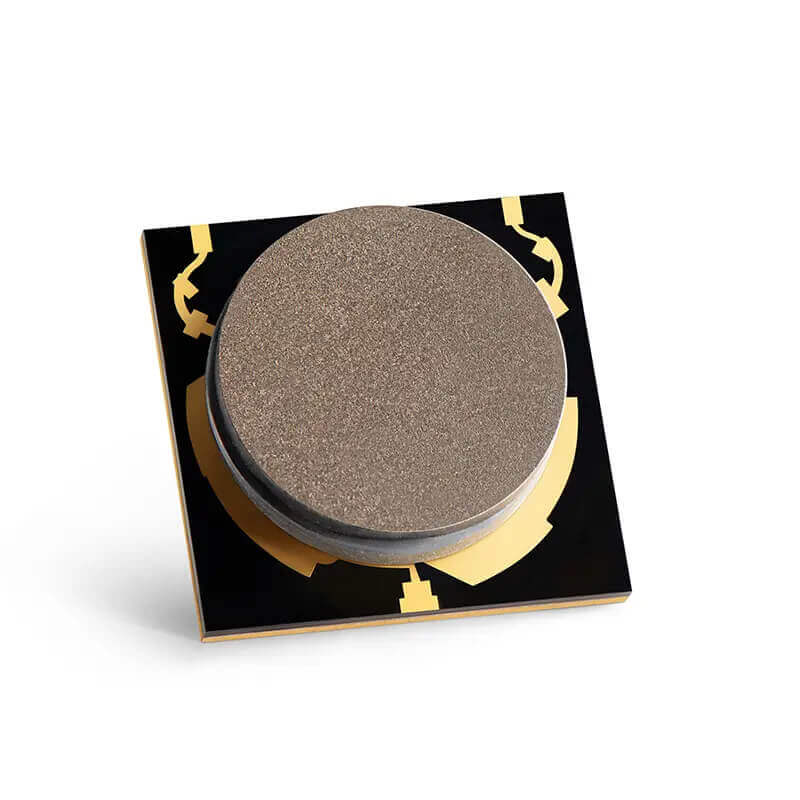
Microstrip RF circulators are suitable for miniaturized RF modules, compact front ends, and high-density integration. They match market demand for smaller, lighter, and more integrated RF systems.
These devices are often selected when space is limited and the circulator must become part of a larger RF module. For communication systems, phased-array platforms, and compact microwave assemblies, microstrip structures can help engineers reduce volume while maintaining the required RF signal direction control.
Drop-in RF Circulators
Drop-in RF circulators are widely used in RF power modules, communication equipment, radar front ends, and amplifier protection circuits. They offer practical installation, good repeatability, and strong integration flexibility.
For many power amplifier modules, the drop-in structure provides a useful balance between electrical performance, mechanical integration, and thermal contact. It is often a strong choice when the circulator must be embedded into a larger RF subsystem.
Coaxial RF Circulators
Coaxial RF circulators are important for system-level integration, laboratory testing, antenna systems, and power amplifier protection. Their connectorized structure makes them convenient for installation, replacement, and measurement.
Because coaxial circulators can be connected with standard RF cables and connectors, they are widely used in test benches, communication systems, and equipment-level RF paths. They are often preferred when flexibility and easy installation are important.
Waveguide RF Circulators
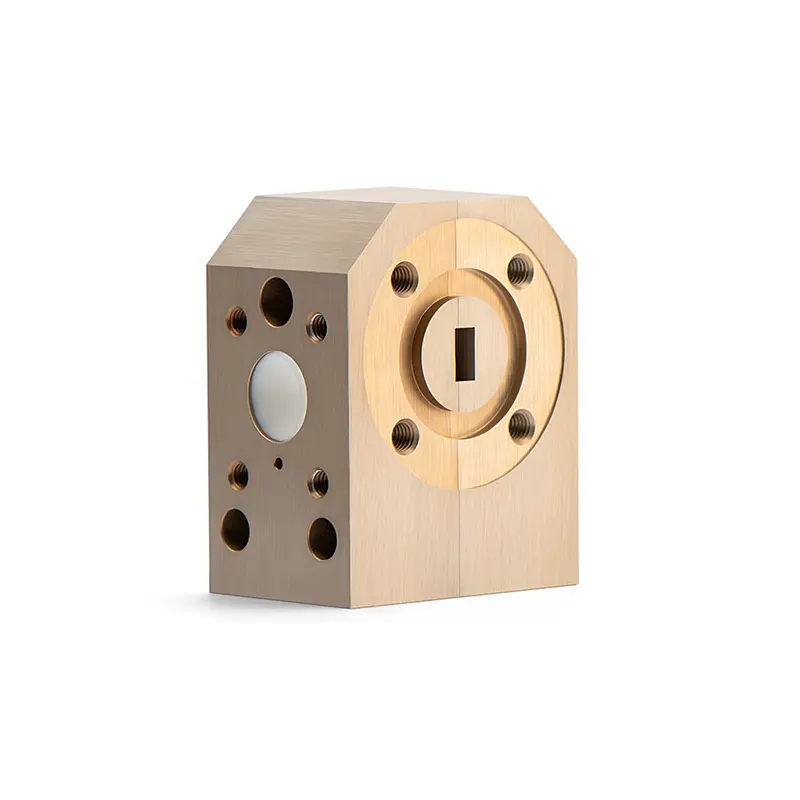
Waveguide RF circulators are used in high-frequency and high-power microwave systems, including radar, satellite communication, and industrial microwave applications. They are suitable where low loss and high power handling are critical.
At higher microwave frequencies, waveguide structures can offer strong performance advantages. They are often selected when the system requires efficient power transmission, robust mechanical structure, and reliable operation under demanding conditions.
Dual-Junction RF Circulators
Dual-junction RF circulators are useful when systems require higher isolation, better power handling, or additional protection margin. They are often selected for more demanding RF environments.
In applications where a single-junction circulator may not provide enough isolation or reflected-power control, dual-junction designs can help improve system reliability. These designs may be especially useful in high-power RF chains and demanding radar or communication systems.
8. Why HzBeat Fits the Changing RF Circulator Market
The RF circulator market is becoming broader and more demanding at the same time. On one side, telecom and high-volume communication systems require compact, repeatable, cost-effective RF components. On the other side, radar, satellite, aerospace, and high-power systems require higher performance, stronger reliability, and more customization.
HzBeat supports this changing market with a product range that includes:
- Microstrip RF circulators: For compact and integrated RF module designs.
- Drop-in RF circulators: For power amplifier modules, radar front ends, and system integration.
- Coaxial RF circulators: For flexible connection, testing, and system-level RF paths.
- Waveguide RF circulators: For high-frequency and high-power microwave applications.
- Dual-junction RF circulators: For higher isolation and demanding RF environments.
- Broadband and miniaturized options: For modern communication and microwave systems.
- Application-specific customization: For frequency, power, package, interface, and installation requirements.
HzBeat’s core strengths in wideband coverage and miniaturization are especially relevant to today’s RF circulator market. As systems move toward higher frequency, smaller size, and tighter integration, engineers need circulator solutions that can fit the mechanical space without losing the electrical discipline required by microwave systems.
For engineers and buyers, this means RF circulator selection can be approached from the system requirement rather than being limited to one package type. HzBeat’s related RF isolators also support amplifier protection and reflected-power control when a two-port isolation device is more suitable than a three-port circulator.
Explore HzBeat RF circulator solutions here: RF Circulators | Microstrip, Drop-in, Coaxial, Waveguide & Dual-Junction Circulators.
Conclusion
The RF circulator market is growing because the systems around it are becoming more complex. 5G networks need denser RF infrastructure. Radar systems require higher reliability and stronger power handling. Satellite communication is expanding into higher-frequency and more demanding front-end designs. Test systems, industrial microwave platforms, and high-power RF applications all need stable signal routing and reflected-power control.
In this market environment, RF circulators are not just passive components hidden inside a system. They are small but strategic devices that help RF energy move safely, efficiently, and predictably.
For buyers, the key is no longer only finding a circulator. The real question is: which RF circulator structure fits the frequency, power, integration, and reliability needs of the system?
HzBeat’s RF circulator portfolio provides a practical starting point for that decision, covering multiple structures and customization options for modern RF and microwave applications.
FAQ
Why is the RF circulator market growing?
The RF circulator market is growing due to demand from 5G infrastructure, radar modernization, satellite communication, high-frequency RF systems, and power amplifier protection applications.
Which industries use RF circulators?
RF circulators are commonly used in telecommunications, radar systems, satellite communication, aerospace and defense, RF test equipment, power amplifier systems, and industrial microwave applications.
Are RF circulators important for 5G systems?
Yes. RF circulators can help support signal routing, reflected-power control, amplifier protection, and stable RF front-end performance in 5G infrastructure and related communication systems.
Why are RF circulators used in radar systems?
Radar systems often require high power handling, stable isolation, low insertion loss, and reliable transmit / receive path control. RF circulators help manage signal direction and reflected power in these demanding systems.
Why are RF circulators important in satellite communication?
Satellite communication systems often operate at microwave and millimeter-wave frequencies, where low insertion loss, stable isolation, and reliable RF signal routing are critical. RF circulators can help protect RF front ends and support stable system performance.
What type of RF circulator is suitable for high-power applications?
Coaxial, waveguide, and dual-junction RF circulators are often considered for high-power applications, depending on frequency range, thermal design, connector type, and system structure.
What type of RF circulator is suitable for compact RF modules?
Microstrip and drop-in RF circulators are often suitable for compact RF modules, amplifier modules, and high-density microwave assemblies where size, integration, and stable RF performance must be balanced.
Can HzBeat provide RF circulators for different market applications?
Yes. HzBeat provides microstrip, drop-in, coaxial, waveguide, and dual-junction RF circulators for applications such as 5G, radar, satellite communication, RF power amplifiers, test systems, and high-power microwave equipment.
References
- Coherent Market Insights, RF Isolators and Circulators Market Forecast, 2026–2033.
- Growth Market Reports, RF Circulator Market Research Report 2033.
- GSMA, The Mobile Economy 2025.
- GSMA, The Mobile Economy.
- Space Foundation, The Space Report 2025 Q2 Highlights Record $613 Billion Global Space Economy.
- Wikimedia Commons, Celluar Antenna with tower for 5G.jpg, CC BY-SA 4.0.
- Wikimedia Commons, Erdfunkstelle Raisting 2.jpg, CC BY-SA 3.0.
- HzBeat, RF Circulators Product Page.
Recommended Products
.jpg)
 Article Tags
Keith Wong
Marketing Director, Chengdu Hertz Electronic Technology Co., Ltd. (Hzbeat)
Keith has over 18 years in the RF components industry, focusing on the intersection of technology, healthcare applications, and global market trends.