What Applications Need High-Power RF Circulators Most?
Discover which applications need high-power RF circulators most, from radar and satellite communication to industrial microwave systems and particle accelerators. Learn why reflected-power protection, duplexing, and high reliability make high-power RF circulators essential in mission-critical RF systems.
 Updated on: Apr 21, 2026
 Author:
High-power RF circulators matter most in systems where forward power is high, reflected power is unpredictable, and the cost of failure is painful. In practice, that pushes a few application groups to the front of the line: radar systems, satellite and space communication links, industrial microwave equipment, and particle accelerators or high-power RF test platforms. In those environments, a circulator is not decorative hardware. It is part of the survival kit for the RF chain.
The reason is simple. Once power rises, even a brief mismatch can throw reflected energy back toward expensive RF sources such as SSPAs, TWTs, klystrons, or magnetrons. A high-power RF circulator routes that reverse energy away from the source path and helps preserve stability, reliability, and uptime. That is why the question is not merely where circulators can be used, but where they become hard to replace.
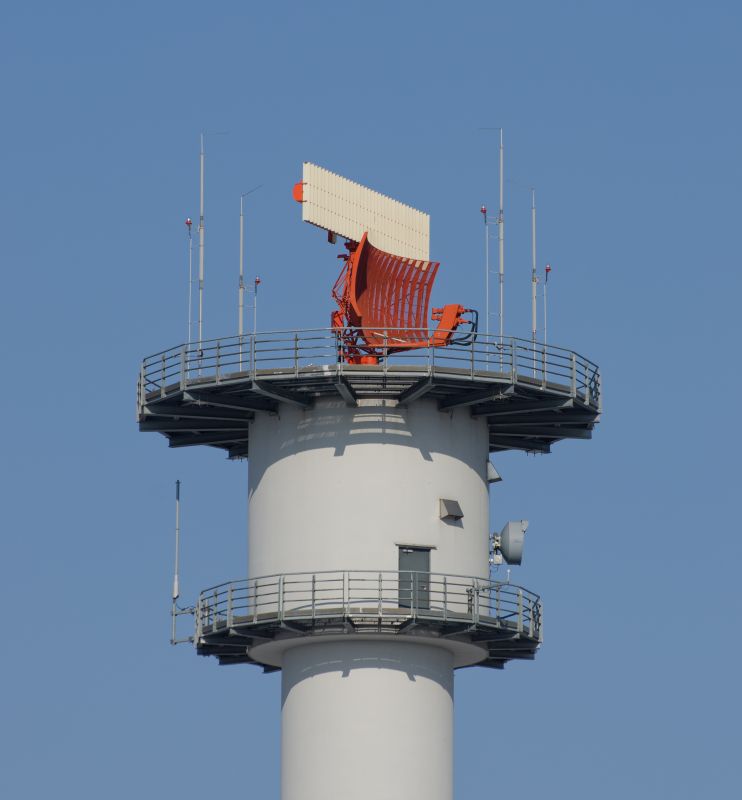
Why High-Power RF Circulators Become Essential in Certain RF Systems
A standard three-port circulator already performs non-reciprocal routing, but a high-power RF circulator has to do that job while handling large energy levels, thermal stress, and imperfect loads. It must keep insertion loss under control, hold isolation under real operating conditions, and direct reverse energy away from the source without becoming the weak link itself.
That combination becomes critical when four conditions appear at the same time. First, the source is expensive or hard to replace. Second, the load is not perfectly stable. Third, the system cannot tolerate receiver damage or chain instability. Fourth, downtime costs more than robust protection. Once those four ingredients meet in one rack, cabinet, or platform, the humble circulator stops being humble.
Quick Application Summary
| Application | Why high-power circulators matter | Typical RF concern |
|---|---|---|
| Radar systems | Protect transmit sources and isolate shared transmit/receive paths | High peak power, receiver sensitivity, duplexing stress |
| Satellite and space links | Shield SSPAs and TWTAs in high-value, high-reliability chains | Source protection, harsh environment, service difficulty |
| Industrial microwave systems | Absorb reflected power from unstable process loads | Load variation, heat, continuous operation |
| Accelerators and RF test stands | Protect klystrons and amplifiers in demanding high-power infrastructure | Severe mismatch risk, high CW or peak power, machine stability |
1. Radar Systems Need High-Power RF Circulators the Most
If you force engineers to answer this question in one breath, many will say radar first. That instinct is not wrong. Radar systems often combine high transmit energy with a receive path that has no interest in getting punched in the face by its own transmitter. When a single antenna path or tightly coupled front-end has to support both transmit and receive functions, the non-reciprocal behavior of a circulator becomes extremely valuable.
This is especially true in weather radar, air traffic control radar, military radar, shipboard radar, and multifunction phased-array architectures. The transmitter side wants efficient delivery of power. The receiver side wants protection and separation. The system owner wants reliability under temperature changes, vibration, and mismatch conditions. That is a lot of responsibility for one small device, which is exactly why high-power radar circulators are treated as serious engineering hardware rather than catalog decoration.
In practical terms, radar applications stress a circulator in several ways at once:
- High forward power: pulsed or continuous transmit energy can be severe.
- Receiver protection: the receive chain must be shielded from the transmit burst and harmful reflections.
- Low-loss demand: every fraction of a decibel matters in long-range detection performance.
- Environmental stability: radar platforms often face outdoor, airborne, naval, or military conditions.
This is why radar stays at the top of the list. When a system is trying to see distant targets while shouting at high power through the same RF architecture, high-power RF circulators become the polite but necessary traffic police.
2. Satellite Communication and Space Payloads Are Ruthlessly Dependent on Reliability
Satellite communication is another major answer, especially in uplink chains, onboard payloads, and high-reliability ground systems. Space hardware does not offer the luxury of casual maintenance. A reflection event that might be annoying in a lab can become brutally expensive in orbit, on a gateway link, or in a mission-critical satcom terminal.
High-power RF circulators are valuable here because they help protect SSPAs and TWTAs, preserve stable signal flow, and support RF chains where component failure is not a charming learning experience. The closer a system moves toward mission-grade reliability, the more attractive robust non-reciprocal protection becomes.
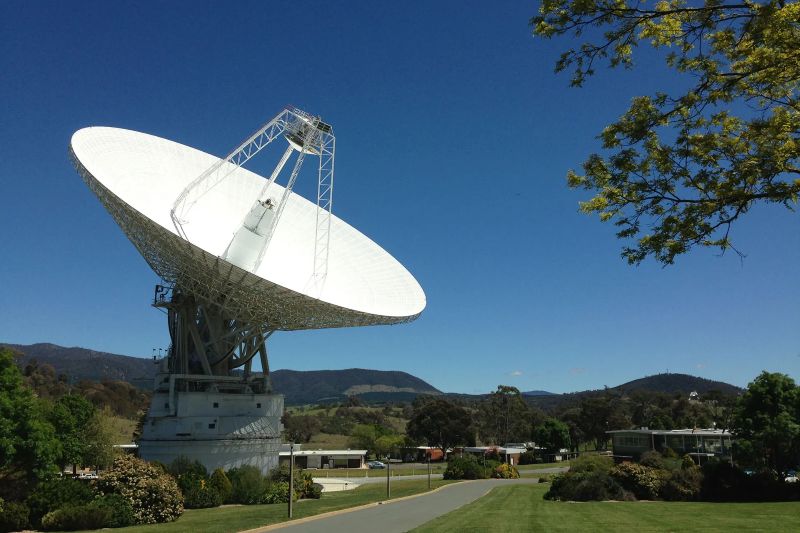
This application group includes:
- Satellite payload RF chains using high-value power amplifiers
- Ground station transmit systems for reliable high-power uplinks
- Navigation and space communication platforms where reflected power must be tightly managed
- Defense and aerospace links requiring strong environmental robustness
In short, satellite communication needs high-power RF circulators not because the devices are glamorous, but because space-grade RF hardware is too expensive to leave unguarded. Ferrite does not wear a cape, but in this application it definitely shows up on time.
3. Industrial Microwave Systems May Be the Most Underestimated Heavy User
Industrial microwave equipment does not always get the spotlight that radar and satellites enjoy, but it belongs firmly in this discussion. High-power microwave generators used for heating, drying, curing, tempering, extrusion support, and material processing often face continuously changing loads. Moisture content shifts. Product density changes. Geometry moves. Reflections rise. The process is messy in exactly the way RF engineers dislike.
That is why industrial microwave systems frequently depend on high-power circulators to protect magnetrons or other sources from reflected power. In these systems, stable operation is not just a technical preference. It is tied directly to process consistency, source lifetime, and production uptime.
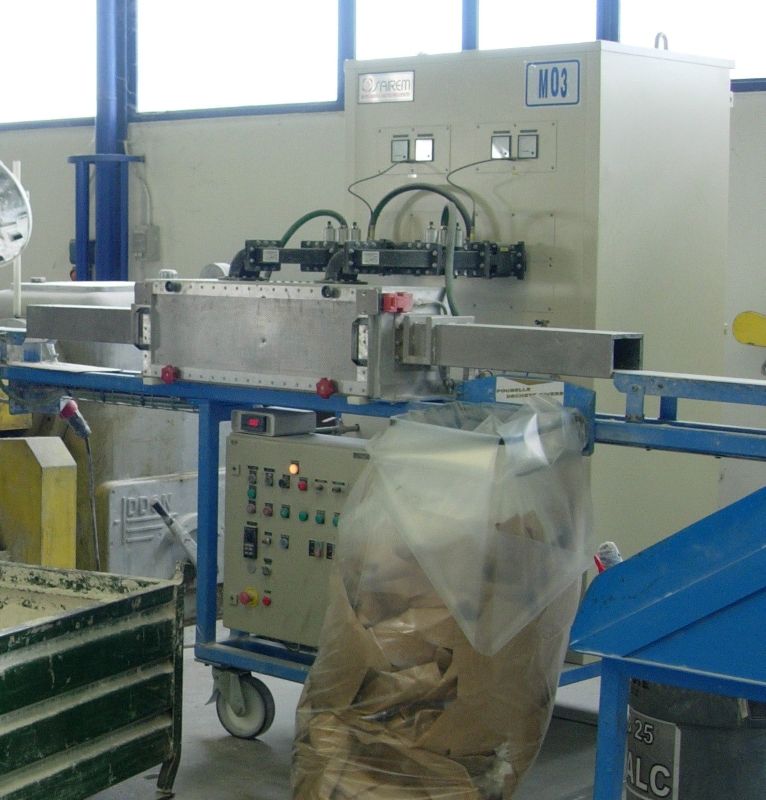
Industrial microwave systems push circulators for a few hard reasons:
- Variable loads: process materials do not present a perfectly stable RF load.
- Long operating cycles: many systems run for extended periods and punish weak thermal design.
- Source lifetime pressure: protecting the microwave source directly protects operating cost.
- Downtime sensitivity: production lines care deeply about reliability.
So while industrial microwave equipment may sound less cinematic than defense radar, it is one of the most practical and financially persuasive use cases for high-power RF circulators.
4. Particle Accelerators and High-Power RF Test Platforms Need Serious Protection
Particle accelerators, cavity drive systems, and high-power RF test platforms form another important category. These systems can operate at very high continuous or peak power levels, often with expensive klystrons, amplifier chains, and tightly controlled RF distribution networks. In such environments, reflected power is not a minor inconvenience. It can destabilize the entire machine or threaten costly equipment upstream.
A high-power RF circulator helps create a safer path for reverse energy and supports more stable operation in demanding research or infrastructure environments. This is why accelerator-grade RF systems and high-power test benches routinely treat circulators as integral protection devices rather than optional accessories.
Typical needs in this category include:
- Protection of high-value RF sources such as klystrons and amplifier modules
- Stable matching behavior in systems where load conditions can shift
- High thermal resilience under sustained power
- Low failure tolerance because system downtime can affect an entire facility
When accelerator engineers specify a high-power circulator, they are not being cautious for sport. They are making sure the rest of the machine does not have to learn a dramatic lesson from one bad reflection.
5. Other Important Applications: Medical RF, Specialized Wireless Infrastructure, and Defense Electronics
Beyond the four strongest categories, high-power RF circulators also matter in selected medical RF systems, specialized wireless infrastructure, electronic warfare equipment, and advanced defense electronics. These cases may not dominate every ranking, but they still share the same underlying logic: high energy, sensitive upstream hardware, and little tolerance for reflected-power chaos.
In other words, the rule is broader than the examples. Any RF application with high source value, mismatch exposure, and uptime pressure is a likely candidate for a high-power RF circulator or isolator strategy.
For real projects, application labels alone are not enough. Selection should also be based on frequency band, CW and peak power, insertion loss, isolation, VSWR, connector or waveguide interface, direction, cooling strategy, and operating environment. A radar system at one band and power level may need a very different solution from an industrial microwave line or a satellite ground station.
How to Judge Whether Your System Truly Needs a High-Power RF Circulator
A simple rule of thumb works well. Your system likely needs a high-power RF circulator when reflected power can damage or de-rate the source, when load mismatch is realistic rather than theoretical, when transmit and receive or source and load paths need controlled directionality, and when the cost of failure is much greater than the cost of proper protection.
That is why so many demanding systems turn to customized solutions instead of generic catalog parts. The right choice often depends on whether the design should be coaxial or waveguide, whether broadband coverage is needed, how compact the assembly must be, and how aggressively thermal management has to be handled.
If your project sits anywhere near those conditions, it is worth reviewing dedicated resources such as HzBeat's RF circulator knowledge hub and the high-power coaxial circulator product page. For projects with unusual power, packaging, or interface requirements, a direct custom inquiry is usually the faster path.
Conclusion
So, what applications need high-power RF circulators most? The strongest answers are radar systems, satellite and space communication links, industrial microwave equipment, and particle accelerators or high-power RF test platforms. These applications share the same harsh truth: forward power is large, reflections are real, sources are expensive, and reliability matters too much to leave protection to hope.
The more mission-critical the system and the more unforgiving the power environment, the more likely a high-power RF circulator moves from useful to non-negotiable. That is the real dividing line. Not fashion, not jargon, not brochure perfume. Just physics, heat, reflected energy, and the human desire not to destroy expensive hardware before lunch.
FAQ
Are high-power RF circulators mainly used in radar systems?
Radar is one of the most important application areas, but it is not the only one. Satellite communication, industrial microwave systems, and accelerator RF infrastructure also depend heavily on high-power circulators for source protection and stable signal routing.
Why are high-power RF circulators important in satellite communication?
Because high-value RF sources such as SSPAs and TWTAs must be protected from reflected power, especially in systems where maintenance is difficult, costly, or impossible after deployment.
Do industrial microwave systems really need circulators that badly?
Very often, yes. Industrial loads can vary significantly during processing, which increases mismatch risk and makes reflected-power protection valuable for preserving source life and process stability.
What is the main difference between a circulator and an isolator?
A circulator is generally a three-port non-reciprocal device that routes energy from one port to the next. An isolator is typically a two-port protection device derived from the same non-reciprocal principle, usually with one path internally terminated to absorb reverse energy.
When should I consider a customized high-power circulator?
You should consider customization when your project has unusual power handling, bandwidth, interface, environmental, cooling, or dimensional requirements. In high-power RF, the wrong “almost suitable” part can become an expensive personality trait.
References
- Ferrite Microwave Technologies, High-Power Microwave Circulators & Isolators.
- Pasternack Blog, Signal Chain Discussion Series: Transmit Receive Module.
- Smiths Interconnect, L-Band Very High Power Space Isolators and Circulators Datasheet.
- Industrial Microwave Systems, Microwave Circulators.
- CERN Accelerator Conference Proceedings,Development of a 50 MW X-Band Ferrite Circulator.
- Wikimedia Commons, radar tower at Frankfurt Airport by Norbert Nagel, CC BY-SA 3.0.
- Wikimedia Commons, Deep Space Station 43 image by NASA/JPL-Caltech, public domain in the United States.
- Wikimedia Commons, Microwave tunnel closeup by Chetvorno, CC BY-SA 3.0.
 Article Tags
Sara
Sara is a Brand Specialist at Hzbeat, focusing on RF & microwave industry communications. She transforms complex technologies into accessible insights, helping global readers understand the value of circulators, isolators, and other key components.