Why Miniaturized RF Circulators Matter More in Dense RF Front-End Designs
Discover why miniaturized RF circulators are becoming essential in dense RF front-end designs for 5G massive MIMO, phased-array radar, and satellite communications. Learn how compact size, isolation, thermal control, and integration shape next-generation RF performance.
 Updated on: Apr 21, 2026
 Author:
As 5G radios, phased-array radar, and satellite terminals become more crowded, the RF circulator is no longer a background component. In dense front-end designs, miniaturization is tied directly to isolation, routing freedom, thermal behavior, and system-level reliability.
The more crowded an RF front end becomes, the more unforgiving it gets. In older and relatively spacious architectures, designers could often absorb a bulky passive component through extra routing length, a little mechanical compromise, or a slightly more relaxed thermal layout. Dense RF front-end design has changed that equation. In 5G massive MIMO radios, active antenna systems, phased-array radar tiles, and space-constrained satcom hardware, every cubic millimeter starts negotiating with everything else. The circulator is part of that negotiation.
That is why miniaturized RF circulators matter more now than they did a decade ago. They are not important simply because the industry likes small parts. They are important because modern RF systems push more channels, more power density, and more integration into less available space. When the transmit chain, receive chain, antenna interface, shielding, control lines, and thermal paths all compete inside a tighter module, a compact circulator can reduce compromise across the whole design instead of merely saving footprint.
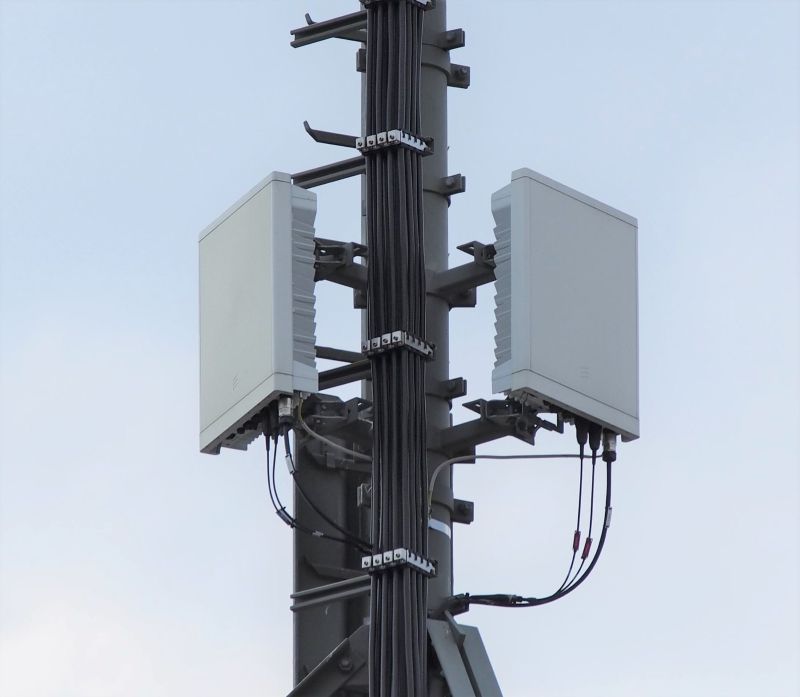
Dense RF Front Ends Change the Rules
Dense RF front-end design is not just a board-layout trend. It is a system architecture shift. In modern active arrays, engineers try to fit more transmit and receive capability close to the antenna, shorten signal paths, reduce losses between functional blocks, and keep the entire module manufacturable at scale. Qorvo notes that phased-array radar is built around growing numbers of T/R channels, and that as operating frequencies rise while element spacing shrinks, the associated modules must become smaller. NXP describes a similar push in active antenna systems for 5G, where integration density and thermal efficiency become critical. Together, those pressures make small nonreciprocal components far more consequential than their size might suggest.
In a crowded front end, the wrong circulator can quietly tax everything around it. It can force longer interconnects, awkward transitions, compromised shield walls, or hot spots that were avoidable on a looser layout. It can also create mechanical headaches when stack height, connector geometry, or assembly sequence leaves no room for indulgence. A miniaturized RF circulator helps because it gives the rest of the design room to breathe. That room might be used for a cleaner bias network, better grounding, additional filtering, or simply safer thermal spacing.
What Dense Designs Need
- Shorter RF paths and cleaner routing
- Stable isolation in close channel spacing
- Lower profile packages for compact modules
- Thermal paths that do not collapse under power density
What Oversized Parts Cause
- Routing detours and extra discontinuities
- More difficult shielding and assembly
- Higher packaging pressure around PAs and LNAs
- Reduced freedom in module partitioning
Why the Circulator Sits at a Critical Point in the Signal Chain
In many front ends, the circulator lives exactly where RF stress is concentrated. Analog Devices describes phased-array T/R modules as including high-power transmit amplification, low-noise receive amplification, and either a circulator or a switch to manage RF direction between the chain and the antenna. That position matters. The circulator is not an isolated passive ornament; it often mediates the relationship between outgoing power, incoming sensitivity, and reflected energy. In compact hardware, that role becomes more valuable because the physical margin around the signal chain keeps shrinking.
FAMES, a European RF pilot-line initiative, similarly describes miniaturized magnetic RF circulators as useful for Tx-Rx-antenna duplexers and for isolating active devices such as amplifiers and mixers. That is the practical story in one sentence. The circulator helps direct energy where it should go and helps prevent it from wandering into places where it should not. In a dense module, the difference between those two outcomes can be the difference between a robust design and a temperamental one.
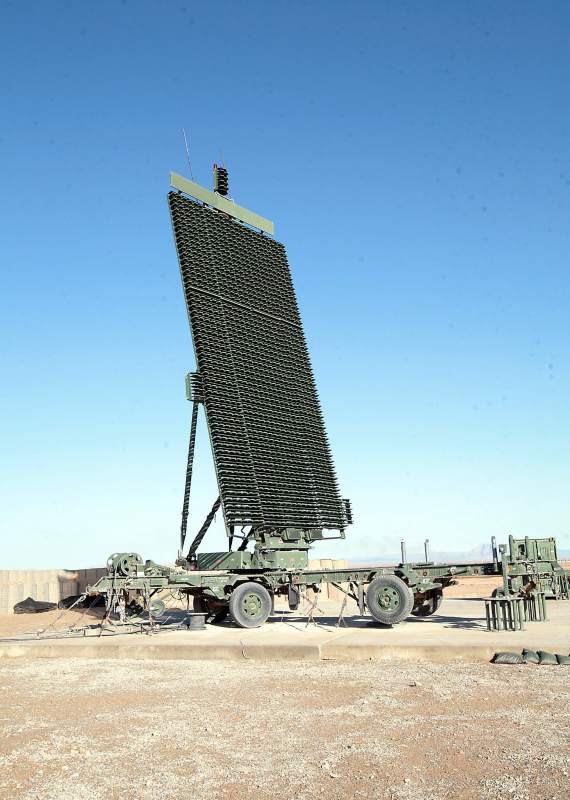
Miniaturization Is About More Than Footprint
It is tempting to define a miniaturized RF circulator by dimensions alone. That is too shallow. A smaller package is only useful when it improves the overall front-end outcome. Academic work from the University of Colorado on phased arrays points out a long-running tension: circulators remain important for circuit-level isolation, but traditional implementations can be bulky and lossy enough to limit integration. That observation still lands cleanly today. Engineers do not want small parts just to win a mechanical beauty contest; they want small parts that preserve the performance logic of the system.
Real miniaturization therefore involves a broader target set. The circulator should shrink in a way that supports tighter antenna spacing, lower profile packaging, shorter internal RF paths, and more natural placement close to the active chain. At the same time, it must avoid becoming a new source of loss, thermal stress, or production variability. In dense RF front-end designs, the best compact part is the one that disappears into the architecture and does its job without demanding heroic compensation elsewhere.
Why This Trade-Off Gets Hard
The physics do not become kinder just because the product roadmap says “smaller.” Ferrite behavior, matching networks, magnetic biasing, conductor loss, packaging constraints, and thermal handling all keep their vote. That is why circulator miniaturization has often moved together with changes in materials, self-biased approaches, MMIC-compatible integration concepts, and packaging platforms such as LTCC. The goal is not only to reduce size, but to make reduced size believable in real manufacturing and real field conditions.
The Real Engineering Trade-Offs: Loss, Isolation, Heat, and Assembly
Once the package shrinks, the designer must still answer the hard questions. What happens to insertion loss? Does isolation remain useful across the working band? How much power can the part handle without turning into a tiny thermal argument? Can the assembly process repeat reliably, or does the smaller geometry introduce yield headaches? These are not side topics. In dense front ends, they decide whether miniaturization creates value or merely creates anxiety.
- Insertion loss: Every fraction of a decibel matters more when many channels add up across an array or when receiver sensitivity is under pressure.
- Isolation: Smaller layout does not excuse weaker directional control. In compact Tx/Rx paths, poor isolation can quickly contaminate overall performance.
- Power handling: Shrinking the part cannot mean surrendering real-world RF stress tolerance, especially near high-power amplifiers.
- Thermal margin: Dense front ends already run hot. A miniaturized circulator has to coexist with that thermal reality rather than becoming its victim.
- Manufacturability: A small part that is electrically elegant but assembly-hostile is not a system solution.
This is also why the purchasing conversation can be misleading. A footprint comparison alone tells only half the truth. For dense RF front-end work, engineers should evaluate how naturally the circulator fits the routing strategy, shield strategy, stack-up, heat flow, and tolerance budget of the complete module. Small size is the beginning of the question, not the final answer.
Why 5G, Radar, and Satcom Push Miniaturized Circulators So Hard
Three application families keep raising the pressure: 5G active antennas, phased-array radar, and satcom terminals. In 5G, radios are asked to push more functionality close to the antenna while staying efficient and compact. In phased-array radar, high channel counts and tighter lattice spacing make routing and packaging especially unforgiving. In satcom, the demand for smaller, lighter, easier-to-integrate RF hardware continues to intensify across airborne, mobile, and fixed platforms. Different sectors, same drumbeat: compact front ends with fewer layout compromises.
That demand does not automatically mean every product needs the tiniest circulator available. It means the design value of a good miniaturized circulator rises sharply wherever channel density, packaging discipline, and directional control intersect. The denser the front end, the more a compact circulator can influence the total architecture rather than acting as a mere line item on the bill of materials.

What Engineers Should Look For When Selecting a Compact RF Circulator
For dense RF front-end designs, circulator selection should be grounded in application logic rather than generic catalog sorting. Frequency range, bandwidth, insertion loss, isolation, VSWR, power handling, operating temperature, and package style still matter. But in compact systems, engineers should also ask a more practical question: does this part reduce total design friction? A circulator that integrates cleanly near the active chain can create more system value than one that looks impressive only on a dimensions table.
- Start with architecture: confirm whether the front end truly benefits more from a circulator than from an RF switch in that signal path.
- Check the heat story early: thermal compatibility should be evaluated before the layout is locked.
- Study mechanical fit: height, mounting method, and surrounding shield or housing geometry can decide success faster than a headline spec does.
- Think in channels, not just one path: in arrays, small losses and packaging issues multiply across many elements.
- Prefer parts that simplify integration: dense front-end design rewards components that reduce routing pain and assembly risk.
Conclusion
Miniaturized RF circulators matter more today because RF front ends themselves have become tighter, smarter, and less tolerant of waste. In dense 5G radios, phased-array radar, and compact satcom platforms, the circulator now affects far more than one node in a signal chain. It influences routing freedom, shielding strategy, thermal behavior, module height, and system reliability. That is why miniaturization is no longer cosmetic. It is architectural.
The smallest part is not always the best part. But in dense RF front-end designs, a well-engineered compact circulator can remove hidden constraints across the entire module. And that is exactly why it matters more now: because modern RF hardware no longer has room for passengers.
Need a compact circulator for a dense front-end project? Focus on the full integration picture: frequency, loss, isolation, power, heat, and packaging. In this corner of RF design, the quiet parts often decide whether the whole system sings or coughs.
FAQ
Do all dense RF front-end designs need a miniaturized RF circulator?
No. Some designs still use RF switches instead of circulators. The correct choice depends on duplexing method, required isolation, power level, system architecture, and the amount of space available near the active chain.
Why are miniaturized RF circulators especially important in phased-array systems?
Because phased-array hardware compresses many RF channels into a small footprint. As element spacing shrinks, routing, shielding, and thermal management get harder. A smaller circulator can reduce layout compromise and help preserve directional control close to the antenna.
What is the main trade-off when shrinking an RF circulator?
The central trade-off is not simply size versus size. It is size versus insertion loss, isolation, power handling, thermal margin, and manufacturability. A tiny package that hurts system efficiency is not true progress.
Which applications benefit most from compact RF circulators?
Compact RF circulators are especially valuable in 5G active antenna systems, phased-array radar, satellite communications, and other front ends where channel density and packaging pressure are high.
Are miniaturized circulators only a packaging trend?
No. Research and industry development show that miniaturization is increasingly linked to deeper integration strategies, including MMIC-oriented work, self-biased approaches, and LTCC-compatible packaging routes.
References
- Qorvo, How Qorvo Is Optimizing the X-Band Phased Array Radar System.
- NXP, Active Antenna Systems.
- Analog Devices, RF Electronics for Phased Array Applications.
- FAMES Pilot Line,RF Components.
- University of Colorado Boulder,Phased Array Front-End Research and Circulator Miniaturization Context.
- OSTI / IEEE Electron Device Letters, Monolithic Integration of Self-Biased Circulator With GaN MMIC Technology.
- HAL,Ku-Band Miniaturized Circulators Based on Ferrite Materials for LTCC Manufacturing.
 Article Tags
Sara
Sara is a Brand Specialist at Hzbeat, focusing on RF & microwave industry communications. She transforms complex technologies into accessible insights, helping global readers understand the value of circulators, isolators, and other key components.