Microstrip RF Circulators for Compact Systems
Microstrip RF circulators are essential for compact RF and microwave systems. Learn their features, advantages, ferrite materials, manufacturing processes, cost drivers, and key applications in communication, radar, aerospace, and integrated microwave modules.
 Updated on: Mar 20, 2026
 Author:
Microstrip RF Circulators for Compact Systems: Why They Matter in Modern RF Design
As RF and microwave systems become smaller, lighter, and more highly integrated, designers face a familiar engineering challenge: they need to save space without sacrificing insertion loss, isolation, or overall system stability. That is exactly where microstrip RF circulators become valuable. These three-port, non-reciprocal ferrite devices direct signals in a fixed rotational sequence, making them useful for duplexing, port isolation, reflected-power management, and compact front-end integration. Smiths Interconnect describes microstrip isolators and circulators as low-profile, low-mass broadband structures, while Corry Micronics positions them as compact ferrite devices for PCB or microstrip platforms used in communications and radar modules.
What Is a Microstrip RF Circulator?
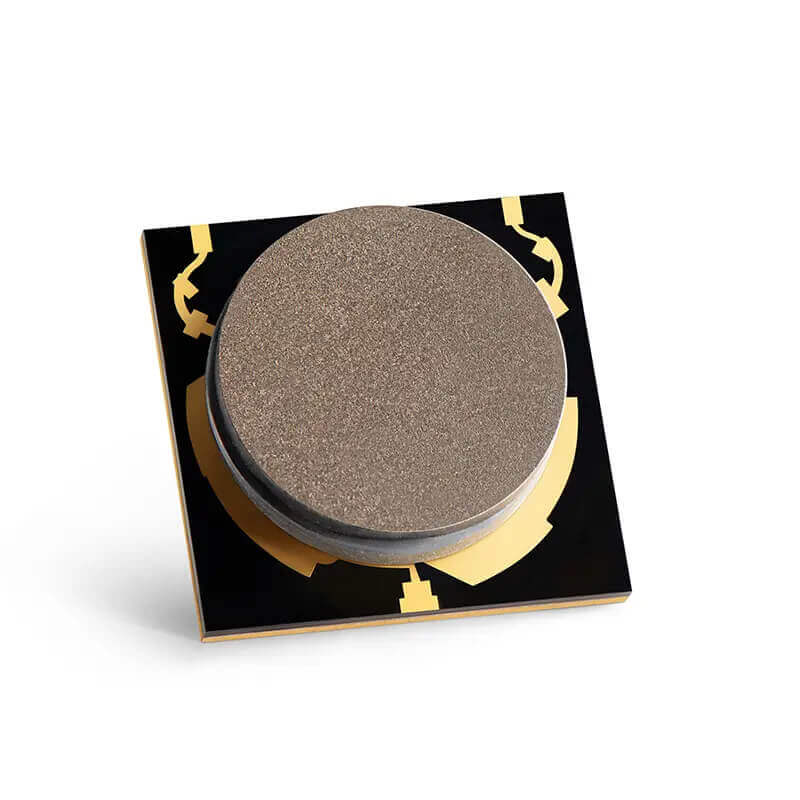
A microstrip RF circulator is a ferrite-based passive component that routes energy from one port to the next in a predetermined direction, typically Port 1 to Port 2, Port 2 to Port 3, and Port 3 to Port 1. In practical RF systems, that behavior allows a transmitter, antenna, and receiver to share a common signal path while remaining functionally separated. Google’s patent record for a microstrip ferrite circulator specifically describes this type of structure as a Y-shaped ferrite circulator coupled to planar substrates, with the circulator enabling compact transitions between circuit elements and even stacked substrates for smaller electronic packages.
That compact, planar nature is the key reason microstrip circulators are attractive. Unlike bulkier connectorized or waveguide solutions, microstrip designs are much easier to integrate into PCB-level or hybrid microwave assemblies. Smiths notes that these devices are ideal for hybrids in space and terrestrial AESA applications because they combine low mass, low profile, and broadband operation.
Why Microstrip Circulators Fit Compact RF Systems So Well
The first and most obvious advantage is size efficiency. Compact RF systems do not just need good electrical performance; they also need packaging efficiency, low profile, and cleaner routing. The substrate-transitioning microstrip circulator described in the patent literature allows circuit elements to be placed on stacked planar substrates, which directly supports smaller packages and more flexible layouts.
The second advantage is easy integration with planar circuitry. Corry Micronics states that its microstrip circulators are designed for PCB or microstrip platforms and are offered in SMT, drop-in, or connectorized packaging formats. Cernex’s SMT microstrip circulators go even further by using wrap-around solder pads on all three ports for surface-mount connections, and their 50-ohm microstrip line configuration is described as immediately ready for circuit insertion. That is exactly the sort of detail RF engineers care about, because it translates into simpler assembly and cleaner system design.
The third advantage is that microstrip circulators provide useful RF performance in a very small footprint. Corry Micronics lists insertion loss as low as 0.4 dB, isolation up to 20 dB, and typical forward/reverse power handling up to 30 W/3 W across 2.7 to 24 GHz, with custom variants beyond that. Cernex’s SMT examples show models such as 3.0–4.5 GHz with 0.7 dB maximum insertion loss, 16 dB minimum isolation, 1.35:1 VSWR, and 20 W power handling, as well as 4.9–6.0 GHz with 1.0 dB maximum insertion loss, 20 dB minimum isolation, 1.25:1 VSWR, and 20 W power handling. Those are not “toy numbers”; they are practical performance levels for real compact front ends.
Key Features of Microstrip RF Circulators
1. Compact Size and Low Profile
One of the most important features of a microstrip RF circulator is its compact form factor. Because it is designed for planar transmission structures, it can be integrated more naturally into low-profile RF modules and hybrid circuits. This makes it especially useful in radar modules, communication front ends, airborne systems, and other designs where volume and weight are tightly controlled.
2. Easy Integration with PCB and Planar RF Circuits
Microstrip circulators are designed to work within microstrip-based RF layouts. This makes them easier to use in assemblies where signal lines, matching structures, filters, and amplifiers already exist on a common substrate or circuit board. For designers building compact RF paths, this integration benefit is often as important as insertion loss or isolation.
3. Practical Balance of Insertion Loss, Isolation, and VSWR
In many compact microwave systems, microstrip RF circulators provide a practical balance of low insertion loss, acceptable isolation, and manageable return loss across targeted frequency bands. They may not replace every other circulator structure in every power class, but within compact systems they often deliver the right performance-to-size ratio.
4. Broadband Capability Within Assigned Bands
Smiths notes that isolators and circulators typically operate over assigned bands with about 20% to 25% fractional bandwidths. Cernex lists SMT microstrip isolators and circulators from 2 to 30 GHz with relative bandwidth up to 30%, while Corry covers 2.7 to 24 GHz and beyond in custom variants. This makes microstrip circulators suitable for many communication, radar, and integrated microwave systems rather than only a narrow corner of the RF market.
5. Support for Surface-Mount or Module-Level Packaging
Many microstrip circulator designs are compatible with SMT-style or module-level integration. This can simplify production and improve assembly consistency in high-density RF hardware.
Materials Used in Microstrip RF Circulators
At the heart of the microstrip circulator is the ferrite element. Patent literature on below-resonance microstrip circulators states that these devices are typically built on ferrite substrates and that the circuit is implemented by sputtering conductive material onto that ferrite substrate. Smiths also notes that the choice of ferrite and magnetic material is heavily influenced by operating frequency, temperature, and RF power. That tells you something important: performance is not determined by geometry alone. Material selection is part of the design engine.
Beyond the ferrite itself, a microstrip circulator may involve multiple material layers chosen for electromagnetic and thermo-mechanical reasons. Smiths states that microstrip isolators and circulators can be made from up to nine individual material layers, assembled into a bonded sandwich structure using specialist epoxies and carefully controlled pressure and thermal profiles. That is a strong reminder that these parts may look simple from the outside, but inside they are very much multi-material microwave devices.
Material development is also moving forward. A 2025 study on an on-chip self-biased microstrip circulator targeted 45–47 GHz and used SrM-type ferrite material with high anisotropy fields, showing how new ferrite approaches are being explored for millimeter-wave integration and reduced reliance on conventional external bias structures.
Manufacturing Processes Behind Microstrip Circulators
The manufacturing side is where the small size of a microstrip circulator stops looking easy. Patent records describe the microstrip conductors as being applied to the ferrite element by sputtering or similar techniques, and another patent notes that below-resonance microstrip circulators are typically ferrite-substrate devices with the circuit material sputtered directly onto the substrate. That means conductor patterning quality, ferrite surface condition, and dimensional control all matter from the beginning.
Assembly is equally important. Smiths explains that the material layers are bonded using specialist epoxies under carefully controlled thermal profiles and precisely applied mechanical pressure. In plain English, these devices live or die by process control. If the bonding stack, pressure, or thermal cycle drifts, the RF result can drift with it.
Bias magnet placement is another critical manufacturing step. Patent literature for surface-mountable circulators explains that microstrip circulators above 10 GHz typically require strong magnets that must be precisely aligned over the central conductive portion so the RF field is not disturbed. The same source says the magnet is then bonded to the ferrite surface using relatively precise bonding techniques. That one sentence quietly explains a lot about yield, repeatability, and why not every “small RF part” is cheap to produce.
Packaging and interconnect also shape manufacturability. Cernex uses bottom wrap-around solder pads for SMT mounting, while Corry offers SMT, drop-in, and connectorized formats. These packaging choices affect not only installation style but also integration speed, rework difficulty, thermal behavior, and production scalability.
Cost Drivers: Why Prices Vary So Much
Microstrip RF circulators do not have a single simple price tag because their cost depends on design difficulty more than on raw size. The operating frequency, target bandwidth, insertion loss, isolation, VSWR, power handling, temperature range, packaging format, and required production consistency all influence the final cost. Smiths notes that operating frequency, temperature, and RF power heavily influence the design approach and material choice, while patent literature shows that higher-frequency units may require stronger and more precisely positioned magnets. That is a neat recipe for cost escalation.
Packaging can also shift system-level economics. Corry notes that microstrip circulators are commonly used as duplexers and can provide cost savings because one cable can carry transmit and receive signals. That means a circulator may add component cost while simultaneously reducing cable count, path complexity, or front-end size elsewhere in the system. RF hardware has a habit of doing that: expensive on the BOM, economical in the architecture.
Major Application Areas
Communication Systems
Communication systems are one of the most important application areas for microstrip circulators. Corry explicitly lists communication systems among its target uses, and Cernex states that circulators provide duplexing functions in many communication systems. When a designer wants to separate transmit and receive paths while keeping the front end compact, a microstrip circulator often becomes a practical solution.
Radar Systems
Radar is another core field. The patent description notes that circulators are used in radar systems as duplexers to couple the transmitter and receiver to a single radar antenna. Cernex echoes that by stating that its SMT microstrip circulators offer duplexing functions in many radar systems. Compact radar modules benefit especially from microstrip implementations because the platform typically demands both small size and stable RF routing.
Aerospace and AESA Modules
Smiths says microstrip devices are ideal for hybrids used in space and terrestrial AESA applications because of their broad band operation, low profile, and low mass. In aerospace electronics, where every gram and every millimeter can turn into a design fight, those advantages are substantial.
Densely Integrated Microwave Assemblies
Corry specifically identifies densely integrated microwave assemblies as a target use case. This is where microstrip circulators truly earn their keep: not as isolated catalog parts, but as enabling devices inside compact subsystems that also include amplifiers, filters, couplers, phase shifters, or transceiver circuitry.
Emerging Millimeter-Wave Integration
The 2025 self-biased microstrip circulator work aimed at 45–47 GHz shows that the technology is also relevant to emerging millimeter-wave integration paths. That does not mean every future compact RF system will use the same architecture, but it does show that microstrip circulator development is still active where higher-frequency integration is concerned.
Limitations Engineers Should Keep in Mind
Microstrip circulators are excellent for many compact systems, but they are not the universal answer to every RF problem. Patent literature points to manufacturability challenges in some higher-frequency structures, including strong-magnet alignment and precise bonding requirements. In applications demanding very high power, unusual mechanical ruggedness, or different packaging priorities, other structures such as drop-in, coaxial, or waveguide circulators may be better fits. Good RF design is rarely about choosing the “best” device in the abstract; it is about choosing the right device for the real constraints of the system.
Conclusion
Microstrip RF circulators matter in compact systems because they solve a system-level problem elegantly. They combine non-reciprocal signal routing, planar integration, low profile, and practical RF performance in a form factor that fits modern communication, radar, aerospace, and integrated microwave designs. Their real value is not just that they are small. It is that they help engineers build smaller, cleaner, and more integrated RF architectures without giving up the isolation and routing control that advanced front ends require. The closer the industry moves toward dense packaging and higher-frequency integration, the more relevant microstrip circulators remain.
Recommended Products

.jpg)
 Article Tags
Sara
Sara is a Brand Specialist at Hzbeat, focusing on RF & microwave industry communications. She transforms complex technologies into accessible insights, helping global readers understand the value of circulators, isolators, and other key components.