RF Circulator for Quantum Computing: A Cryogenic RF Circulator Selection Guide (77 K, 4 K, and mK)
Engineering guide to RF circulators for quantum computing, focusing on cryogenic RF circulator selection at 77 K, 4 K, and mK. Covers RF isolator vs RF circulator roles, insertion loss at 4 K, isolation requirements, magnetic compatibility with superconducting qubits, dilution refrigerator integration, validation, and practical mistakes.
 Updated on: Jan 30, 2026
 Author:
Introduction
The engineering reality of quantum computing is not only about qubits—it is also about keeping the microwave environment stable, quiet, and repeatable across temperature stages. For superconducting qubit platforms, the readout chain must operate inside a dilution refrigerator from room temperature down to 4 K and often into the millikelvin (mK) regime. In this environment, an RF circulator for quantum computing is a system-critical non-reciprocal microwave component that controls reflections, blocks back-propagating amplifier noise, and helps preserve measurement fidelity.
This is why cryogenic RF circulators and cryogenic RF isolators have moved from “specialty parts” to infrastructure-grade components in many quantum labs and early industrial testbeds. However, selection is frequently misunderstood: engineers sometimes choose an RF circulator based on room-temperature curves, overlook magnetic compatibility near superconducting qubits, or underestimate how insertion loss at 4 K translates into effective noise in the quantum readout chain.
This article is a practical, engineering-first cryogenic RF circulator selection guide designed to capture high-intent long-tail searches such as “insertion loss at 4 K,” “RF isolator vs RF circulator in quantum computing,” and “dilution refrigerator RF circulator placement.” The goal is straightforward: help engineers choose RF circulators and RF isolators that remain predictable at cryogenic temperatures and integrate cleanly into real quantum measurement infrastructure.
System Context: Why Non-Reciprocity Matters in Quantum Readout
Superconducting qubits are measured using microwave signals that are extremely sensitive to noise and reflections. In a typical chain, the device under test sits at the mK stage, while the first cryogenic amplifier stage is often near 4 K. Without sufficient non-reciprocity, amplifier noise can propagate backward into the qubit environment, and reflections can create standing-wave conditions that cause drift, calibration instability, or reduced readout contrast.
An RF circulator enforces a preferred direction for energy flow—commonly described as port-to-port routing in a three-port device. A cryogenic RF circulator must provide that non-reciprocity while maintaining stable S-parameters after cooldown, during long operating windows, and across thermal cycles. In practice, this requirement is why “cryogenic measurement infrastructure” is often treated as a holistic discipline rather than a collection of standalone parts.

RF Isolator vs RF Circulator in Quantum Computing
Engineers often search “RF isolator vs RF circulator” because both components are used to prevent reverse signal flow, but they are not interchangeable in system design.
An RF circulator is typically a three-port non-reciprocal microwave device that routes energy directionally among ports. In quantum readout chains, a cryogenic RF circulator can separate the forward path (qubit to amplifier) from reflections. An RF isolator is commonly implemented as a circulator with one port terminated, producing a two-port device that strongly attenuates signals traveling in the reverse direction. A cryogenic RF isolator therefore behaves like a “one-way valve” for microwave energy.
In many practical quantum stacks, engineers deploy both: a cryogenic RF circulator to manage routing and reflections, and one or more cryogenic RF isolators to add reverse-noise suppression margin. This layered approach becomes more important as systems scale, multiplex, or tighten noise budgets.
Cryogenic Environment: Dilution Refrigerator Constraints
A dilution refrigerator is not a normal lab environment. Cooling power is limited at the cold stages, mechanical access is constrained, and material contraction from 300 K to 4 K can alter assembly stress states. These realities create long-tail engineering concerns such as: dilution refrigerator RF circulator mounting, thermalization for cryogenic RF components, and repeatability after thermal cycling.
In cryogenic systems, the same specification can mean different things depending on where a component is mounted. A few tenths of a dB of insertion loss at a colder stage may matter more than a larger change at a warmer stage, because the loss can translate into effective noise contribution that directly affects readout performance.
Key Parameters for Cryogenic RF Circulator Selection
A cryogenic RF circulator selection guide should prioritize parameters differently than a standard RF catalog search. The most common long-tail questions revolve around: insertion loss at 4 K, isolation stability, magnetic leakage near superconducting qubits, and how return loss/VSWR interacts with readout resonators and microwave cabling.
- Insertion loss (IL) at cryogenic temperature: IL at 4 K (and sometimes 77 K) is more meaningful than room-temperature IL for quantum chains.
- Isolation across the operating band: The “RF circulator isolation requirement” is system-specific but must remain stable after cooldown.
- Return loss / VSWR: Poor match can increase standing-wave sensitivity and calibration drift.
- Power handling vs real operating levels: Many quantum chains operate at low power, but transient conditions and reflections can still matter.
- Magnetic compatibility: Ferrite bias fields and magnetic leakage can be problematic near superconducting devices.
- Thermalization and mechanical robustness: Performance must be repeatable across thermal cycling and mounting changes.
Insertion Loss at 4 K: When IL Becomes Effective Noise
Engineers frequently search “RF circulator insertion loss at 4 K” because insertion loss is not only a link budget penalty in cryogenic systems. Any dissipative loss can contribute noise related to the component’s physical temperature and thermalization state. In ultra-low-temperature measurement, that contribution can dominate margins because the entire chain is engineered to be extremely quiet.
Practically, the long-tail decision is: where should the cryogenic RF circulator be placed? Placing it closer to the qubit may improve isolation effectiveness against amplifier back-action, but it can also tighten the acceptable insertion loss because the cold stage noise margin is smaller. Placing it closer to the amplifier can relax the thermal noise constraint but may reduce protection for the coldest device. This is why many systems use a mix of RF circulators and RF isolators distributed across stages.
Isolation Requirements: Protecting the Cryogenic Amplifier Interface
In a typical quantum readout chain, the cryogenic amplifier stage at ~4 K is a critical noise source. Without sufficient reverse isolation, amplifier noise can propagate back toward the qubit and resonator structure. This is why “cryogenic RF isolator for quantum amplifier protection” is a common search pattern.
There is no single universal isolation number that fits every quantum system. Required isolation depends on amplifier noise temperature, readout bandwidth, multiplexing strategy, and how tolerant the system is to drift. However, the general engineering direction is clear: stable isolation under cryogenic conditions is essential, and it must remain stable after thermal cycling.
Magnetic Compatibility Near Superconducting Qubits
Many RF circulators are ferrite-based and require magnetic bias to achieve non-reciprocity. Superconducting qubits, however, can be sensitive to magnetic fields. This creates a unique quantum-specific selection requirement: “RF circulator magnetic compatibility superconducting qubits.”
Engineers address this by careful component placement, magnetic shielding strategies, and system layout choices that reduce stray-field coupling into the qubit environment. In dense cryostats, magnetic compatibility becomes a first-class integration constraint rather than an afterthought.
Typical Placement of RF Circulators in a Dilution Refrigerator
A common long-tail search is “cryogenic RF circulator for quantum readout” or “dilution refrigerator RF circulator.” The typical placement strategy is to position RF circulators and RF isolators between the qubit output and the first cryogenic amplifier stage, with careful attention to thermal stage boundaries and cabling. Some systems also include additional non-reciprocal stages to further suppress reverse noise.
Placement is not only electromagnetic. Mechanical mounting, thermal contact, and cable routing influence stability and repeatability. Engineers should treat placement as a system design variable that interacts with insertion loss, isolation, and calibration sensitivity.
Validation: How to Verify Cryogenic RF Circulator Performance
Cryogenic validation is frequently more difficult than room-temperature validation because calibration quality, thermal equilibrium, and repeatability are coupled. A robust workflow often includes:
- Room-temperature baseline: confirm S-parameters, connector integrity, and initial repeatability.
- Stage verification: measure insertion loss and isolation at relevant cryogenic stages (commonly 77 K and 4 K).
- Thermal cycling: repeat cooldown/warm-up cycles to verify stability and confirm no drift or degradation.
- System-in-chain testing: validate performance where it matters most—in the full quantum readout chain.
“System-in-chain testing” is essential because a cryogenic RF circulator can interact with filters, attenuators, cables, and amplifier stages in ways that are not obvious from a standalone datasheet. If the chain exhibits unexpected standing waves, calibration drift, or stability issues, the circulator/isolator placement and matching strategy often need to be revisited.
Common Selection Mistakes Engineers Make
- Using room-temperature data as the decision driver: cryogenic insertion loss and isolation behavior may differ.
- Ignoring magnetic compatibility: ferrite bias and leakage can disturb superconducting qubits if integration is careless.
- Overlooking return loss / VSWR: mismatch can create standing-wave sensitivity and measurement instability.
- Skipping thermal cycling checks: repeatability after cooldown cycles is often the difference between “works once” and “works reliably.”
- Not validating in the full chain: quantum readout performance is system-level, not component-only.
Implementation Outlook and HzBeat’s R&D Direction
The direction of the ecosystem is increasingly clear: cryogenic RF circulators and cryogenic RF isolators are becoming infrastructure components for scalable quantum computing. That increases the value of repeatable characterization workflows, integration-aware packaging decisions, and stable performance under thermal cycling.
HzBeat is also prioritizing research into RF circulator and cryogenic RF circulator behavior under ultra-low-temperature constraints, focusing on predictable insertion loss, stable isolation, and integration compatibility for cryogenic measurement infrastructure. The practical target is engineering readiness: consistent performance under realistic cryostat conditions and validation practices that scale with system complexity.
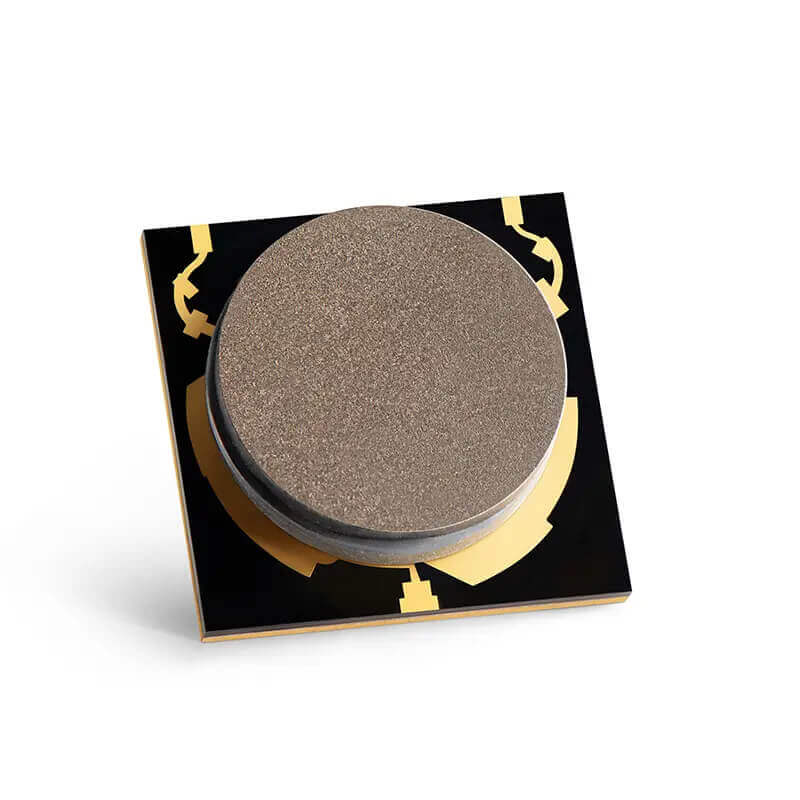
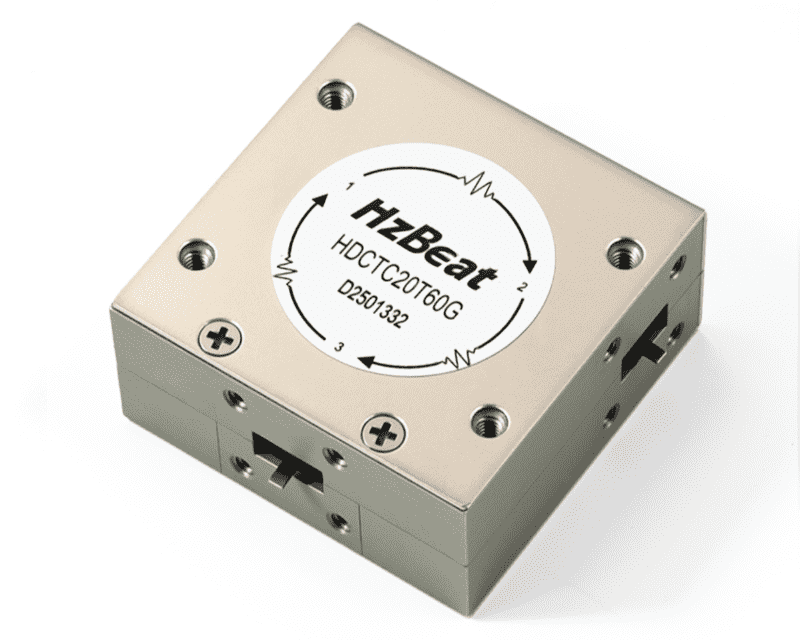
If you are aligning form factors and RF interfaces with broader platform needs, these internal resources can help: Microstrip RF Circulators, Drop-In RF Circulators, Coaxial RF Circulators, Waveguide RF Circulators, and the broader RF Circulator Selection Guide.
Conclusion
A high-performing RF circulator for quantum computing is defined less by marketing numbers and more by repeatable behavior at cryogenic temperatures. Cryogenic RF circulators and cryogenic RF isolators must maintain stable insertion loss and isolation at 4 K (and sometimes near mK stages), remain compatible with superconducting qubits in magnet-sensitive environments, and deliver predictable results after thermal cycling.
The best selection approach is system-level: understand where insertion loss becomes effective noise, where isolation must block amplifier back-action, and how placement interacts with calibration stability. As quantum computing continues to scale, engineers who treat RF circulators and RF isolators as infrastructure—validated in-chain, not only on paper—will move faster and debug less.
FAQ
Is every RF circulator suitable for cryogenic quantum computing?
No. Quantum systems typically require cryogenic RF circulators that have been validated at relevant cryogenic stages and remain stable after thermal cycling. Magnetic compatibility and thermalization behavior can also be critical constraints.
What is the most searched selection factor for a cryogenic RF circulator?
In many quantum computing contexts, insertion loss at 4 K is the dominant concern, because it can translate into effective noise contribution in the readout chain. Isolation stability and return loss (VSWR) are also common decision drivers.
Why do many systems use both an RF circulator and an RF isolator?
RF circulators manage routing and reflections, while RF isolators provide strong reverse-direction attenuation. Many quantum readout chains use both to suppress back-propagating amplifier noise and improve stability.
References
- Wikimedia Commons — “Helium dilution refrigerator.jpg” (CC BY-SA 2.5).
- NIST Image — “Dilution Refrigerator” (usage guidance for editorial content with correct credit).
- Wikimedia Commons — “Superconducting magnet cutaway.jpg” (CC BY 4.0).
- Microwave Journal — “Cryogenic Circulators and Isolators for Quantum” (industry overview).
- Bluefors — “Cryogenic Measurement Infrastructure for Quantum Computing” (system-level context).
Recommended Products
.jpg)
 Article Tags
Keith Wong
Marketing Director, Chengdu Hertz Electronic Technology Co., Ltd. (Hzbeat)
Keith has over 18 years in the RF components industry, focusing on the intersection of technology, healthcare applications, and global market trends.