Will RF Circulators Be Needed in 6G Systems?
A technical article on whether RF circulators, RF isolators, 5G circulators, and emerging 6G circulators will remain necessary in 6G systems, with a focus on full duplex radios, sub-THz front ends, antenna interfaces, and measurement challenges.
 Updated on: Mar 13, 2026
 Author:
Introduction
The move from 5G to 6G is not simply about higher throughput. It is about wider spectrum use, deeper antenna integration, stronger coordination between communication and sensing, and much tighter control of leakage, reflection, and self-interference in the RF front end.
That is why the question behind RF Circulators has returned. In many wireless discussions, circulators are treated as legacy microwave hardware, while software-defined radios and digital cancellation get the spotlight. That framing is too simple. When a system must transmit high energy, receive weak signals, share an antenna path, or prevent reflected power from damaging a power amplifier, the need for directional isolation does not vanish. It becomes more important, especially as operating frequencies move toward mmWave and sub-THz bands.
In practical terms, RF Circulator and RF isolator functions remain valuable because 6G hardware is expected to push three pressure points at the same time: higher frequency, denser packaging, and more aggressive reuse of spectrum and hardware resources. Those three pressures increase the penalty for leakage and instability. For that reason, the right question is not whether circulators disappear, but where future 6g Circulators will sit in the signal chain and what form they will take.
What 6G changes in the RF front end
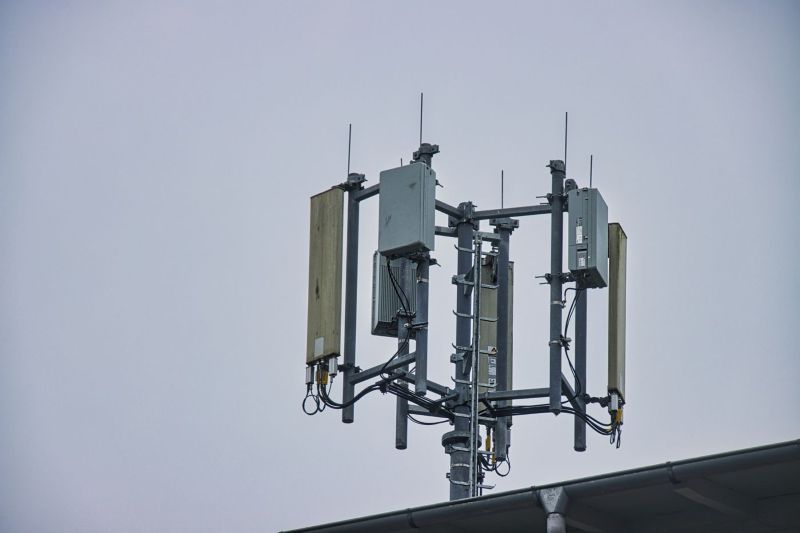
According to the ITU framework for IMT-2030, 6G development extends wireless design across a very wide spectrum range, from low bands used for coverage to frequencies above 100 GHz for advanced capacity and specialized scenarios. That shift alone raises the difficulty of RF front-end design because loss, blockage, material sensitivity, packaging parasitics, and beam control all become harder as frequency climbs.
At the same time, the 6G discussion increasingly includes full duplex radio concepts, integrated sensing and communication, and highly compact antenna-module-chip combinations. Each of those trends increases dependence on strong transmitter-receiver separation. In a half-duplex system, transmit and receive functions can be scheduled apart in time or frequency. In a full duplex or tightly coupled sensing front end, they overlap much more aggressively. That overlap makes self-interference a first-order hardware problem, not just a digital signal processing problem. Research from Aalto on integrated mmWave transceivers and circulators makes this point directly by treating the antenna interface as a central design bottleneck in future radios.
This is where the familiar terms 5g Circulators and 6g Circulators start to diverge. Many 5G deployments can still rely on established isolation methods, traditional duplexing schemes, and robust external modules. But 6G is pushing more functionality into smaller spaces and into more difficult bands. A component category that once looked mature can become strategically important again when the system around it changes.
Three front-end pressures that favor nonreciprocal devices
- Higher-frequency operation: mmWave and sub-THz links magnify mismatch, layout sensitivity, and packaging loss.
- Antenna sharing and compact integration: shared paths create stronger demand for directional routing between transmit and receive circuits.
- Higher isolation requirements: full duplex and ISAC use cases increase the cost of leakage into the receive chain.
Why RF circulators are still relevant
The most direct reason is physical, not historical. A circulator provides nonreciprocal routing. An isolator provides one-way protection by absorbing or redirecting reflected power. Those functions solve real front-end problems that 6G does not remove.
First, RF isolator devices remain important whenever power amplifiers face unpredictable load conditions. Antenna mismatch, environmental detuning, connector issues, and module tolerance shifts can all create reflected power. At lower frequencies, systems often have more room to absorb or manage those effects. At higher frequencies and in tighter packages, reflected energy can more easily hurt efficiency, stability, and device reliability.
Second, RF Circulators are highly relevant in architectures where one antenna path or one tightly integrated front-end aperture must support both transmit and receive activity. This matters in compact radios, in some phased-array interfaces, and especially in full duplex research. Digital cancellation helps, but digital cancellation works better when the analog front end has already reduced the strongest leakage. A strong nonreciprocal interface can lower the burden on everything downstream.
Third, not every future 6G node will be a low-power consumer handset. Some applications will involve fixed wireless infrastructure, high-reliability links, satellite-related hardware, backhaul, industrial wireless, or communication-sensing convergence. Those systems can place more value on power handling, ruggedness, and predictable behavior than on the smallest possible die area. In such cases, traditional ferrite-based RF Circulator and RF isolator hardware still has a strong engineering case.
Where 6G circulators are most likely to be used
1. Full duplex and shared-antenna radio front ends
Full duplex remains one of the clearest reasons why future 6g Circulators matter. If a transmitter and receiver operate at the same time in the same band, self-interference must be suppressed by a combination of antenna design, analog cancellation, nonreciprocal interfaces, and digital cancellation. Research in integrated full duplex hardware repeatedly shows that it is risky to rely on only one cancellation layer. A circulator can serve as an early barrier that improves the starting condition for the rest of the receiver chain.
2. Sub-THz communication links
As work above 100 GHz expands, high-frequency front ends become more fragile in practical terms. Tiny discontinuities can have large effects. Packaging, material selection, calibration, and thermal behavior become part of RF design rather than support issues. In this environment, RF Circulators and RF isolator concepts remain useful because they address stability and directionality at the hardware level. Even if future implementations look less like classic drop-in parts and more like chip-scale or package-integrated interfaces, the function is still needed.
3. Communication and sensing convergence
Integrated sensing and communication uses the RF front end more intensively. The system may need to transmit energetic signals while extracting weak reflected information or low-level communication signals. That is conceptually similar to many radar and sensing problems where transmit-receive separation matters. The stronger the sensing role becomes, the more valuable clean isolation and controlled routing become.
4. High-reliability and infrastructure hardware
For infrastructure and industrial-grade systems, there is often a premium on reliability, power handling, and repeatable validation. This is where the conversation about 5g Circulators naturally extends into future 6G hardware. Even if the most visible 6G headlines focus on AI-native networks and immersive experiences, the actual hardware stack still depends on front-end components that keep high-frequency signal paths stable.
Ferrite devices versus integrated nonreciprocal circuits
There is no serious reason to frame the future as ferrite versus silicon in absolute terms. The more realistic outlook is coexistence. Ferrite-based devices are established, physically robust, and still attractive when power handling, linearity, and field reliability matter most. Integrated nonreciprocal circuits, including time-varying and magnet-free approaches, are attractive when size, monolithic integration, and close coupling with RFIC architecture matter more.
That split is already visible in the research literature. Nature Communications has reported broadband nonreciprocity using synchronized conductivity modulation in CMOS-compatible approaches, while more recent mmWave full duplex work continues to explore integrated circulator concepts. These results show that next-generation nonreciprocal hardware is real, but they do not prove that traditional circulators are obsolete. Instead, they point to a broader product landscape where different implementations serve different bands, power levels, and integration goals.
For technical buyers, that means the future market for RF Circulators may become more segmented, not smaller. One segment will continue to demand proven ferrite hardware. Another will demand package-level or chip-level nonreciprocal interfaces compatible with dense 6G modules.
What future buyers will evaluate
- Frequency coverage: support for mmWave and potential sub-THz paths.
- Insertion loss and isolation: still the core tradeoff in real front ends.
- Power handling and thermal behavior: especially important in infrastructure hardware.
- Form factor: discrete, drop-in, package-integrated, or chip-scale implementation.
- Measurement confidence: whether the claimed performance can be validated cleanly at the intended frequency range.
Why measurement and validation matter more above mmWave
One reason articles about future wireless hardware often feel abstract is that they stop at architecture diagrams. Real RF products do not end at theory. They have to be measured, calibrated, compared, and repeated. That is why vector network analysis becomes even more critical as systems move toward mmWave and beyond. Above those ranges, fixture effects, connector quality, calibration strategy, and test environment discipline can change the meaning of a datasheet number.
For any company building or sourcing future 6g Circulators, validation will be part of product value. Low insertion loss on paper is not enough. Isolation behavior, return loss, thermal stability, and repeatability under realistic front-end conditions are what matter. This is particularly important for RF isolator devices used to protect amplifiers, because their worth is often revealed when the system is stressed rather than when it is idle.
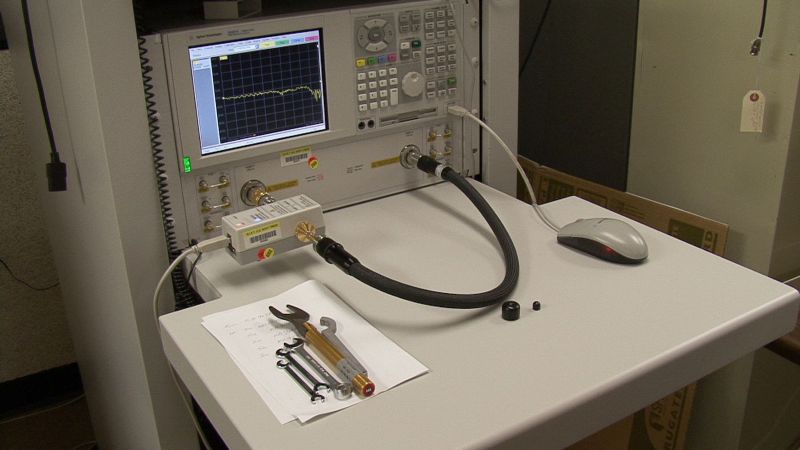
That is also why the search interest behind terms like RF Circulator and 6g Circulators will increasingly connect to test and verification content, not only to theory. Buyers and engineers want to know how devices behave in actual modules, under actual mismatch, and at the real frequencies targeted by next-generation systems.
Conclusion
RF Circulators are still likely to be needed in 6G systems because the core front-end problems they address are not disappearing. If anything, 6G makes them harder. Wider spectrum use, work above 100 GHz, stronger interest in full duplex operation, and closer coupling between sensing and communication all increase the need for controlled signal direction, transmitter-receiver separation, and protection against reflected power.
The form factor will evolve. Some future 6g Circulators will continue to look like conventional ferrite hardware used in high-power or rugged systems. Others will be more integrated, possibly magnet-free, and designed as part of a package or RFIC ecosystem. But from an application perspective, the demand for nonreciprocal behavior remains very real.
That means RF Circulator, RF isolator, and related front-end isolation devices should still be considered part of the 6G hardware conversation. Not because they are old components that survived by habit, but because they solve hardware problems that advanced wireless systems still cannot afford to ignore.
FAQ
Will RF circulators still be needed when 6G systems become more integrated?
Yes. Higher integration does not remove the need for nonreciprocal routing, transmitter-receiver separation, or amplifier protection. It mainly changes how that functionality is implemented and packaged.
Will 6G replace traditional ferrite RF circulators with chip-scale solutions overnight?
No. Ferrite hardware is still well suited to high-power and high-reliability use cases, while integrated nonreciprocal circuits are gaining attention for compact mmWave and sub-THz radios. The market is more likely to split by application than to switch all at once.
Why are RF isolators still relevant in future 6G hardware?
Because reflections still damage efficiency and can threaten amplifier stability. As front ends become tighter and frequencies rise, the margin for mismatch problems becomes smaller, which keeps isolators useful.
What is the main difference between 5G circulators and 6G circulators?
The difference is not just operating frequency. Future devices must also fit denser integration targets, stronger isolation requirements, and more difficult measurement conditions associated with mmWave and sub-THz systems.
References
- ITU-R Recommendation M.2160-0, Framework and overall objectives of the future development of IMT for 2030 and beyond. Available from ITU.
- Report ITU-R M.2541-0, Technical feasibility of IMT in bands above 100 GHz. Available from ITU.
- 6G-IA Vision Working Group, European Vision for the 6G Network Ecosystem, Version 2.0, 2024.
- Saeed Naghavi, Integrated mmWave transceivers and circulators, Aalto University, 2025.
- Tolga Dinc et al., “Synchronized conductivity modulation to realize broadband lossless non-reciprocity,” Nature Communications, 2017.
- RF Circulator Isolator, Inc., Operating Principles of Ferrite Circulators and Isolators.
Recommended Products
 Article Tags
Sara
Sara is a Brand Specialist at Hzbeat, focusing on RF & microwave industry communications. She transforms complex technologies into accessible insights, helping global readers understand the value of circulators, isolators, and other key components.