RF Circulators & Isolators for LEO Satellite Networks
A comprehensive 2026 technical guide on rad-hard RF circulators and isolators for LEO satellite constellations. Explore YIG material science, Ka-band integration, and SWaP-C optimization.
 Updated on: Feb 04, 2026
 Author:
Advanced Solutions for 2026 Next-Gen Aerospace Connectivity and SWaP-C Optimization
1. Introduction: The LEO Satellite Revolution
As we navigate through 2026, the global telecommunications infrastructure is undergoing a radical shift toward space-based Non-Terrestrial Networks (NTN). Low Earth Orbit (LEO) satellite constellations are no longer just a futuristic concept; they are the primary drivers of high-speed internet in remote regions and the backbone of 6G development. In these complex orbital systems, managing radio frequency signals with extreme precision is mandatory.
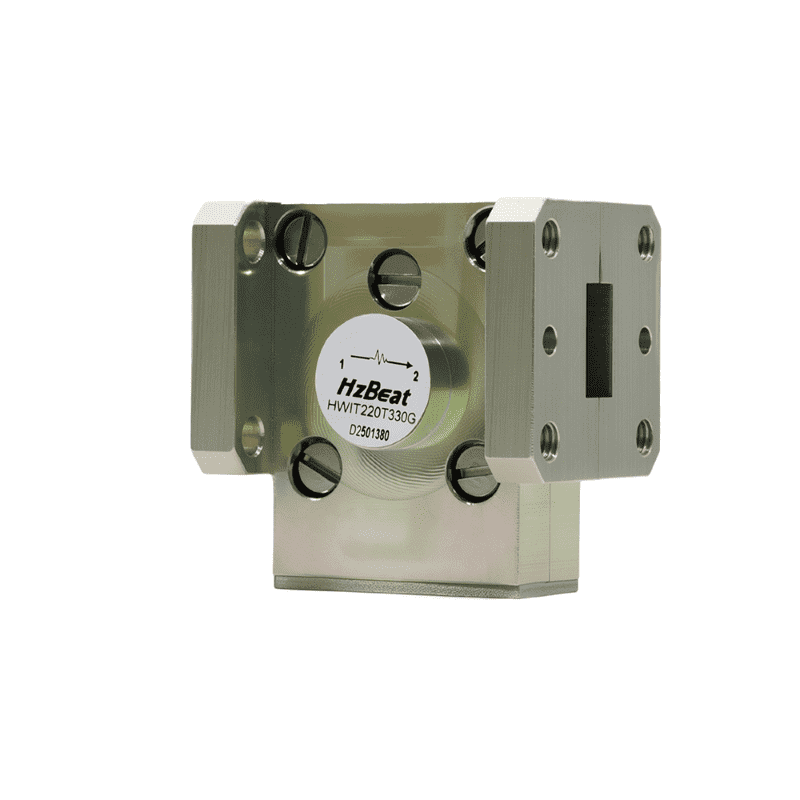
This is where the expertise of an RF Circulator & Isolator Manufacturer becomes indispensable. Devices like the RF circulator and RF isolator are essential for signal duplexing and power amplifier protection. HzBeat, specializing in microstrip, drop-in, coaxial, and waveguide types, provides the miniaturized, broadband designs required to meet the stringent demands of modern satellite payloads.
2. Fundamental Physics of RF Circulators and Isolators
The RF circulator is a passive, non-reciprocal multi-port device based on biased ferrite materials. Its core function is to route signals entering one port to the next sequential port (1 → 2 → 3) while providing isolation in the reverse direction. In satellite links, this allows the same antenna to be utilized for both transmission and reception, significantly reducing the mass of the RF front-end.
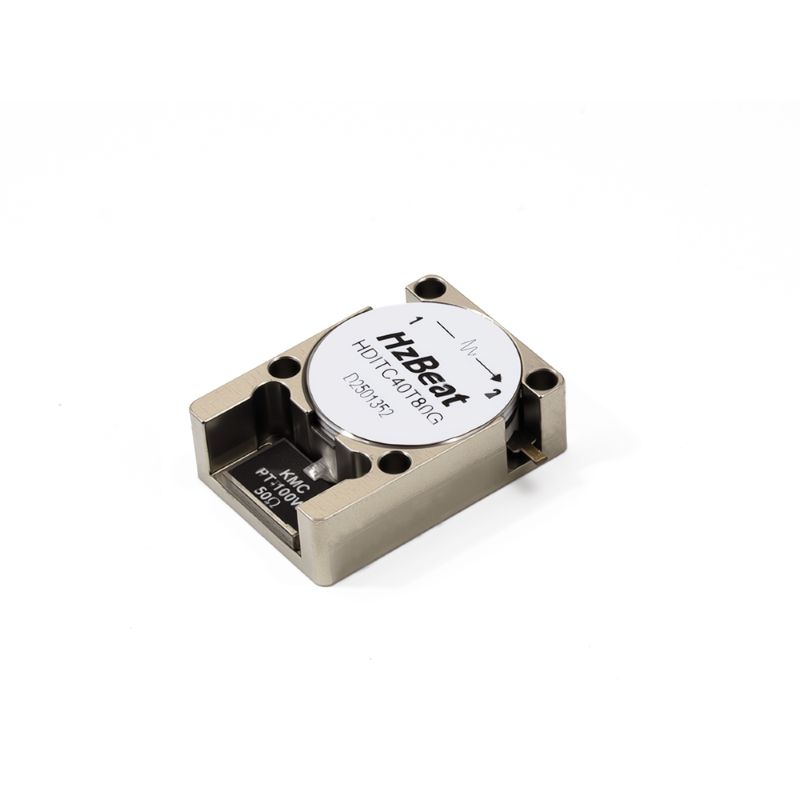
An RF isolator is essentially a circulator with its third port internally or externally terminated. It is the primary line of defense for Gallium Nitride (GaN) power amplifiers. By absorbing reflected energy caused by antenna impedance mismatches, the isolator prevents thermal runaway and hardware damage. HzBeat’s broadband and miniaturized designs ensure that these protections are implemented without adding unnecessary bulk to the system.
3. The Challenges of the Space Environment: Radiation & Vacuum
Designing hardware for LEO (500-2,000 km altitude) requires a departure from terrestrial engineering norms. Two primary factors dominate: Ionizing Radiation and the Vacuum of Space.
Rad-hard RF circulators are engineered to withstand Total Ionizing Dose (TID) from solar protons and trapped electrons. Radiation exposure can alter the lattice structure of ferrites, leading to "magnetic aging" and frequency shifts. Furthermore, in a vacuum, the absence of convective cooling makes thermal management critical. HzBeat uses high-conductivity materials and specialized outgassing-compliant adhesives to ensure that every RF isolator remains stable throughout the satellite's mission life.
4. Deep Dive: Material Science in High-Frequency Ferrites
The 2026 industry standard for Ka-band (26.5–40 GHz) and Q-band (33–50 GHz) circulation involves advanced Yttrium Iron Garnet (YIG) ceramics. HzBeat utilizes proprietary doping strategies involving Gadolinium (Gd) and Aluminum (Al) to stabilize the saturation magnetization ($4\pi M_s$) against temperature fluctuations.
By controlling the ceramic grain size at the nanometer level, we can achieve ultra-low magnetic loss tangents. This results in an RF circulator with an insertion loss of less than 0.25 dB, which is vital for preserving the Effective Isotropic Radiated Power (EIRP) of the satellite payload.
5. Mathematical Modeling: The LLG Equation and Spin Dynamics
Millimeter-wave engineering requires precise control over electron spin precession. The non-reciprocal action is modeled by the Landau-Lifshitz-Gilbert (LLG) equation:
In this formula, $\gamma$ is the gyromagnetic ratio and $\alpha$ is the damping constant. For satellite engineers, minimizing $\alpha$ is the key to reducing heat generation. HzBeat’s advanced Microstrip and Drop-in types utilize optimized magnetic biasing to ensure the resonance peak remains far from the operating frequency, providing maximum isolation with minimum loss.
6. SWaP-C Optimization: From Waveguide to Microstrip Designs
In the aerospace sector, the "Rocket Equation" dictates that every gram of mass costs thousands of dollars in launch fees. SWaP-C (Size, Weight, Power, and Cost) is the primary metric for LEO constellations.
- Waveguide Circulators: Ideal for high-power gateway ground stations where loss must be absolute minimum.
- Coaxial Isolators: Used in laboratory testing and legacy satellite systems.
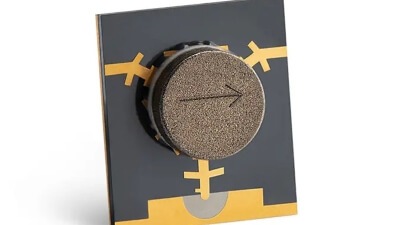
- Drop-in & Microstrip Types: The gold standard for modern LEO constellations. These allow for high-density integration onto PCBs using SMT (Surface Mount Technology), enabling the creation of flat-panel phased-array antennas.
7. Ground Terminal Economics: Scaling for Global Reach
To achieve global internet coverage, millions of ground user terminals (UTs) must be produced. This requires a shift from manually tuned components to automated mass production. HzBeat has optimized its SMT RF isolators for high-speed pick-and-place assembly. By reducing the reliance on rare-earth magnets and utilizing self-biased hexagonal ferrites, we have successfully lowered the cost-per-unit for ground segment hardware while maintaining the technical performance required for 10 Gbps+ satellite links.
8. Manufacturing Precision and Quality Assurance
Reliability in space is non-negotiable—there are no repair missions for LEO satellites. HzBeat’s manufacturing process includes 100% automated S-parameter verification and rigorous Thermal Vacuum (TVAC) cycling. Our rad-hard RF circulators undergo random vibration testing to simulate the intense mechanical stress of a rocket launch, ensuring that the internal magnetic alignment remains perfectly intact.
9. Conclusion and Future Trends
Looking ahead to the late 2020s, we anticipate the expansion of satellite communication into the V-band and E-band. HzBeat is already pioneering the next generation of Broadband and Miniaturized Designs to support these higher frequencies. The integration of RF circulators directly into GaN-on-Si MMICs is the next frontier, further shrinking the footprint of satellite communication hardware.
10. Frequently Asked Questions (FAQ)
Q1: Can your circulators handle vacuum conditions?
A: Yes, HzBeat manufactures space-qualified RF circulators specifically designed with venting and
low-outgassing materials for high-vacuum environments.
Q2: How do I choose between Microstrip and Drop-in types?
A: Microstrip is best for compact, low-power integration. Drop-in types are preferred when higher power handling
and better thermal dissipation are required. Explore our Microstrip, Drop-in, and Waveguide Types for detailed specs.
11. References and Authoritative Citations
- NASA Goddard Space Flight Center: Reliability of Passive Microwave Components in LEO.
- IEEE Microwave Theory and Technology Society: Non-reciprocal Ferrite Devices for 5G/6G Satellite Links.
- ESA (European Space Agency): Multipactor Suppression in Ferrite Circulators.
- HzBeat Technical Database: Advanced Materials for Miniaturized RF Designs.
Recommended Products
.png)
 Article Tags
Keith Wong
Marketing Director, Chengdu Hertz Electronic Technology Co., Ltd. (Hzbeat)
Keith has over 18 years in the RF components industry, focusing on the intersection of technology, healthcare applications, and global market trends.