When Should I Use a Microstrip RF Circulator?
Learn when to use a microstrip RF circulator, including key advantages, application scenarios, limitations, and selection factors for compact RF systems.
 Updated on: Jul 07, 2026
 Author:
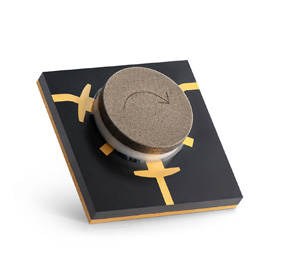
A microstrip RF circulator is a good choice when your RF system needs a compact, lightweight, and highly integrated non-reciprocal device for signal routing, transmitter protection, or antenna sharing.
Compared with coaxial, drop-in, and waveguide circulators, the microstrip structure is especially suitable for RF modules where space is limited and the circuit layout needs to stay flat, compact, and easy to integrate.
In practical RF design, choosing a circulator is not only about frequency. Engineers also need to consider structure, power level, size, installation method, thermal conditions, bandwidth, isolation, insertion loss, and system layout. A microstrip RF circulator is often selected when the design requires a balance between electrical performance, miniaturization, and integration flexibility.
What Is a Microstrip RF Circulator?
A microstrip RF circulator is a three-port non-reciprocal RF component that guides signals in one direction from port to port. In a typical circulator, the signal travels from Port 1 to Port 2, from Port 2 to Port 3, and from Port 3 to Port 1, while reverse signal transmission is suppressed.
The microstrip structure uses planar transmission lines on a dielectric substrate. This makes it different from a coaxial circulator, which uses connectorized coaxial ports, or a waveguide circulator, which is usually larger and used for high-frequency or high-power waveguide systems.
Because of its planar design, a microstrip circulator is commonly used in compact RF modules, microwave circuits, radar front-end assemblies, communication equipment, and customized RF systems.
When Should You Use a Microstrip RF Circulator?
You should consider using a microstrip RF circulator when your system has one or more of the following requirements.
Compact Size
Suitable for RF modules where installation space is limited.
Module Integration
Helps reduce cables and supports a cleaner RF path.
Low Profile
Useful for thin, dense, or height-limited assemblies.
Customization
Can be adjusted for frequency, layout, size, and power needs.
1. When Your RF System Requires a Compact Size
Microstrip RF circulators are often selected for systems where space is valuable. Their flat and compact structure makes them suitable for RF modules with limited installation area.
For example, in phased array radar, satellite communication terminals, UAV communication equipment, and compact microwave modules, engineers often need to place many RF components in a very small space. A bulky connectorized circulator may not be ideal in these cases. A microstrip circulator can help reduce the overall module size while still providing signal routing and isolation functions.
This is one of the most important reasons to choose a microstrip structure: it saves space without removing the circulator function from the RF chain.
2. When You Need Better Integration with RF Modules
A microstrip RF circulator is suitable for module-level integration. Since it uses a planar transmission structure, it can be more easily integrated into compact RF assemblies compared with connectorized devices.
In some RF systems, engineers do not want every component to be connected by external cables. Too many connectors and cables can increase insertion loss, occupy more space, and make the system more complex. A microstrip circulator can be designed as part of a compact RF path, helping the whole module become cleaner and more integrated.
This is useful in applications such as:
- Radar transmit/receive modules
- Microwave communication modules
- Compact RF front-end assemblies
- Satellite communication payloads and terminals
- Test and measurement modules
- Customized microwave subsystems
3. When Low Profile Design Is Important
Some systems require a low-profile component because the module has strict height limitations. A microstrip circulator can be a better choice than a coaxial circulator when vertical space is limited.
This is especially relevant for systems where the RF module must fit inside a small enclosure, a thin antenna unit, or a densely packed electronic assembly. In such cases, a low-profile structure helps improve mechanical compatibility and system packaging.
4. When You Need a Customized Frequency Range
Microstrip RF circulators are commonly used in customized RF designs because their structure can be adjusted according to the required frequency band, bandwidth, and system layout.
If a standard off-the-shelf circulator does not match your frequency range, port arrangement, size limit, or mounting requirement, a customized microstrip circulator may be a practical solution.
For example, engineers may request a microstrip circulator with:
- A specific center frequency
- A customized operating bandwidth
- A special port direction
- A compact outline size
- A specific substrate or mounting condition
- Optimized insertion loss or isolation
- A defined power handling level
This makes microstrip circulators useful in projects where the RF design is not completely standard.
5. When You Need Signal Routing in a Compact RF Chain
A circulator is often used to control the direction of RF signal flow. In many systems, it can help separate transmitted and reflected signals, protect sensitive circuits, or route signals between different parts of the RF chain.
A microstrip circulator can be used when the RF path needs to remain compact and controlled. For example, it may be placed after a power amplifier to reduce the influence of reflected signals caused by antenna mismatch. It may also be used in front-end systems where the transmitter and receiver share part of the same RF path.
In this role, the circulator acts like a one-way traffic guide for RF energy. The road is small, the traffic is fast, and the wrong turn can be expensive.
6. When Weight Matters
In aerospace, UAV, portable communication, and satellite-related equipment, weight can be an important design factor. Microstrip circulators are generally more compact and lightweight than some connectorized or waveguide alternatives.
When the whole system needs to reduce mass while maintaining RF performance, a microstrip circulator may be a better structural choice.
Typical Applications of Microstrip RF Circulators
Microstrip RF circulators can be used in many RF and microwave systems, especially when compact size and integration are important.
Common application areas include:
- Radar systems: Used in RF front-end modules, phased array systems, and transmit/receive paths.
- Satellite communication: Used in compact terminals, payload-related RF modules, and microwave links.
- 5G and wireless communication: Used in RF modules where signal routing and isolation are required.
- Test and measurement equipment: Used in customized RF test paths and microwave measurement setups.
- Electronic warfare and defense systems: Used in compact, high-performance RF assemblies.
- Medical RF systems: Used in specialized RF signal chains where isolation and signal direction control are required.
- Microwave modules: Used in integrated assemblies that require smaller, lighter, and more efficient layouts.
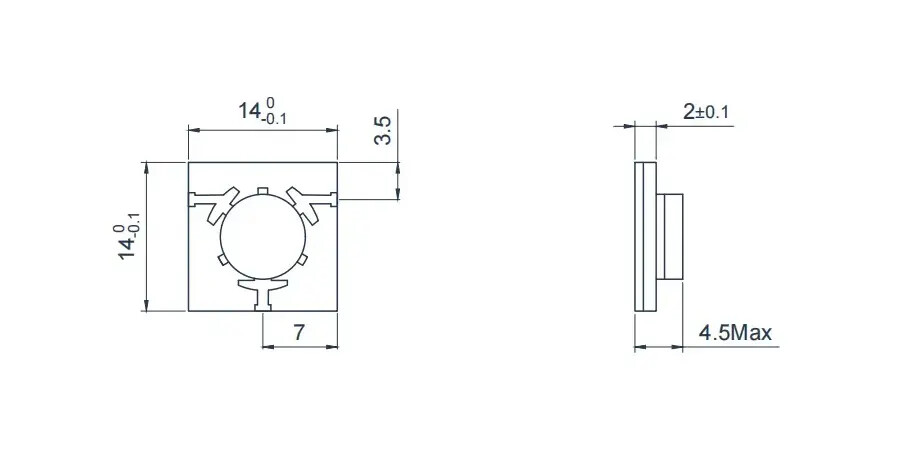
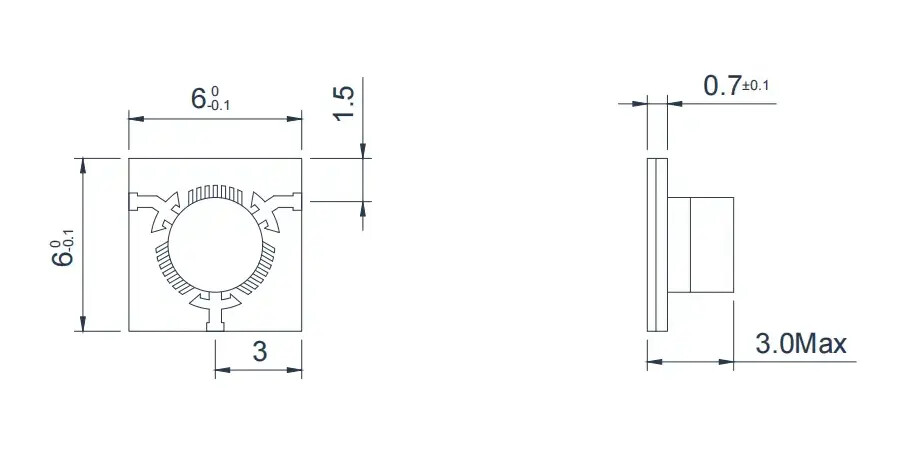
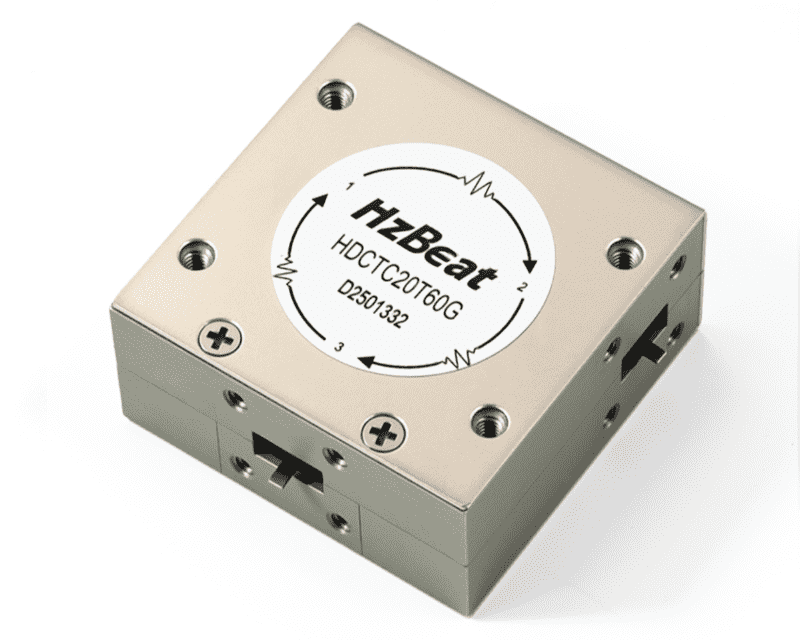
Real Product Size Reference
During early RF module design, engineers often need to evaluate the outline size, height, port direction, and available mounting space. A real appearance reference can help connect the electrical requirement with the mechanical layout.
When Is a Microstrip RF Circulator Not the Best Choice?
Although a microstrip RF circulator has many advantages, it is not always the best option. In some cases, other structures may be more suitable.
1. When Very High Power Handling Is Required
If the system needs to handle very high RF power, a coaxial, drop-in, or waveguide circulator may be more appropriate, depending on the frequency and thermal requirements.
Microstrip circulators can be designed for different power levels, but power handling is strongly related to size, materials, thermal design, and operating conditions. If your system has high CW power, high peak power, or strict heat dissipation requirements, the power specification must be carefully reviewed.
2. When You Need a Connectorized Plug-and-Play Device
If your system uses standard RF cables and connectors, a coaxial circulator may be easier to install and replace. Coaxial circulators are convenient for laboratory testing, system debugging, and external RF connections.
A microstrip circulator is better suited for module integration, while a coaxial circulator is often better for connectorized system-level installation.
3. When the System Uses Waveguide Transmission
For very high-frequency or high-power waveguide systems, a waveguide circulator may be the better option. Waveguide circulators are commonly used in applications where waveguide interfaces are already part of the RF system.
4. When Mechanical Robustness and Easy Replacement Are Priorities
A connectorized circulator may be easier to replace in the field. If the application requires frequent installation, removal, or maintenance, the mechanical convenience of a coaxial package can be an advantage.
Microstrip vs. Coaxial vs. Drop-In vs. Waveguide Circulators
| Structure | Best For | Main Advantage | Typical Limitation |
|---|---|---|---|
| Microstrip Circulator | Compact RF modules and planar integration | Small size, low profile, flexible customization | Requires careful integration and layout design |
| Coaxial Circulator | Connectorized RF systems and lab testing | Easy installation, convenient replacement | Larger size compared with planar structures |
| Drop-In Circulator | High-performance module assembly | Good RF performance and integration flexibility | Requires proper mounting and grounding |
| Waveguide Circulator | High-frequency or high-power waveguide systems | High power capability and low loss in waveguide paths | Larger size and less suitable for compact modules |
Key Parameters to Confirm Before Choosing a Microstrip RF Circulator
Before selecting or customizing a microstrip RF circulator, engineers should confirm the following specifications:
Frequency Range
The circulator must be designed for the correct frequency band.
Bandwidth
A broadband design requires careful balance between size, loss, isolation, and matching.
Insertion Loss
Lower insertion loss helps improve power efficiency and receiver sensitivity.
Isolation
Higher isolation helps protect sensitive components and improve signal stability.
VSWR / Return Loss
Better matching helps reduce signal reflection and improve system reliability.
Power Handling
Power handling must include both average power and peak power when applicable.
Size and Port Layout
The outline size, thickness, port direction, and mounting method should match the module design.
Operating Temperature
Temperature requirements should be clearly defined for harsh or outdoor environments.
What Information Should You Provide for a Custom Microstrip RF Circulator?
To request a suitable microstrip RF circulator, it is helpful to provide the following information:
- Operating frequency range
- Required bandwidth
- Input power and peak power
- Expected insertion loss
- Required isolation
- VSWR or return loss requirement
- Port configuration
- Size limitation
- Operating temperature range
- Application scenario
- Quantity requirement
- Special mounting or material requirements
How HzBeat Supports Microstrip RF Circulator Projects
HzBeat provides RF circulator and RF isolator solutions for different RF and microwave applications, including microstrip, coaxial, drop-in, and waveguide structures. For microstrip RF circulators, the design can be adjusted according to frequency range, bandwidth, power handling, size, port layout, and application requirements.
For projects that require compact size, customized frequency bands, or module-level integration, a microstrip RF circulator can be a practical and efficient choice. HzBeat can support customers from requirement evaluation to product selection and customized design.
Conclusion
You should use a microstrip RF circulator when your RF system needs compact size, low-profile structure, flexible integration, and customized RF performance. It is especially suitable for radar modules, satellite communication systems, microwave communication equipment, compact RF front ends, and customized RF assemblies.
However, if your system requires very high power handling, connectorized installation, or waveguide interfaces, other circulator structures may be more suitable. The best choice depends on the complete RF system design, not only the frequency range.
In short, a microstrip RF circulator is the right choice when your system needs the circulator function to live quietly inside a compact RF module—small in size, precise in direction, and steady in performance.
FAQ
When should I use a microstrip RF circulator?
You should use a microstrip RF circulator when your RF system requires compact size, low-profile structure, module-level integration, and customized RF performance. It is commonly used in radar, satellite communication, microwave modules, and compact RF front-end systems.
Is a microstrip RF circulator suitable for high-power systems?
It depends on the specific power level, frequency range, thermal design, and size requirement. For moderate power levels and compact RF modules, a microstrip circulator can be suitable. For very high-power applications, coaxial, drop-in, or waveguide circulators may be more appropriate.
What is the main advantage of a microstrip RF circulator?
The main advantage is compact integration. A microstrip RF circulator has a planar and low-profile structure, making it suitable for RF modules where space and weight are limited.
How is a microstrip circulator different from a coaxial circulator?
A microstrip circulator uses a planar transmission structure and is usually designed for compact module integration. A coaxial circulator uses RF connectors and is easier to install in cable-connected systems.
Can a microstrip RF circulator be customized?
Yes. A microstrip RF circulator can be customized according to frequency range, bandwidth, power handling, insertion loss, isolation, VSWR, size, port layout, and operating environment.
What applications commonly use microstrip RF circulators?
Microstrip RF circulators are commonly used in radar systems, phased array modules, satellite communication equipment, microwave communication systems, test modules, defense electronics, and compact RF front-end assemblies.
Recommended Products
.jpg)
 Article Tags
Keith Wong
Marketing Director, Chengdu Hertz Electronic Technology Co., Ltd. (Hzbeat)
Keith has over 18 years in the RF components industry, focusing on the intersection of technology, healthcare applications, and global market trends.