Where Are VHF RF Circulators Commonly Used? Key Applications Explained
Explore where VHF RF circulators are commonly used, including broadcast transmitters, radio communication, repeaters, RF power amplifier protection, test systems, and custom VHF RF modules.
 Updated on: Apr 24, 2026
 Author:
Introduction
VHF RF circulators may not always receive the same attention as microwave and millimeter-wave components, but in many real RF systems, they quietly do some of the hardest work. From broadcast transmitters and land mobile radio networks to repeater systems, RF power amplifier modules, and specialized communication platforms, a VHF RF circulator helps manage signal direction, protect sensitive stages from reflected power, and improve overall system stability.
The VHF band generally covers 30 MHz to 300 MHz, a frequency range widely associated with FM broadcasting, television broadcasting, two-way radio, public safety communication, marine radio, and other long-range or regional communication services. In these systems, reflected power, antenna mismatch, load variation, and high VSWR conditions are not just theoretical problems. They can affect transmitter efficiency, create unwanted distortion, reduce coverage reliability, or even damage expensive RF power devices.
This is where a RF circulator becomes valuable. By routing RF energy from one port to the next in a defined direction, the circulator allows forward power to move toward the antenna or load, while reflected energy can be guided away from the transmitter path. For engineers working with VHF transmitters, repeaters, and custom RF front-end designs, this small ferrite component often acts like a quiet traffic controller inside the RF chain.
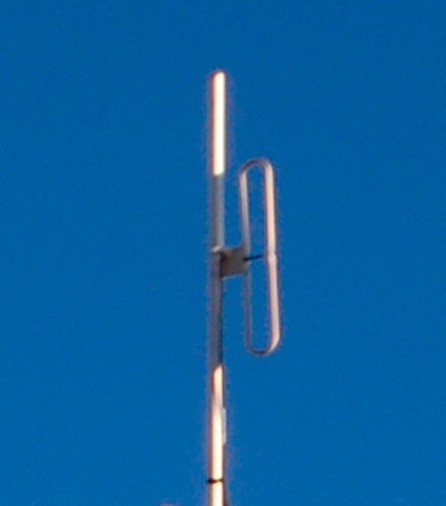
Why VHF Systems Need RF Circulators
In an ideal RF system, the transmitter sends energy into a perfectly matched antenna or load, and all forward power is delivered without reflection. Real systems are rarely that polite. Antenna impedance can shift with installation height, nearby structures, weather exposure, cable aging, connector condition, and frequency offset. When mismatch occurs, part of the transmitted signal travels back toward the power amplifier.
For low-power systems, this reflected energy may only reduce performance. For high-power VHF transmitters, it can become a serious reliability issue. Reflected power can increase device temperature, stress output transistors, create instability, and generate intermodulation products. A VHF RF circulator helps reduce this risk by directing reflected energy to a load or termination instead of allowing it to return directly into the transmitter output stage.
This is also why VHF circulators are often discussed together with RF isolators. A circulator is a three-port device, while an isolator is typically built by terminating one port of a circulator. If the application mainly requires one-way protection between a transmitter and a load, an isolator may be selected. If the system requires signal routing among three ports, a circulator is usually the more flexible solution.
VHF Broadcast Transmitters
One of the most common application areas for VHF RF circulators is broadcast infrastructure. VHF frequencies are used in parts of FM radio, TV broadcasting, and regional transmission systems. Broadcast transmitters often operate continuously, sometimes at high power levels, and must remain stable under changing antenna and environmental conditions.
In a broadcast transmitter chain, a VHF RF circulator can be installed near the power amplifier output. Its purpose is to maintain a cleaner separation between forward power and reflected power. If an antenna system becomes mismatched due to icing, cable failure, connector damage, or tuning drift, the circulator helps prevent reflected power from flowing directly back into the transmitter output stage.
For broadcast engineers, the benefit is not only component protection. A stable RF output path also helps reduce distortion, improves transmitter reliability, and supports more predictable system maintenance. In this type of application, important circulator specifications usually include frequency range, insertion loss, isolation, CW power handling, connector type, and cooling conditions.
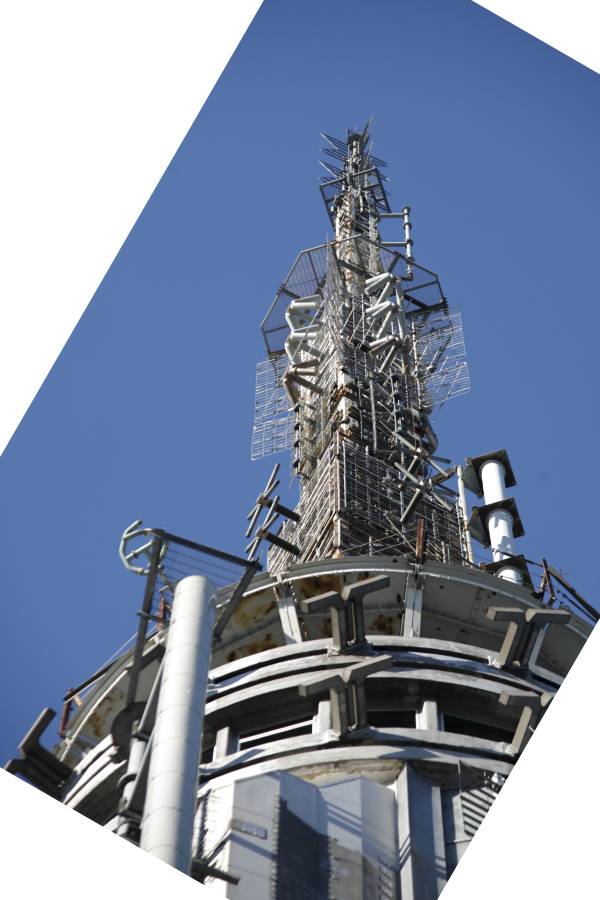
Two-Way Radio and Land Mobile Communication Systems
VHF communication is still widely used in land mobile radio systems, including public safety, emergency services, transportation, utility networks, industrial sites, and field communication. These systems often need reliable voice or data links across relatively long distances, especially in outdoor or semi-rural environments.
In two-way radio infrastructure, VHF RF circulators may be used in base station transmitters, repeater stations, and RF distribution systems. Their role is to stabilize the transmitter path and protect amplifier stages from reflected signals caused by antenna mismatch or external coupling. This is especially important when multiple transmitters, receivers, filters, and antennas are installed in the same communication site.
A well-selected VHF circulator can improve RF chain robustness by providing a more predictable load condition for the power amplifier. In practical terms, this helps the system keep working when the field environment is less than perfect. RF systems live in the real world, not in a clean textbook diagram; wind, rain, temperature shifts, and imperfect installations all have a vote.
Repeater and Base Station Systems
VHF repeaters and base stations often operate in fixed locations with antennas installed on towers, rooftops, or remote sites. These systems may run continuously and may be exposed to harsh environmental changes. Because repeaters are designed to receive and retransmit signals, their RF front ends must carefully manage isolation, filtering, and power flow.
A VHF RF circulator can be used in the transmitter path of a repeater system to help protect the power amplifier and improve the stability of the output chain. In some installations, circulators may also be used together with duplexers, filters, combiners, and loads. The exact architecture depends on the system frequency plan, transmit power, antenna configuration, and isolation requirements.
For repeater applications, engineers usually pay close attention to insertion loss. Any extra loss in the transmit path can reduce effective radiated power. At the same time, isolation must be high enough to keep reflected or unwanted signals away from sensitive circuit stages. This is the classic RF design compromise: every dB has a job, and every dB has a cost.
RF Power Amplifier Protection
Another major use of VHF RF circulators is RF power amplifier protection. In many VHF transmitters, the power amplifier is one of the most expensive and failure-sensitive parts of the system. If the amplifier sees a poor load match, reflected power may return to the output device and cause heating, instability, or long-term reliability problems.
A VHF circulator helps create a safer operating environment for the amplifier by redirecting reflected energy away from the amplifier output. When a termination is connected to the appropriate circulator port, reflected energy can be absorbed instead of being sent back into the active device. This is why circulators and isolators are often placed close to the output stage of high-power RF systems.
When choosing a VHF RF circulator for amplifier protection, power handling should not be treated as a simple number on a datasheet. Engineers should consider CW power, peak power, reverse power, duty cycle, cooling method, ambient temperature, connector capability, and mechanical mounting. High power increases heat, and heat is where many RF dreams go to sweat.
Laboratory Test and Measurement Systems
VHF RF circulators are also useful in laboratory test setups. Engineers may use them during amplifier characterization, antenna testing, reflected-power testing, or system validation. In these environments, a circulator can help protect test instruments and maintain more controlled signal routing.
For example, when testing a VHF power amplifier with a load or antenna simulator, a circulator can help separate forward and reflected energy. This makes the test setup safer and easier to interpret. It can also help reduce the risk of damaging a signal generator, amplifier, or measurement instrument if an unexpected mismatch occurs during testing.
Test applications may not always require the same rugged construction as outdoor transmitter systems, but they often require stable electrical performance and clear documentation. Key parameters include frequency coverage, insertion loss, isolation, VSWR, connector type, calibration condition, and power rating.
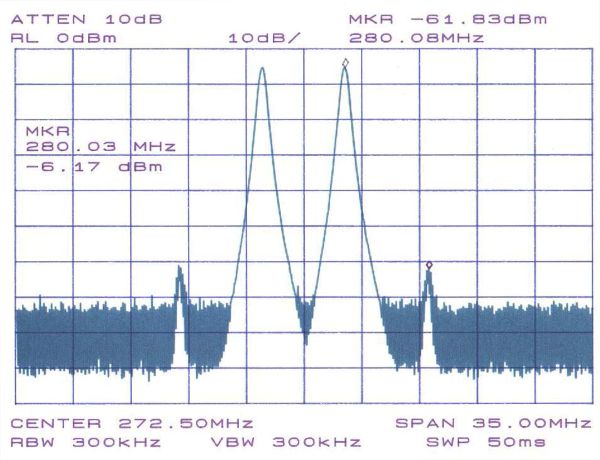
Defense, Emergency, and Specialized Communication Platforms
VHF communication remains important in many specialized systems because it can provide practical coverage, mature infrastructure, and reliable operation in field environments. Defense communication, emergency response networks, aviation-related ground systems, maritime communication, and industrial telemetry may all involve VHF frequency planning.
In these applications, the RF circulator is usually selected not because it is glamorous, but because it makes the system harder to break. A circulator can support transmitter protection, signal routing, and stable operation under changing load conditions. For mission-critical communication, reliability is not a decorative feature; it is the whole architecture breathing.
Specialized systems may also require non-standard frequency ranges, unusual connectors, customized mounting, wider temperature operation, or higher power handling. This is where a standard catalog part may not always be enough. A custom VHF RF circulator can be designed around the real operating conditions of the platform.
Custom Low-Frequency RF Front-End Modules
VHF circulators are often larger than higher-frequency components because lower frequencies generally require different ferrite and magnetic design considerations. When engineers need a VHF circulator inside a compact RF module, mechanical design becomes just as important as electrical performance.
Custom VHF RF front-end modules may need to balance frequency range, power handling, connector position, mounting hole layout, thermal path, isolation, and insertion loss. In some designs, a coaxial RF circulator may be preferred for connectorized installation and easier system-level integration. In other cases, a drop-in RF circulator may be selected for module-level assembly where space and layout are tightly controlled.
For projects with unusual frequency bands, specific power levels, or strict mechanical limits, a custom RF circulator solution can help align the component with the actual system rather than forcing the system to adapt to a generic part.
Key Parameters When Selecting a VHF RF Circulator
Application is only the first step. Once engineers know where the VHF RF circulator will be used, the next question is how to specify it correctly. The following parameters are usually the most important:
| Parameter | Why It Matters | Typical Engineering Question |
|---|---|---|
| Frequency Range | Defines the operating band where the circulator must meet performance targets. | Does the circulator cover my exact VHF band? |
| Insertion Loss | Affects transmitter efficiency and delivered output power. | How much forward power will I lose? |
| Isolation | Determines how well reflected or reverse energy is separated from the protected port. | Will it protect my amplifier under mismatch? |
| VSWR | Indicates impedance matching quality and reflection behavior. | Will the circulator maintain a stable 50-ohm path? |
| Power Handling | Includes CW power, peak power, reverse power, duty cycle, and thermal design. | Can it survive my transmitter power level? |
| Connector or Interface | Affects integration, power capability, mechanical layout, and serviceability. | Should I choose N-type, SMA, tab, or a custom interface? |
| Operating Temperature | Critical for outdoor, industrial, mobile, and defense environments. | Will performance remain stable in real field conditions? |
When Should You Consider a Custom VHF RF Circulator?
A custom VHF RF circulator should be considered when standard products cannot meet the project’s frequency, power, mechanical, or environmental requirements. This is common in specialized VHF systems where the operating band is narrow but strict, the power level is high, or the available installation space is limited.
Before requesting a custom design, engineers should prepare the following information:
- Operating frequency range: such as 136–174 MHz, 150–160 MHz, or another project-specific VHF band.
- Power requirements: including CW power, peak power, reflected power, and duty cycle.
- Performance targets: insertion loss, isolation, VSWR, and return loss.
- Mechanical requirements: connector type, mounting style, size limits, and port orientation.
- Environmental conditions: operating temperature, vibration, humidity, outdoor exposure, or cooling method.
- Application context: broadcast transmitter, repeater, amplifier module, test system, or communication platform.
With this information, HzBeat can better evaluate whether the requirement is suitable for a standard RF circulator, a connectorized coaxial design, a drop-in structure, or a fully customized VHF circulator. The clearer the specification, the shorter the road from engineering discussion to a usable RF component.
Conclusion
VHF RF circulators are commonly used in broadcast transmitters, two-way radio systems, land mobile radio networks, repeaters, base stations, RF power amplifier modules, laboratory test setups, defense communication platforms, and custom low-frequency RF front ends. Their main value is simple but powerful: they help guide RF energy in the right direction and protect sensitive system stages from reflected power.
For engineers working with VHF systems, choosing the right circulator is not only about matching a frequency range. It is about understanding the relationship between power, insertion loss, isolation, VSWR, mechanical design, thermal behavior, and real-world operating conditions. A well-designed VHF RF circulator can make a transmitter more stable, a repeater more reliable, and a custom RF module easier to integrate.
If your VHF RF system requires a specific frequency band, high power handling, low insertion loss, special connector layout, or compact mechanical structure, HzBeat can support custom RF circulator and isolator solutions for demanding communication and RF front-end applications.
FAQ
Where are VHF RF circulators commonly used?
VHF RF circulators are commonly used in broadcast transmitters, two-way radio systems, land mobile radio networks, repeaters, RF power amplifier modules, test equipment, defense communication systems, and custom VHF RF front-end modules.
Why are RF circulators useful in VHF transmitter systems?
They help route forward RF energy toward the antenna while directing reflected energy away from the transmitter output stage. This helps protect the power amplifier and improve system stability under antenna mismatch or high VSWR conditions.
Can a VHF RF circulator protect a power amplifier?
Yes. A VHF RF circulator can help protect a power amplifier by redirecting reflected power to another port, often connected to a termination or load. This reduces the risk of reflected energy returning directly into the amplifier.
What is the difference between a VHF RF circulator and a VHF RF isolator?
A VHF RF circulator is typically a three-port device that routes signals from one port to the next. A VHF RF isolator is usually made by terminating one port of a circulator, creating a two-port device that allows signal flow in one direction while absorbing reflected power.
Can VHF RF circulators be customized?
Yes. VHF RF circulators can often be customized for specific frequency bands, power levels, connector types, mounting styles, port orientations, and environmental requirements. Custom design is especially useful for non-standard VHF systems and compact RF modules.
References
- CRFS, What is Very-High Frequency (VHF)?
- Bird RF, Guide to ITU Frequency Bands
- Pasternack, RF Circulators
- Molex, RF Isolators and Circulators
- Radio World, Practical Use of Circulators and Isolators
Recommended Products
.jpg)
 Article Tags
Keith Wong
Marketing Director, Chengdu Hertz Electronic Technology Co., Ltd. (Hzbeat)
Keith has over 18 years in the RF components industry, focusing on the intersection of technology, healthcare applications, and global market trends.