RF Circulator and RF Isolator Price Trends in 2026
Explore RF circulator and RF isolator price trends in 2026. Learn typical small-quantity price ranges, key cost drivers, Ka-band premiums, and practical buyer tips for fair RF quote comparison.
 Updated on: Mar 18, 2026
 Author:
Introduction: Why RF Pricing Matters
Price is never just a purchasing detail in RF and microwave projects. It affects design choices, sourcing strategy, qualification flow, lead time planning, and risk management. A buyer comparing two parts that appear similar on paper may still see a large price gap. In most cases, that difference is not arbitrary. It reflects how difficult the part is to design, tune, manufacture, validate, and deliver consistently.
In small-quantity purchasing, many standard products fall into the mid-hundreds of U.S. dollars, but that does not mean the market is simple. Once a device moves into higher frequency bands, lower insertion loss, stronger isolation guarantees, higher power handling, smaller packages, or stricter reliability screening, pricing can rise quickly. That is why RF circulator and RF isolator pricing should be analyzed as an engineering and procurement issue, not just a catalog lookup exercise.
For buyers, the better question is not only "What is the RF circulator price?" but also "What exact technical and commercial assumptions define that price?" A lower visible unit cost may still become the more expensive choice once thermal margin, screening, qualification delay, or replacement risk is taken into account.
Data Sources and Pricing Methodology
Price trend discussions become unreliable very quickly when there is no clear methodology. Public distributor pricing, channel-visible list prices, and OEM project quotes serve different roles and should not be treated as interchangeable. In this article, public market-visible prices are used as small-quantity reference anchors rather than direct substitutes for negotiated program-level quotations.
That distinction matters because a public price may reflect one-piece or low-quantity supply, standard commercial screening, fixed channel margins, and stock-based sales logic. An OEM quote, by contrast, can depend heavily on annual quantity, exact technical alignment, operating environment, testing scope, traceability requirements, packaging, delivery terms, and whether the part is standard, semi-custom, or fully custom.
To compare RF circulator price and RF isolator price fairly, buyers should normalize at least these variables:
- Frequency band and usable bandwidth
- Isolation guarantee, not only a typical value
- Insertion loss under the actual operating condition
- VSWR and mismatch environment
- Power handling definition and heat dissipation requirement
- Operating temperature range
- Mechanical format such as microstrip circulator, drop-in, coaxial, or waveguide
- Qualification and screening scope
- Lead time, taxes, freight, and regional channel effects
Without that normalization, two prices may describe two very different engineering promises.
Typical RF Circulator and RF Isolator Price Ranges in 2026
Buyers often want a simple answer: what is a realistic RF circulator price or RF isolator price in 2026? The honest answer is that small-quantity visible pricing often begins in the low-to-mid hundreds of dollars for relatively standard products, then climbs as performance, frequency, package complexity, and qualification demands increase.
The table below is not a universal catalog law. It is a practical framework for understanding the pricing zones buyers commonly encounter when comparing visible market listings and early-stage quotations.
| Frequency / Category | Typical Small-Quantity Price Position | Common Cost Pattern | Buyer Interpretation |
|---|---|---|---|
| L / S / lower microwave bands | Lower to mid range | Standard designs are more common, and the supply base can be broader | Useful as a baseline zone for early price benchmarking |
| C / X band | Mid range | Performance, package, and integration differences become more visible | Quote variation often reflects trade-offs in IL, isolation, and power |
| Ku band | Mid to high range | Tighter tolerances and application-specific requirements increase cost sensitivity | Compare guaranteed performance, not only label or center frequency |
| Ka-band RF isolator / circulator | High range | Smaller dimensions and tighter tuning windows increase process difficulty | Ka-band RF isolator price usually carries a clear premium |
| High-power designs | Higher than standard equivalents | Thermal path, termination, materials, and validation work raise cost | Power definition and mismatch condition must be clarified |
| Miniaturized parts | Often higher than expected | Smaller size can reduce manufacturing margin and increase tuning difficulty | "Smaller" should not be assumed to mean "cheaper" |
That is why a single "average RF circulator price" is usually not enough to guide procurement. The right question is which price band matches the actual specification window.
Representative Product Formats Behind Price Differences
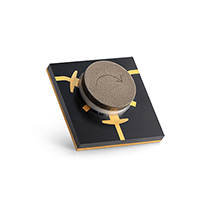
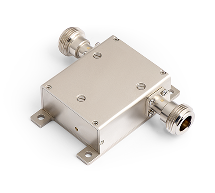
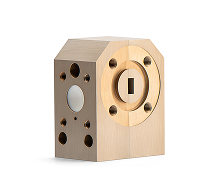
Mechanical structure also changes price behavior. Buyers comparing microstrip circulators, coaxial units, waveguide devices, and drop-in formats are not comparing identical engineering problems. Package style influences integration method, thermal path, connector or flange complexity, tuning margin, and long-term reliability expectations.
If you need a deeper engineering comparison, see how to choose the right RF circulator structure. That guide is especially useful when two products look similar in a price table but create very different system-level costs.
| Format | Typical Cost Position | Why the Price Moves | Procurement Consideration |
|---|---|---|---|
| Microstrip | Lower to medium | Compact integration is efficient, but demanding RF targets can still raise cost quickly | Good for integration-sensitive systems, but compare thermal and isolation margins carefully |
| Drop-in | Medium | Widely used, yet package and tuning demands still create meaningful spread | Check mounting conditions and actual board or module integration logic |
| Coaxial | Medium to high | Connector, structure, and power requirements can increase cost | Do not compare by connector size or appearance alone |
| Waveguide | High | Mechanical precision, flange standards, and high-frequency use raise difficulty | Often serves more specialized microwave and millimeter-wave programs |
What Public Distributor Prices Really Tell Buyers
Public pricing is useful, but only when buyers understand what it can and cannot tell them. Channel-visible prices can reveal broad market direction, relative price layers by band, and whether a device family sits in a standard, mid-range, or premium category. What they do not automatically confirm is whether the listed part truly matches the operating environment of a real project.
This is where many procurement mistakes begin. A sourcing team finds a lower visible RF isolator price and assumes the project can save money. Later, it becomes clear that the lower-cost part was based on a lighter screening flow, a narrower guaranteed performance window, a different thermal assumption, or a different mismatch condition. The apparent savings fade like fog under a noon sun.
Public prices are therefore best used as early landmarks rather than final truths. Buyers who need broader context can review HzBeat's RF circulator product portfolio and the RF isolator knowledge hub before comparing quotations line by line.
For teams focused on market behavior rather than a single SKU, the related guide on RF circulator and isolator procurement trends provides additional context about lead time pressure, channel structure, and how sourcing expectations shape practical buying decisions.
Why RF Circulator and RF Isolator Prices Vary So Much
1. Frequency band is only the beginning
Many buyers assume that frequency alone explains price. That view is too simple. Higher-frequency products, especially in Ku and Ka band, are often more expensive because tolerances tighten, tuning windows narrow, and repeatable manufacturing becomes harder. At these levels, small deviations can visibly affect insertion loss, isolation, and return loss performance.
2. Power handling changes the thermal problem
High-power RF circulators and RF isolators are not merely normal parts with larger numbers on the datasheet. They often require stronger thermal control, more robust terminations, more stable mechanical support, and greater reliability validation. Once power is defined under realistic mismatch conditions rather than ideal assumptions, the engineering burden becomes much heavier.
3. Low insertion loss and high isolation are expensive together
Buyers frequently want wide bandwidth, low insertion loss, strong isolation, low VSWR, broad operating temperature range, and compact size all at once. That is where pricing often climbs sharply. The challenge is not simply more material or machining. It is the increased difficulty of balancing multiple RF targets simultaneously while still maintaining yield and repeatability.
4. Miniaturization often carries a premium
This point surprises people more often than it should. In microwave hardware, smaller does not automatically mean cheaper. Miniaturized devices often leave less tuning margin, impose tighter assembly constraints, and make thermal or power trade-offs more sensitive. A compact design may save space, but it can still increase total manufacturing complexity.
5. Qualification can outweigh catalog assumptions
In defense, aerospace, satcom, and other demanding environments, the final quote may be shaped as much by documentation, traceability, and validation as by the hardware structure itself. Environmental screening, vibration testing, thermal cycling, inspection requirements, and customer-specific records can push the final RF circulator price or RF isolator price beyond what catalog buyers first expect.
6. Customization can change the quote dramatically
Custom RF components often cost more not because customization is a luxury, but because it changes the engineering workload. Custom bandwidth, tighter insertion loss, special housing, connector changes, extended screening, and application-specific thermal constraints can all expand validation effort, manufacturing complexity, and schedule risk.
Buyers exploring that route should also read Custom RF Circulator Design and Manufacturing Guide 2025, which explains in greater detail how custom requirements affect price, performance, and production difficulty.
| Cost Driver | Impact on Price | Why It Matters |
|---|---|---|
| Higher frequency band | Medium to high | Tighter tolerances and harder repeatability |
| Higher power handling | High | Thermal structure and reliability burden increase |
| Lower insertion loss target | Medium to high | Performance balancing becomes more difficult |
| Higher isolation requirement | Medium to high | Guaranteed performance usually costs more than typical performance |
| Miniaturized size | Medium to high | Reduced process margin and lower yield potential |
| Special screening / qualification | High | Added testing, records, and reliability controls |
| Rush delivery | Medium | Schedule compression often increases operational cost |
| Custom design or semi-custom tuning | High | NRE, engineering time, and validation scope expand |
Price comparison also becomes more meaningful when buyers understand how circulators and isolators behave in actual systems. For a broader application-level explanation, see RF Circulators vs. RF Isolators in Radar & Comms.
How Buyers Should Compare Quotes Fairly
In real procurement, the most common pricing mistake is comparing two devices by category and center frequency alone. A fair comparison requires a disciplined checklist. Otherwise, one quote may look lower simply because it is promising less.
Match the real operating band and bandwidth
A part that technically overlaps your frequency range may still be optimized differently. If usable bandwidth, edge-of-band performance, or actual operating window differs, the quote comparison is already distorted.
Separate typical values from guaranteed values
A quote based on typical insertion loss or typical isolation is not equivalent to a quote based on guaranteed minimum performance across production and temperature. Buyers should confirm which values are guaranteed and under what conditions.
Clarify temperature range and environmental expectations
Commercial room-temperature assumptions and wide-temperature field requirements do not belong in the same comparison column. If the application needs stable performance across broader conditions, pricing must reflect it.
Define power under realistic mismatch conditions
Power handling should never be read as a single number floating in space. The real condition may depend on mismatch, duty cycle, heat sinking, and package mounting. These factors strongly affect whether two quotes are genuinely comparable.
Check screening, traceability, and reliability scope
Especially in high-reliability sectors, paperwork and testing can move cost materially. One part may be cheaper only because the validation burden is lighter.
Distinguish list price, OEM quote, and landed cost
The visible item price is only one layer. Buyers should also consider freight, taxes, packaging, customs, qualification delay, replacement risk, and total schedule impact. The lowest headline number is not always the lowest program cost.
2026 Outlook: What May Happen Next
Looking ahead, the broad direction is easier to see than the exact numbers. Standard products in mature bands may remain relatively stable where supply chains and product platforms are already established. However, high-frequency, high-power, compact, and tightly screened devices are likely to remain premium segments.
The next phase of RF circulator and isolator price trends will probably be shaped by several forces at once: continued demand from advanced communications and radar platforms, pressure for smaller system footprints, higher power density expectations, and buyer demand for more predictable lead times. In that environment, the premium attached to engineering control and manufacturing consistency is unlikely to disappear.
For buyers, this means procurement discipline matters more than ever. The companies that normalize requirements early, compare quotes on equivalent terms, and align sourcing expectations with real program needs will almost always make better cost decisions.
FAQ
What is a realistic RF circulator price in small quantities?
A realistic RF circulator price in small quantities often starts in the low-to-mid hundreds of U.S. dollars for relatively standard parts, then rises as frequency, power, performance guarantees, qualification, and package complexity increase.
What is a realistic RF isolator price for Ka-band applications?
Ka-band RF isolator price is usually positioned above lower-band standard products because higher-frequency designs often involve tighter tolerances, narrower tuning windows, and more demanding manufacturing consistency.
Why are Ka-band RF isolators usually more expensive?
Ka-band parts tend to cost more because maintaining repeatable low loss, sufficient isolation, and stable performance becomes harder as dimensions shrink and tolerance sensitivity rises. The premium often reflects process difficulty rather than simple material cost.
Do OEM quotes differ significantly from distributor prices?
Yes. Distributor prices are usually public small-quantity anchors, while OEM quotes may depend on annual volume, specification alignment, screening, delivery terms, customization, and project-level support requirements.
Which affects price more: power handling or frequency band?
Either one can dominate, depending on the application. In many practical cases, the largest price jumps come from the interaction of high frequency, higher power, low insertion loss, and strong isolation requirements rather than from a single parameter alone.
Are miniature RF circulators cheaper than larger ones?
Not necessarily. Miniaturized RF circulators often cost more because tighter packaging can reduce process margin, increase tuning difficulty, and place more pressure on yield and thermal management.
What information should buyers provide for an accurate quote?
Buyers should provide frequency range, bandwidth, insertion loss target, isolation target, VSWR, power handling definition, operating temperature range, package type, qualification requirements, quantity, and target lead time. That is the fastest way to get a quote that actually reflects the project.
How can buyers compare two RF quotes fairly?
Compare only after normalizing specifications. Check whether both quotes refer to the same band, bandwidth, insertion loss guarantee, isolation guarantee, power condition, temperature range, package type, and qualification scope. Otherwise, the price difference may be misleading.
Related Reading
- RF Circulators | Full Range: Microstrip, Coaxial, Waveguide, Drop-in, Dual-Junction
- RF Isolator Knowledge Hub | Complete Guide
- Microstrip Circulator | Standard, Broadband, Miniaturized and SMD Models
- Microstrip, Drop-in, Coaxial, or Waveguide: Choosing the Right RF Circulator Structure
- Custom RF Circulator Design and Manufacturing Guide 2025
- RF Circulator & Isolator Procurement Trends 2025
- RF Circulators vs. RF Isolators in Radar & Comms
References
- HzBeat. RF Circulator and Isolator Price Trends.
- HzBeat. RF Circulators Product Portfolio.
- HzBeat. RF Isolator Knowledge Hub.
- HzBeat. Choosing the Right RF Circulator Structure.
- HzBeat. Custom RF Circulator Design and Manufacturing Guide 2025.
- HzBeat. RF Circulators vs. RF Isolators in Radar & Comms.
- HzBeat. RF Circulator & Isolator Procurement Trends 2025.
- Public distributor-visible listings and market-facing RF component pricing references used as directional price anchors.
 Article Tags
Keith Wong
Marketing Director, Chengdu Hertz Electronic Technology Co., Ltd. (Hzbeat)
Keith has over 18 years in the RF components industry, focusing on the intersection of technology, healthcare applications, and global market trends.