What Does an RF Circulator Do in a 5G Base Station?
Learn what an RF circulator does in a 5G base station, including PA protection, reflected-power routing, Tx/Rx isolation, and key selection criteria.
 Updated on: Aug 14, 2026
 Author:
A 5G base station RF circulator is typically installed in the RF front end of a macro base station, small cell, remote radio unit, or selected massive-MIMO architecture. Its exact position varies with the duplexing scheme and radio design, but the engineering objective is consistent: control where forward and reverse RF power travels.
The following FAQ focuses on what the component does in an operating 5G radio. It does not repeat the basic operating theory of an RF circulator.
What Is the Main Role of an RF Circulator in a 5G Base Station?
The primary role is to manage RF power between the transmitter, antenna network, receiver chain, or a matched termination. In the transmit path, the RF circulator for a 5G base station helps deliver amplified signals toward the antenna while preventing a large portion of reverse energy from returning directly to the power amplifier.
This function is particularly valuable when the radio operates at high power or when antenna impedance can vary because of installation conditions, weather, nearby objects, feeder problems, or changes in the active antenna array.
What Practical Problems Does It Solve?
Power-amplifier protection
Antenna mismatch creates reflected power. Without adequate protection, that energy can stress the final-stage power amplifier, increase device temperature, disturb linearity, or trigger protection circuits. A 5G base station RF circulator can divert reverse energy to a suitable load, reducing the RF stress seen by the amplifier.
Improved RF-path isolation
The downlink transmitter may produce far more power than the uplink receiver is designed to handle. Appropriate isolation helps limit unwanted transmitter energy at sensitive receiver or feedback paths. The circulator works together with filters, duplexers, RF switches, shielding, and PCB isolation; it does not replace them.
More stable transmitter operation
By reducing the effect of load variation at the power-amplifier output, the circulator helps the transmitter maintain more predictable gain, efficiency, and linearity. This supports stable operation in multicarrier and wideband 5G systems where error vector magnitude and unwanted emissions must remain controlled.
Reflected-power monitoring and fault management
In some radio designs, the reverse-power path is connected to a load, coupler, detector, or protection network. Engineers can then monitor antenna mismatch, excessive VSWR, damaged cables, or abnormal installation conditions while keeping reverse energy away from the main transmit chain.
Is It Used in Both TDD and FDD 5G Base Stations?
It can be, but the requirement is architecture-dependent.
- FDD systems: A duplexer normally separates the transmit and receive frequency bands. A circulator may also be used for power-amplifier isolation, reverse-power control, or a specialized shared-antenna arrangement.
- TDD systems: Transmit and receive functions share the same frequency band at different times. Many TDD radio units use high-power RF switches or integrated front-end modules. A circulator may still be selected when power handling, PA protection, switching behavior, or system isolation makes it advantageous.
- Massive MIMO systems: Size, weight, cost, and insertion loss are multiplied across many RF channels. Designers therefore compare discrete circulators with compact switches and highly integrated front-end solutions on a channel-by-channel basis.
Does Every 5G Base Station Need an RF Circulator?
No. A 5G base station RF circulator is not mandatory in every radio architecture. Its use depends on frequency, duplex mode, channel count, transmit power, permitted insertion loss, antenna configuration, mechanical space, and cost.
High-power macro radios may value robust reverse-power handling and amplifier protection. Compact small cells and dense massive-MIMO arrays may prioritize small size and integration. At millimeter-wave frequencies, phased-array front ends often use integrated transmit/receive switches rather than conventional discrete circulators.
Which Specifications Matter Most?
| Specification | Why It Matters in a 5G Base Station |
|---|---|
| Frequency range | Must cover the complete operating band, including production and temperature-related variation. |
| Insertion loss | Directly affects delivered transmit power, efficiency, heat generation, and potentially the receiver noise budget. |
| Isolation | Determines how effectively unwanted RF energy is suppressed between designated paths. |
| Forward power | Must support rated average and peak transmit power with appropriate engineering margin. |
| Reverse power | Must withstand the reflected-power level and duration expected during antenna mismatch or fault conditions. |
| VSWR / return loss | Affects impedance matching and the amount of additional reflection introduced into the RF chain. |
| Passive intermodulation | Low PIM is important in multicarrier base stations because unwanted products can degrade receiver performance. |
| Temperature and thermal path | Outdoor radio units operate across wide temperatures, while insertion and reverse-power losses generate heat. |
| Package and mounting | Must suit the available channel spacing, grounding method, heat sink, connectors, and production assembly process. |
Why Is Low Insertion Loss Especially Important?
Even a small loss occurs after the signal has already been amplified to a high power level. That loss reduces the power delivered to the antenna and becomes heat inside the RF assembly. Across dozens of massive-MIMO channels, small per-channel losses can materially affect total radio efficiency and cooling requirements.
For this reason, selection should not focus on isolation alone. The best RF circulator for a 5G base station provides the required isolation and power margin while keeping insertion loss, temperature rise, size, and manufacturing variation within the system budget.
What Happens If the Circulator Is Underspecified?
An underspecified component may overheat, lose isolation, produce excessive insertion loss, shift outside the required band, or fail under high reflected power. These problems can reduce coverage, increase transmitter distortion, trigger repeated PA protection events, or shorten radio-unit life.
Qualification should include full-band S-parameters, rated forward power, worst-case reverse power, load mismatch, temperature cycling, thermal stabilization, connector or mounting repeatability, and passive-intermodulation testing where required.
Frequently Asked Questions
What does an RF circulator do in a 5G base station?
It controls RF-energy routing, helps isolate sensitive signal paths, and directs reflected power away from the power amplifier. This supports transmitter protection and stable operation under changing antenna-load conditions.
Can a circulator prevent all transmitter leakage into the receiver?
No. Isolation is finite, and leakage can also travel through filters, antennas, PCB structures, cables, enclosures, and power networks. The circulator must be combined with filtering, shielding, grounding, and system-level isolation design.
Is a circulator the same as a duplexer?
No. A duplexer separates transmit and receive bands by frequency selectivity. A circulator controls the direction of RF propagation between ports. Some base-station front ends use both because they perform different jobs.
Can a 5G base station operate without a circulator?
Yes. Some architectures use RF switches, duplexers, antenna separation, or integrated front-end modules. The correct solution depends on duplex mode, frequency, power, channel count, acceptable loss, and protection requirements.
How should a 5G base station RF circulator be selected?
Match the exact frequency band, average and peak forward power, reverse-power exposure, insertion-loss budget, isolation target, VSWR, PIM requirement, operating temperature, cooling method, package size, and mounting interface.
Why is reverse-power handling different from forward-power handling?
Forward power follows the intended signal path. Reverse power is normally caused by mismatch and may be dissipated in another port or load. Its magnitude, duration, duty cycle, and resulting thermal stress must be specified separately.
Conclusion
A 5G base station RF circulator is primarily used to manage transmit and reflected power, protect the power amplifier, and improve isolation within the RF front end. It can make a high-power radio more tolerant of antenna mismatch and load variation, but it must be selected as part of the complete transmitter, filter, antenna, and thermal design.
Not every 5G base station requires a circulator. When one is used, frequency coverage, low insertion loss, high isolation, forward and reverse power capacity, low PIM, temperature stability, and installation quality determine whether it delivers the expected benefit.
Need a 5G Base Station RF Circulator?
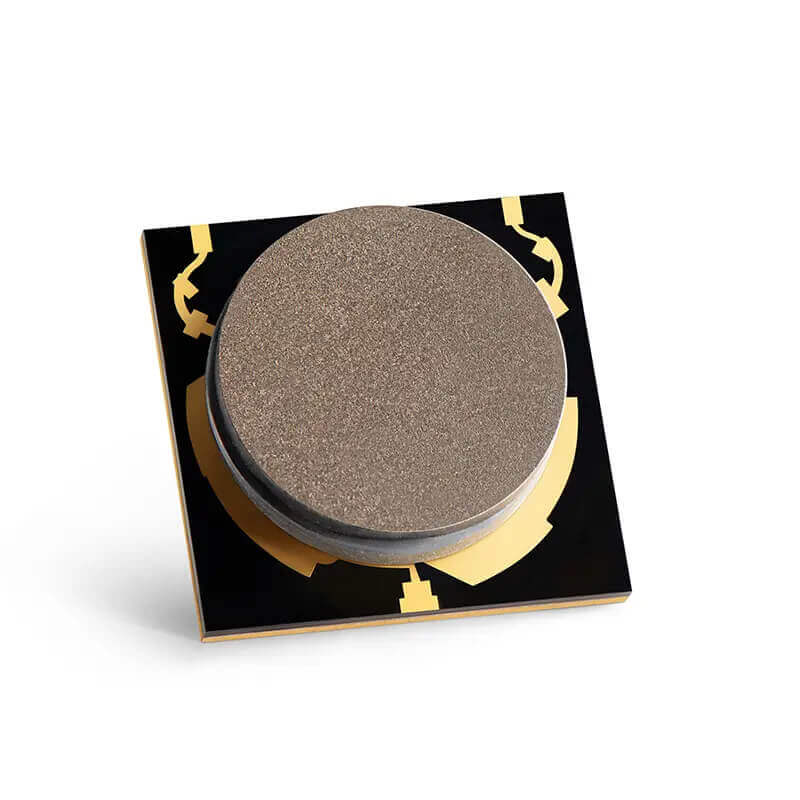
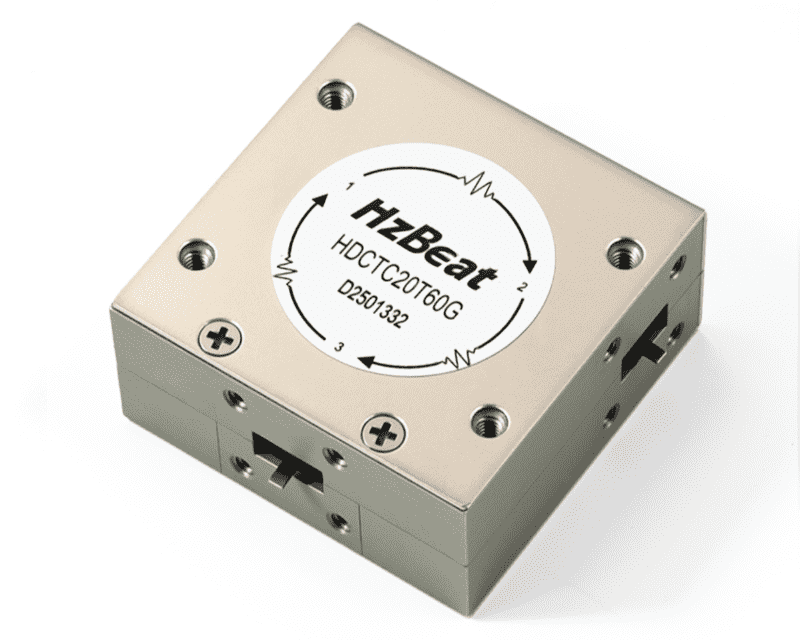
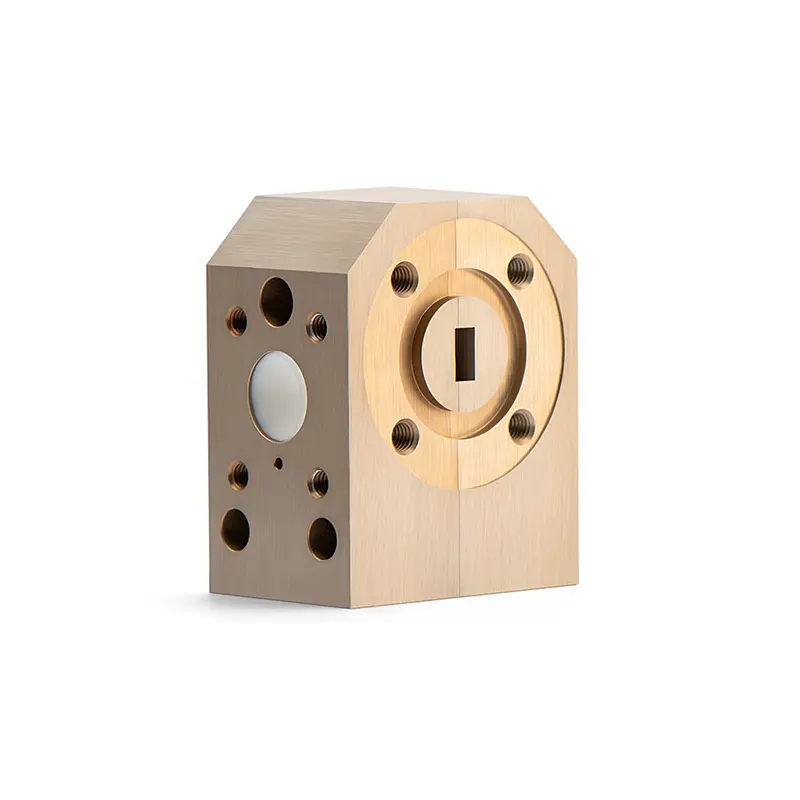
HzBeat supplies microstrip, drop-in, coaxial, waveguide, and customized RF circulators. Share your 5G frequency band, forward and reflected power, isolation target, insertion-loss limit, package size, and operating temperature for model selection or a custom engineering review.
Contact HzBeatRecommended Products
 Article Tags
Keith Wong
Marketing Director, Chengdu Hertz Electronic Technology Co., Ltd. (Hzbeat)
Keith has over 18 years in the RF components industry, focusing on the intersection of technology, healthcare applications, and global market trends.